
Since 2014
Ten Years of Reliability Your Trusted Partner
Ten Years of Reliability Your Trusted Partner
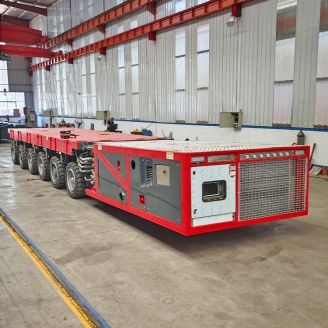
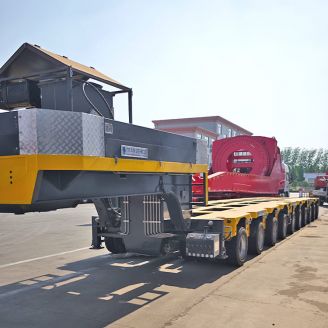
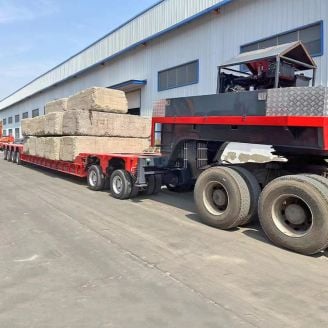
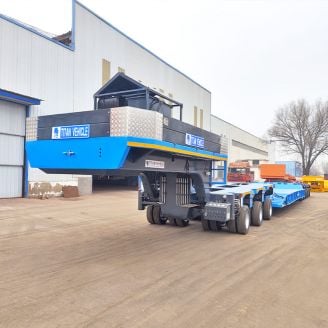
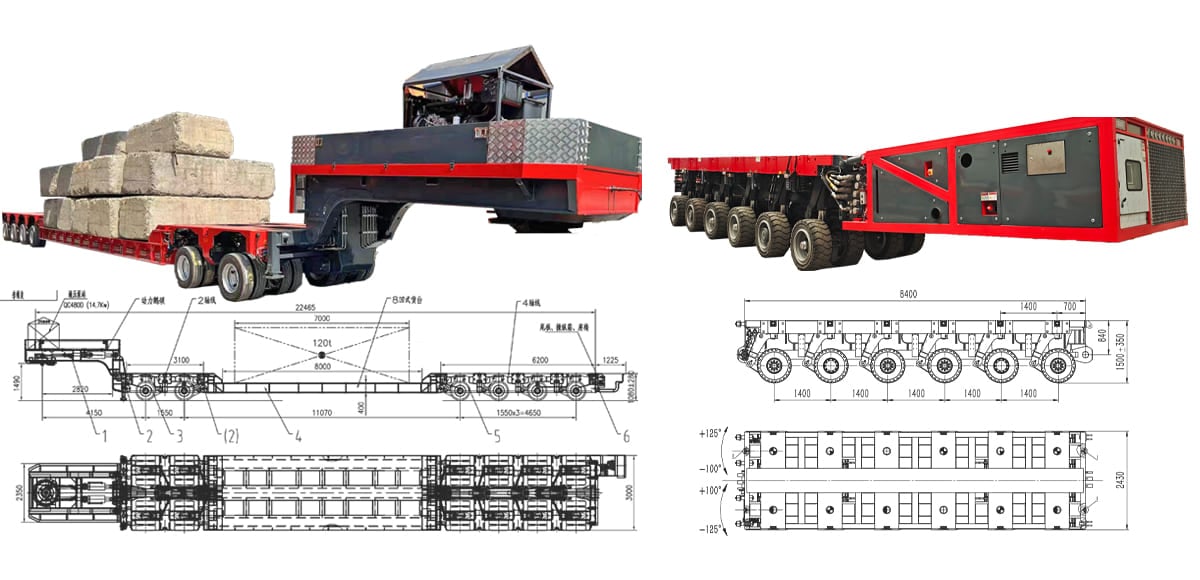
For heavy and oversized cargo transportation in Saudi Arabia, modular trailer and SPMT are two important transport solutions, but they are designed around different operating concepts. A modular trailer normally works as a towed heavy-duty transport platform, while an SPMT combines modular axle lines with its own propulsion and control system. This difference becomes more noticeable when the cargo is large enough to require specialized transport planning.
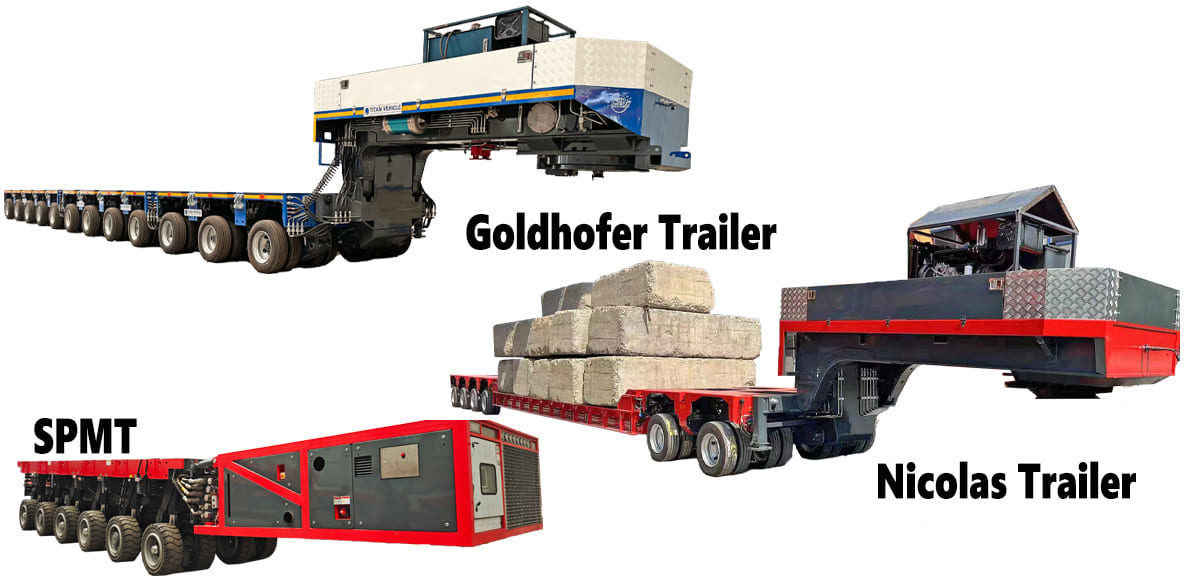
There is also an important relationship between Goldhofer trailer and modular trailer. Goldhofer trailer is not a completely separate category from modular trailer. It is commonly associated with heavy-duty modular trailer systems, which means it should be considered within the broader modular trailer category when comparing equipment with an SPMT.
For buyers in Saudi Arabia, the distinction is mainly about how the cargo needs to move. A modular trailer is closely associated with tractor-towed heavy transport, while an SPMT is designed around self-propelled movement and precise maneuvering. The right choice therefore depends on the cargo, route, transport distance, site conditions and final positioning requirements.
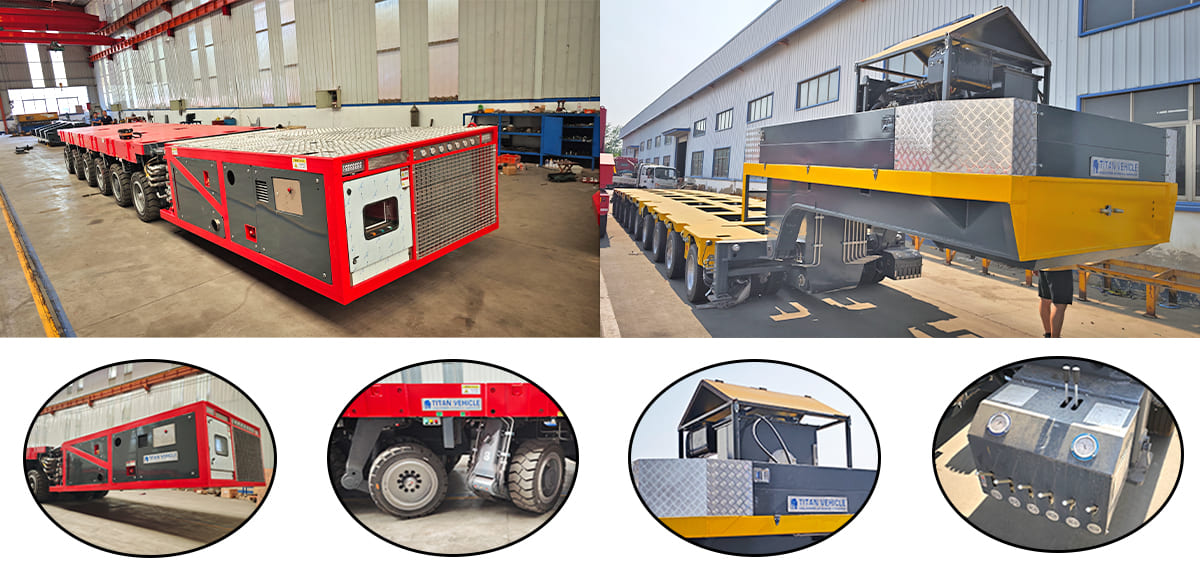
A modular trailer is a heavy-duty transport system made from separate axle-line modules that can be combined into different configurations. Instead of using one fixed trailer frame, the transporter can be assembled according to the size and weight of the cargo. This structure makes a modular trailer useful for project cargo that does not fit the dimensions or load requirements of conventional trailers. Depending on the configuration, several axle lines can be arranged longitudinally, side by side, or in larger combinations to distribute the cargo weight across the transport system.
The trailer is normally connected to a suitable tractor or heavy-haul prime mover. The tractor supplies the main driving force, while the modular trailer handles load support, hydraulic suspension and steering functions.
An SPMT, or Self-Propelled Modular Transporter, is also built around modular axle lines, but the operating principle is different. Instead of relying on a tractor to provide the propulsion, the SPMT incorporates a power unit and hydraulic drive system into the transport platform itself. This gives the two systems different strengths. A modular trailer is closely associated with tractor-based heavy transportation. An SPMT is built around self-propelled transportation and controlled positioning.
Where does Goldhofer trailer fit?
A Goldhofer trailer belongs within the modular heavy-transport concept rather than being positioned as a third category alongside SPMT.
In practical equipment discussions, Goldhofer heavy-duty modules are examples of modular transport equipment that can be combined in different configurations. The THP/SL family, for example, is designed around modular axle units and can be configured with different components and combinations for heavy road and off-road transport. Published specifications include configurations from 2 to 8 axles, hydraulic axle compensation and a maximum steering angle of ±55°.
Therefore, when the article compares modular trailer vs. SPMT, a Goldhofer trailer can be used as a representative example of the modular trailer side of the comparison. The important point for a buyer is that “modular trailer” describes the broader equipment concept, while Goldhofer trailer refers to a particular modular heavy-transport solution within that concept.
The common modular principle
Both modular trailer and SPMT equipment use multiple axle lines because extremely heavy cargo cannot always be supported effectively by a conventional fixed trailer.
The modular approach allows the number and arrangement of axle lines to be adapted to the cargo. A compact but extremely heavy transformer, for example, may need a different arrangement from a long industrial vessel.
The difference appears when the transporter needs to move. A modular trailer normally moves through a tractor-trailer combination. An SPMT provides its own movement through an integrated power system. This distinction is the foundation for understanding the rest of the comparison.
 How Do Modular Trailer, SPMT and Goldhofer Differ in Saudi Arabia
The heavy-transport environment in Saudi Arabia includes ports, industrial zones, energy projects, construction sites and logistics facilities. The country's transport and logistics strategy continues to expand connectivity and logistics infrastructure, including logistics zones and major port developments. This creates different types of heavy-transport assignments.
One cargo movement may involve transporting equipment over a relatively long road route. Another may require the load to move only within an industrial project but through a complicated internal route. A third project may involve both stages. That is why modular trailer vs. SPMT is not simply a comparison of which machine carries more weight. The more useful comparison is how each system handles the complete transport task.
Road transportation favors a different operating model
A modular trailer is naturally suited to operations where a suitable tractor is available and the cargo needs to travel as part of a road-going heavy-haul combination. The modular configuration can be built around the cargo, while the tractor provides propulsion over the route. This can make a modular trailer attractive for transportation between ports, logistics areas, industrial facilities and construction projects in Saudi Arabia. The road journey still requires careful planning. Overall dimensions, axle distribution, turning radius, clearances and the complete vehicle combination all matter.
Saudi Arabia also has a specific framework for exceptional loads. The Roads General Authority reported issuing more than 15,000 exceptional-load permits in the first quarter of 2026, and stated that special authorization is required for indivisible loads exceeding prescribed weight or dimensional limits. For a modular trailer operation, this means the trailer specification should be considered together with the route and the road-transport requirements.
Site movement creates another set of requirements
An SPMT becomes particularly relevant when the difficult part of the job is maneuvering the cargo after it reaches the project area. Large industrial facilities can have restricted access, fixed structures, narrow passages and limited turning space. A conventional tractor and trailer combination may have difficulty performing some of the final movements.
An SPMT uses its own propulsion and steering system, allowing the operator to move the cargo at controlled low speeds without requiring a tractor to perform every movement. For Saudi Arabia, this can be useful in refinery construction, power projects, industrial facilities, infrastructure projects and other applications where the final movement is closely connected to installation.
One cargo can require both systems
Modular trailer and SPMT do not always have to compete for the same project.
A heavy cargo can travel by modular trailer for the main road section and then be transferred to an SPMT for final positioning.
For example, an industrial vessel may be transported from a logistics or port area using a tractor-towed modular trailer. Once it arrives at the project site, an SPMT may take over to move the vessel through a restricted area and align it with the installation location. This approach is especially relevant when the road and site parts of the transport operation have very different requirements. The same project may also use a Goldhofer trailer as part of the modular trailer solution for the road section.
 How Do Modular Trailer, SPMT and Goldhofer Differ in Saudi Arabia
The biggest difference between a modular trailer and SPMT is not simply the number of axles. Both systems can use multiple axle lines, hydraulic suspension and modular configurations. The difference is how these components work together as a transport system.
| Feature | Modular Trailer | SPMT |
|---|---|---|
| Structure | Modular axle lines | Modular axle lines |
| Propulsion | Tractor | Integrated power unit |
| Steering | Hydraulic | Hydraulic/electronic |
| Main role | Heavy road transport | Heavy site transport |
| Configuration | Flexible | Highly flexible |
| Positioning | Tractor-assisted | Independent |
| Typical use | Road + project cargo | Site + installation |
Modular trailer: load support with tractor propulsion
The main function of a modular trailer is to create a transport platform capable of carrying heavy cargo while spreading the load through multiple axle lines.
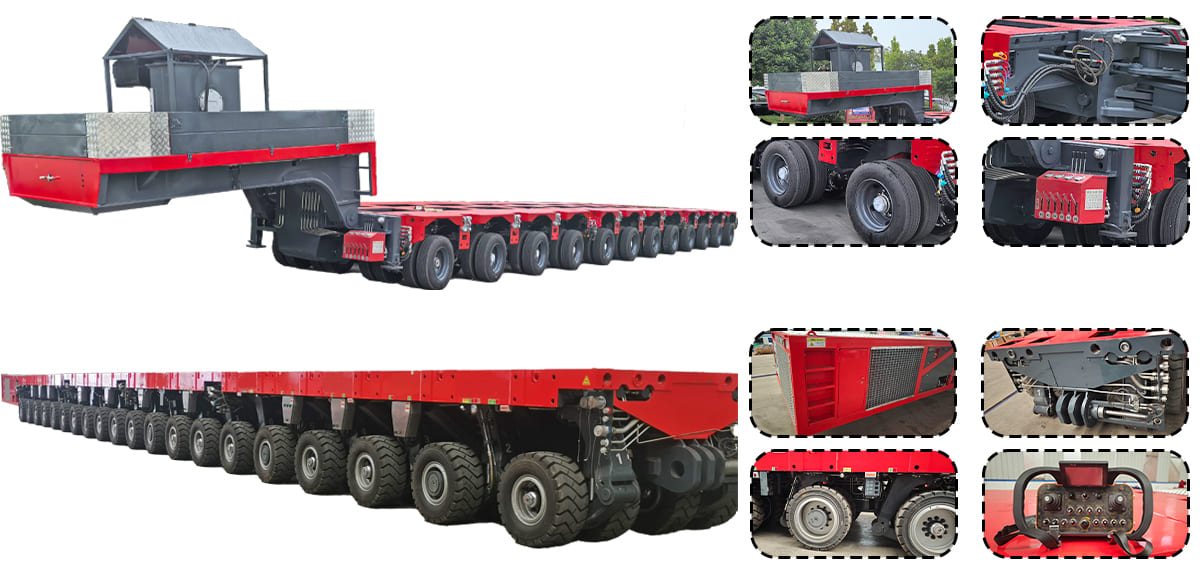
The trailer itself does not need to contain the main propulsion system. A compatible tractor can provide the pulling force, which makes this configuration practical for road transportation. The flexibility comes from the modular structure. More axle lines can be added when the cargo requires greater load distribution. Additional modules can also be combined laterally when the cargo is unusually wide.
A Goldhofer trailer is a useful example of this modular approach. Heavy-duty modules can be combined in different arrangements, and the manufacturer provides accessories such as goosenecks, turntables, flatbed decks and vessel decks for different transport tasks. This modularity is one of the main reasons such equipment is used for project cargo.
SPMT: propulsion and movement are integrated
An SPMT combines the transport platform and propulsion system into one operating unit. Its power pack supplies the driving force, while the hydraulic and electronic systems coordinate propulsion, steering and suspension. This makes an SPMT particularly useful when the cargo has to move independently inside a site.
Instead of depending on a tractor for forward movement and turning, the transporter itself becomes the controlled vehicle platform. This changes the type of problems the equipment can solve.
An SPMT can be valuable when a heavy cargo has to move slowly through a confined area, perform complex turns or approach an installation point with controlled positioning. The system is therefore not simply a modular trailer with additional equipment. The integrated propulsion and control system changes its operating role.
Steering requirements become more important with oversized cargo
A long or wide cargo can make steering much more complicated than a standard trailer operation.
With a modular trailer, steering is coordinated within the trailer system but remains part of a larger tractor-trailer combination.
With an SPMT, the steering system can be controlled as part of the self-propelled transporter. This can provide much greater flexibility when the vehicle operates inside a project site.
The difference becomes especially noticeable when the transporter needs to move in more than one direction or make controlled positioning movements.
For Saudi Arabia projects, this can matter when large equipment must be installed inside an existing industrial environment rather than simply delivered to a roadside unloading point.
Hydraulic suspension serves different transport needs
Hydraulic suspension is important in both modular trailer and SPMT systems because heavy cargo creates substantial vertical and dynamic loads. The suspension allows the axle lines to compensate for variations in the surface and helps maintain the transport platform under different loading conditions.
In modular trailer applications, hydraulic suspension contributes to load support and road transport. In an SPMT, it works together with the steering and drive system to control the entire transport platform.
Goldhofer's published THP/SL specification, for example, includes 600 mm of axle compensation, demonstrating the role of hydraulic movement in heavy modular transport. The exact specification should still be evaluated according to the selected model and configuration rather than applied to every modular trailer.
 How Do Modular Trailer, SPMT and Goldhofer Differ in Saudi Arabia
The choice between a modular trailer and an SPMT becomes easier when the transport project is divided into practical applications. There is no need to assume that one system must replace the other. Their operating characteristics can be useful in different parts of the same logistics chain.
Heavy road transportation
For long-distance road transportation, a modular trailer can provide a practical solution when a suitable tractor and appropriate route are available. The trailer can be configured around the cargo, while the tractor supplies propulsion. This is relevant to Saudi Arabia because large industrial cargo may need to travel between ports, industrial areas and construction projects.
A modular trailer can also be configured for different cargo shapes. A wider load may require a parallel arrangement, while a long load may require additional axle lines and an extended support structure. The goal is to achieve the required load distribution without using a more complex self-propelled system when the road transportation task does not require it.
Final positioning inside industrial facilities
An SPMT is more closely associated with the type of work where movement and positioning happen together. A power plant, refinery or industrial project may have limited working space. Heavy equipment may have to pass between structures or align with a specific installation point.
In this environment, an SPMT can move independently and perform controlled positioning. This does not make an SPMT universally preferable. It means that its self-propelled architecture solves a different problem. For Saudi Arabia, projects involving large plant modules, transformers, vessels and other installation-related cargo may require this type of controlled site movement.
Heavy project cargo over mixed routes
Some projects involve both road transportation and site maneuvering.
In such cases, a modular trailer and SPMT can complement each other.
A Goldhofer trailer, as a heavy modular trailer configuration, can be used for the transportation section where tractor towing is practical. An SPMT can then be used for the site section when independent movement is required.
This can be more practical than forcing one system to cover every stage of the project.
The transport plan should therefore identify where the cargo starts, where it needs to travel and what happens after it reaches the destination.
Industrial and petrochemical applications
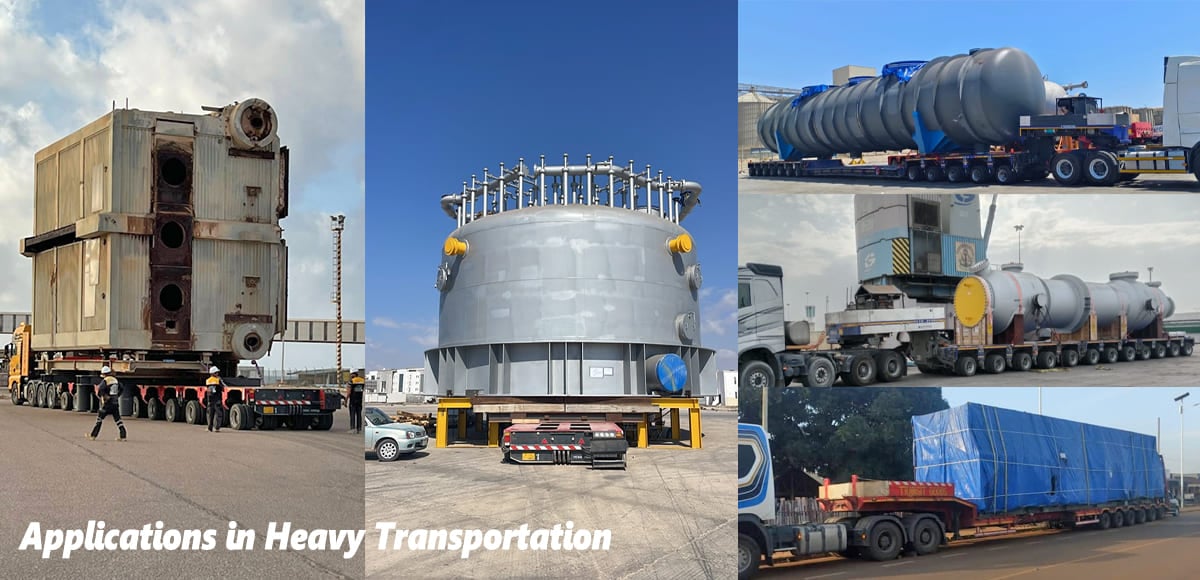
Large industrial projects in Saudi Arabia can involve pressure vessels, reactors, tanks, generators, transformers and process modules.
These cargo types can create difficult combinations of weight and dimensions.
A modular trailer can provide the required support platform for transportation, especially when the cargo needs to travel over roads.
An SPMT can become more relevant when the cargo is already inside the project environment and needs to be positioned among existing structures.
A Goldhofer trailer can be considered when a specialized modular heavy-duty configuration is required for the transport phase.
Construction and infrastructure projects
Large construction projects may also require modular transport equipment for bridge sections, large machinery, structural components and other oversized cargo.
The appropriate system depends on whether the equipment mainly needs to travel from one location to another or whether the project involves extensive movement within the construction zone.
For road-oriented operations, a modular trailer can work as part of a tractor-based heavy-haul combination.
For complex site movement, SPMT can provide greater operational flexibility.
The distinction is therefore based on the work environment rather than simply the cargo category.
 How Do Modular Trailer, SPMT and Goldhofer Differ in Saudi Arabia
For buyers in Saudi Arabia, selecting between a modular trailer and an SPMT should begin with the actual transportation plan.
Cargo weight is important, but it is only one part of the specification. The buyer should also establish the cargo length, width, height, support points and approximate center of gravity. These factors determine how many axle lines may be required and how the modules should be arranged.
The route then becomes the second major consideration. Public-road transportation, port access, industrial roads and internal project roads can create different requirements. A modular trailer that works well on the main road section may not provide the same level of flexibility for final positioning inside a plant.
The procurement process should therefore connect the equipment configuration with the complete movement of the cargo.
Start with the cargo rather than the nominal capacity
The advertised load capacity of a modular trailer or SPMT is not enough to determine whether it fits a specific project.
A heavy but compact transformer may require a different axle arrangement from a long process vessel. A large industrial module may require greater width, while a tall load may make transport height more important than deck length.
Load distribution also matters because the weight does not necessarily act evenly across the entire platform.
For this reason, buyers should provide the supplier with the cargo drawing or detailed dimensions whenever possible. The supplier can then work backward from the cargo to the required modular configuration.
This is also useful when comparing a Goldhofer trailer with another modular trailer. The comparison should use the actual configuration rather than only the product name.
Evaluate the road section separately from the site section
The road section and site section should be treated as two parts of the same transport project.
For a modular trailer, the buyer needs to consider the tractor, axle arrangement, steering, suspension and overall dimensions as one combination.
For an SPMT, the main focus shifts toward the integrated power system, hydraulic control, steering and maneuverability within the site.
In Saudi Arabia, exceptional-load requirements are also relevant when the cargo exceeds normal weight or dimensional limits. The Roads General Authority states that indivisible exceptional loads exceeding the prescribed limits require special permits, and heavy equipment is among the types of movement that may require exceptional authorization.
This makes route planning part of the purchasing decision rather than a separate issue to be addressed after the equipment has been selected.
Compare the complete configuration
A useful supplier comparison should include the actual configuration of the equipment.
When considering a Goldhofer trailer, the buyer should treat it as a modular trailer configuration and compare its technical characteristics with the modular systems from other suppliers.
This avoids a common purchasing problem in which buyers compare product names but not the actual equipment being quoted.
Consider how often the equipment will be used
The right solution also depends on fleet utilization.
A heavy-haul contractor in Saudi Arabia that frequently moves industrial cargo between ports and project sites may prioritize modular trailer configurations that can operate with its existing tractor fleet.
A contractor whose work is concentrated inside refineries, power plants and large construction sites may have more frequent applications for SPMT equipment.
A company handling both types of projects may use modular trailer and SPMT equipment as complementary systems.
The same consideration applies to a Goldhofer trailer. A specialized modular configuration may make sense when the fleet regularly handles the type of heavy cargo for which that configuration was designed.
Consider maintenance and operating support
Heavy modular transport equipment is a long-term fleet asset, so buyers should also consider the practical support requirements.
For a modular trailer, the operating tractor, hydraulic equipment, steering components, suspension and braking system all need to be supported over the service life.
For an SPMT, the power pack and control systems add another layer of equipment that needs trained operators and appropriate maintenance capability.
For buyers in Saudi Arabia, local service availability, spare parts access, operator experience and supplier technical support can therefore influence the actual operating value of the equipment.
The cheapest initial quotation is not necessarily the easiest configuration to operate over multiple projects. The important comparison is between the complete equipment package and the work the fleet expects to perform.
 How Do Modular Trailer, SPMT and Goldhofer Differ in Saudi Arabia
What is a modular trailer?
A modular trailer is a heavy-duty transport platform assembled from multiple axle-line modules. The modules can be combined in different configurations to support heavy and oversized cargo, and the system is normally towed by a suitable tractor.
What is an SPMT?
An SPMT is a Self-Propelled Modular Transporter. It uses modular axle lines together with an integrated power unit, hydraulic drive, steering and suspension system, allowing the transporter to move heavy cargo independently.
Is Goldhofer trailer a type of modular trailer?
Yes. In the product classification used in this article, a Goldhofer trailer is treated as a type of heavy-duty modular trailer rather than as a category parallel to SPMT. Goldhofer's THP/SL family is an example of towed heavy-duty modular equipment with configurable axle combinations.
What is the main difference between modular trailer and SPMT?
The primary difference is propulsion. A modular trailer normally relies on a tractor, while an SPMT has its own propulsion system and can move independently.
Is modular trailer suitable for Saudi Arabia road transport?
A modular trailer can be suitable for heavy road transportation in Saudi Arabia when the tractor, trailer configuration, cargo and route are properly matched. Exceptional loads may also require specific permits according to the applicable Saudi road requirements.
When is SPMT more useful in Saudi Arabia?
An SPMT is particularly useful when heavy cargo needs to be moved inside industrial facilities, construction sites, ports or other areas where independent propulsion and controlled maneuvering are important.
Can modular trailer and SPMT transport the same cargo?
Yes. The same cargo can be transported by a modular trailer during the road transportation stage and later moved by an SPMT during final site positioning. The equipment can therefore perform different stages of one project.
Is Goldhofer trailer the same as SPMT?
No. A Goldhofer trailer in this context belongs to the modular trailer category, while an SPMT is a self-propelled modular transport system. Modular trailers are generally associated with tractor towing, whereas SPMTs integrate propulsion into the transport platform.
Which cargo is suitable for a modular trailer?
A modular trailer can be configured for industrial vessels, tanks, transformers, generators, machinery, construction equipment and other heavy project cargo. The exact configuration depends on cargo dimensions, weight distribution and route requirements.
How should Saudi Arabia buyers compare modular trailer and SPMT?
Buyers should compare propulsion, axle arrangement, load distribution, steering, hydraulic suspension, maneuverability and the intended operating environment. The cargo route and final positioning requirement should be considered together rather than comparing maximum tonnage alone.
Can a Goldhofer trailer be combined with other modular equipment?
Heavy-duty modular systems can be configured with different modules and supporting components depending on the transport task. Goldhofer's THP/SL information, for example, describes combinations with different accessories and configurations for heavy transport.
What is the key consideration for heavy transport in Saudi Arabia?
The key consideration is matching the transport system to the complete project. A modular trailer may suit tractor-based road transportation, while an SPMT may suit self-propelled site movement. A Goldhofer trailer can be considered as a specialized modular trailer option within the broader modular transport category.
Shandong TITAN Vehicle Co., Ltd.
Wehcat/Whatsapp: +86 18660159635
Tel.: +86531-88997626

BOSS WeChat

Boss Whatsapp