
Since 2014
Ten Years of Reliability Your Trusted Partner
Ten Years of Reliability Your Trusted Partner
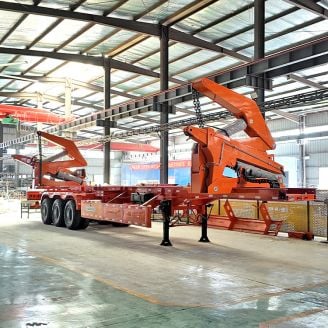
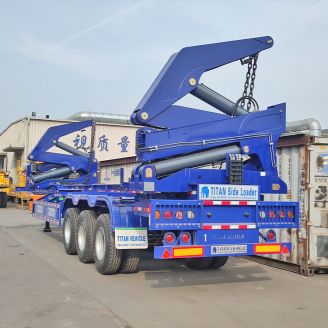
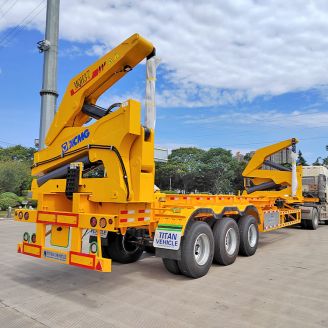
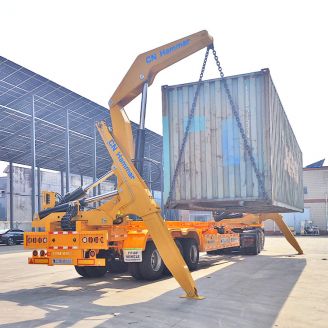
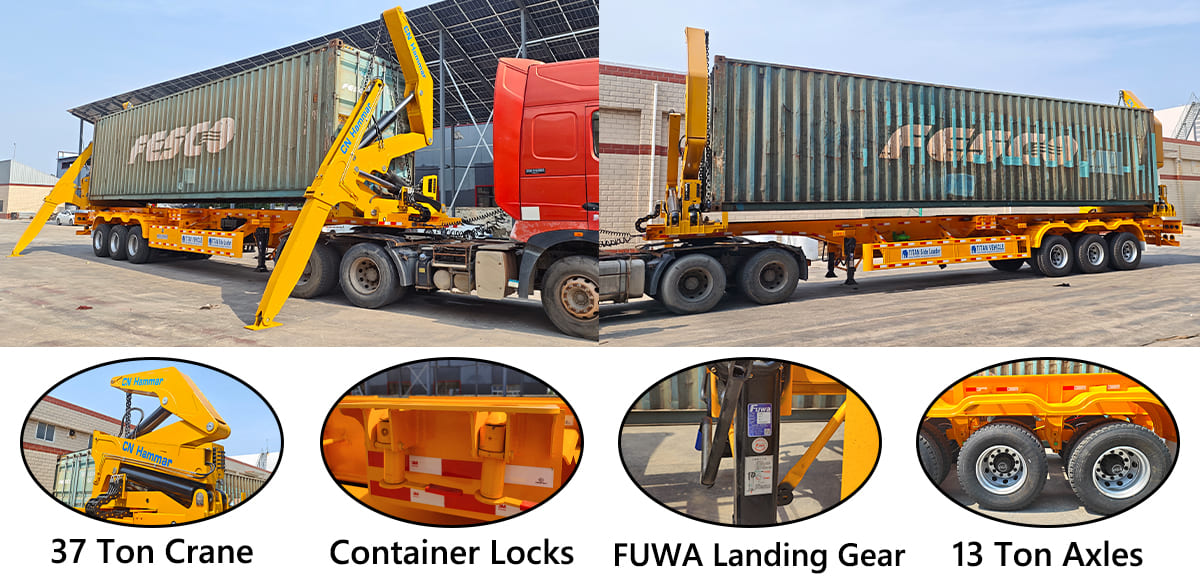
A container side loader trailer is designed for situations where a standard container trailer cannot simply rely on a suitable loading bay, container terminal, or fixed handling equipment. Instead of moving a container only from the rear, a side loader trailer uses its own side-loading arrangement to place a container onto the trailer or unload it beside the vehicle. That changes how the trailer fits into the wider transport operation.
For buyers searching for a 20ft container side loader, 40ft container side loader, or a side loader trailer in Guyana, the central issue is therefore not just trailer size. The more important question is whether the trailer configuration matches the containers being handled and the working conditions in which loading and unloading will take place.
The distinction between 20 ft and 40 ft container handling is particularly important. A trailer intended to handle only one container format has a different operating focus from one intended to work with both. The side-loading mechanism also needs to be considered as part of the complete transport system rather than as an isolated trailer feature.
For a Guyanese B2B buyer, the useful evaluation starts with the intended container format, the type of loading work required, and the way the trailer will be integrated into normal container transport. The following sections explain those points without treating every side loader as if it had the same configuration.
The defining function of a side loader trailer is simple: it allows a container to be transferred between the trailer and the ground or another suitable position from the side of the vehicle. This makes the equipment fundamentally different from a conventional flatbed or skeletal container chassis, even though all of them can be involved in container transportation.
A conventional container chassis mainly provides a transport platform. The actual lifting and positioning work is generally handled by separate equipment. A side loader adds another layer of handling capability to the trailer itself. As a result, the buyer is not selecting only a frame on which a container travels; the buyer is selecting a transport-and-handling arrangement.
That distinction matters because the usefulness of a side loader depends on where the container must be placed. A container may need to be removed from the trailer at a location without dedicated container-handling equipment. It may also need to be positioned alongside a working area rather than simply delivered to a conventional terminal position. In those situations, the side-loading function becomes part of the operational requirement.
The product category can therefore be understood through three connected functions.
First, the trailer must transport the container securely as a road vehicle. Second, it must accommodate the relevant container configuration. Third, the side-loading system must provide the lifting and positioning function required by the intended operation.
These three functions should be considered together. A trailer may be technically suitable for container transport but unsuitable for a particular side-loading task, while another configuration may provide the handling arrangement needed for a wider range of container movements.
1.1 Why the 20 ft and 40 ft distinction matters
The difference between a 20ft container side loader and a 40ft container side loader is not merely the number in the product name. It reflects the container format that the trailer is expected to accommodate.
A 20 ft container and a 40 ft container have different overall lengths, so the trailer's support arrangement and handling configuration must correspond to the intended container length. For a buyer, that means the first specification question is often not how many tons the trailer can carry, but which container formats it is actually designed to handle.
A buyer whose operation is centered on 20 ft containers has a different equipment requirement from a fleet moving predominantly 40 ft units. Another buyer may require one side loader to accommodate both formats. In that case, the handling and support arrangement becomes a key part of the specification discussion.
This is also why simply searching for the broad term side loader trailer can produce products that are not directly equivalent. Two trailers can both be called side loaders while being intended for different container configurations.
1.2 The side loader is part of the transport workflow
A side loader becomes most useful when transport and handling cannot be separated.
Consider a normal container delivery. A tractor and trailer arrive at the destination, the container needs to be removed, and another piece of lifting equipment performs the operation. The trailer's main job is transportation.
With a side loader, the trailer itself participates in the transfer process. This changes the workflow because the loading or unloading operation is linked to the trailer's own equipment.
For fleet operators, this distinction can affect how vehicles are assigned to jobs. The trailer may be selected not only because it can transport a container, but because the complete unit needs to perform a specific handling function at the delivery point.
 20 40 Ft Container Side Loader Trailer in Guyana: Types and Uses
The most important configuration issue is container compatibility. The trailer should be evaluated according to the actual container formats that the buyer expects to move rather than according to a generic description such as “for containers.”
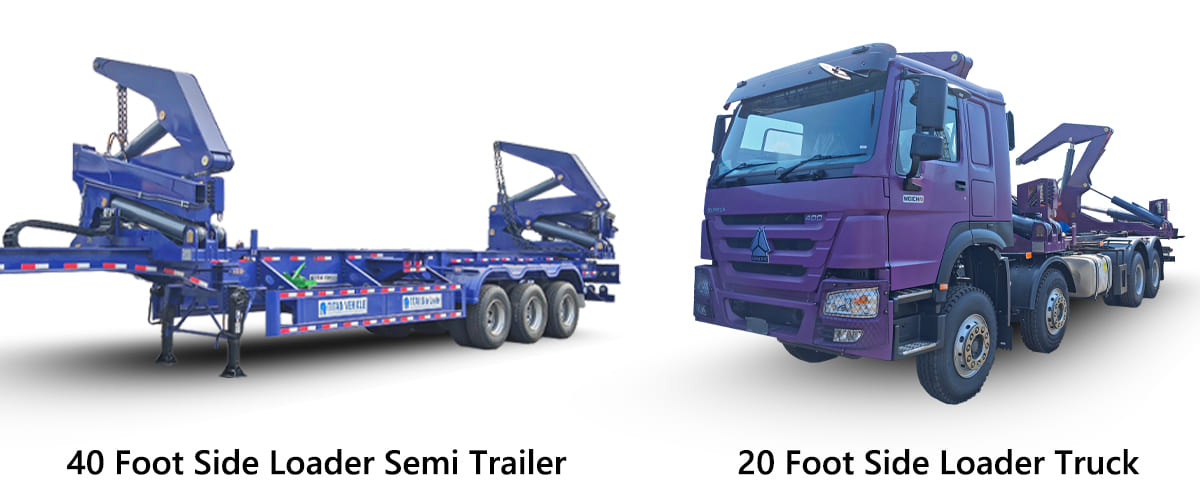
A 20ft container side loader is centered on the handling and transport of 20 ft containers. A 40ft container side loader is intended for the longer container format. A multi-purpose configuration may be designed to support both, but the buyer should confirm exactly how that flexibility is achieved.
The important point is that container length affects the relationship between the container, trailer support points, and lifting arrangement. The side loader is therefore a system in which dimensions and handling geometry work together.
2.1 20 ft container operations
20 ft containers are a common reference point for container transport because they provide a shorter container format than 40 ft equipment. When the working fleet is built around this format, the side loader should be considered primarily in relation to the 20 ft operating requirement.
This can simplify equipment matching because the trailer's intended container format is clearly defined. The buyer can then focus more closely on how the side-loading function interacts with the transport position and the expected loading or unloading sequence.
For example, the relevant question may be whether the trailer is expected to repeatedly load and unload 20 ft containers at locations where separate lifting equipment is not available. In that situation, the side-loading arrangement is central to the equipment decision.
The same configuration may also be considered where container delivery requires the unit to operate away from a dedicated terminal environment. The important issue is not to claim that every remote or non-terminal delivery requires a side loader, but to understand why self-contained handling capability can become valuable in a transport operation.
2.2 40 ft container operations
A 40ft container side loader addresses the longer container format and therefore introduces a different dimensional relationship between the trailer and the container.
When the intended work is dominated by 40 ft containers, buyers should evaluate the side loader around that specific container length rather than assuming that a trailer marketed for 20 ft units will automatically provide the same handling arrangement for 40 ft equipment.
The longer container changes how the trailer supports and positions the load. The lifting system also needs to work with the intended container position. This is why container compatibility should be confirmed from the actual product configuration rather than inferred from the broad term “side loader.”
For a fleet operating multiple container formats, this distinction becomes even more important. A single trailer that can work with different container lengths may offer broader operational use, but only where the manufacturer has designed the equipment to accommodate those formats.
2.3 One format or multiple formats
The decision between a dedicated and more flexible side loader configuration should follow actual fleet requirements.
| Container requirement | Suitable equipment focus | Main issue to confirm |
|---|---|---|
| Mainly 20 ft containers | 20ft container side loader | Compatibility with the intended 20 ft container operation |
| Mainly 40 ft containers | 40ft container side loader | Compatibility with the intended 40 ft container operation |
| Both 20 ft and 40 ft containers | Multi-format side loader configuration | Whether the supplied design supports both formats |
| Container transport without self-loading need | Conventional container transport equipment may be sufficient | Whether side-loading capability is actually required |
The purpose of this comparison is not to suggest that one format is universally better. The correct configuration follows the containers that the fleet actually handles. For a buyer in Guyana, this can prevent an easy but costly mistake: selecting equipment based on the phrase “side loader” while leaving the actual container compatibility undefined.
 20 40 Ft Container Side Loader Trailer in Guyana: Types and Uses
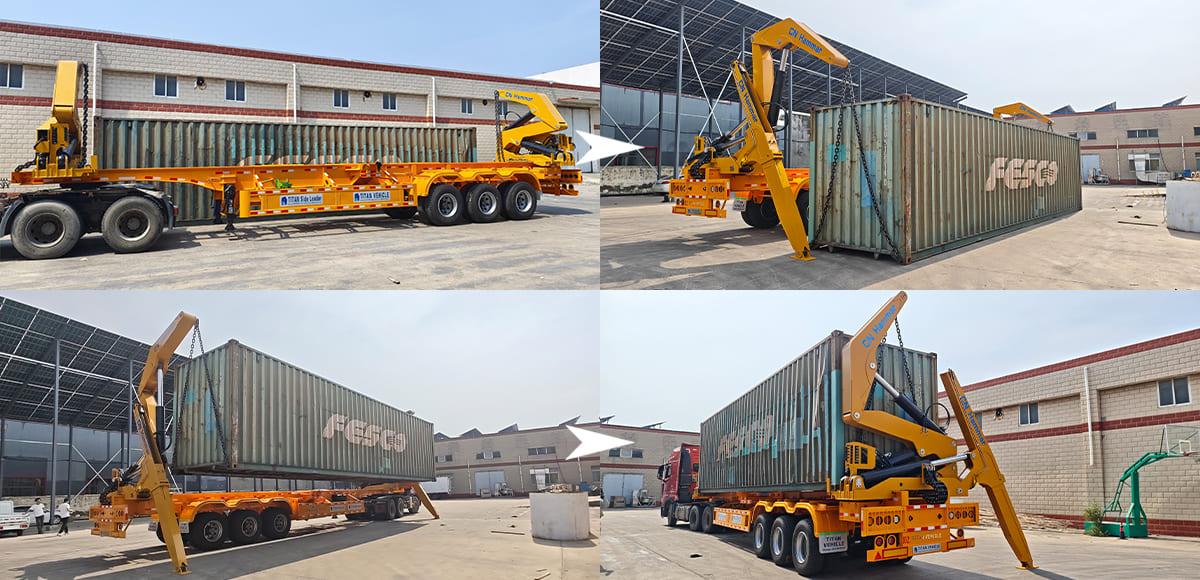
A side loader should be evaluated according to what happens at the destination, not only according to what happens while the container is being transported.
The key application difference is whether the trailer must simply carry the container or must also take part in placing it. Where a separate crane, reach stacker, forklift arrangement, or other handling method is already consistently available, the additional side-loading function may not be central to the fleet's requirements. Where container placement is part of the normal delivery task, the side loader becomes much more relevant.
This distinction gives the product category a wider range of applications without requiring unsupported claims about specific locations or industries in Guyana.
3.1 Delivery locations without fixed handling equipment
One useful application logic is container delivery to places where dedicated container-handling equipment cannot simply be assumed.
The side loader can connect transportation with placement. Rather than treating the trailer as a passive transport platform, the vehicle becomes part of the unloading operation.
For the buyer, this means the purchasing decision depends on the complete workflow. The relevant question is not simply, “Can this trailer carry my container?” It is, “Does this trailer provide the handling function required at the point where my container is delivered?”
That difference sounds small, but it changes the way the equipment should be evaluated.
3.2 Container positioning at the worksite
Another application is container positioning where the final location of the container matters as much as delivery itself.
A container may need to be placed next to a working area, storage area, or other designated position. The side-loading arrangement gives the operation a different physical relationship between vehicle and container than rear-only loading equipment.
The buyer should therefore think about the available space around the vehicle and the intended placement operation. The trailer's usefulness is linked to the fact that the container is handled laterally rather than simply dropped from the rear.
This is also why the name “side loader” is more meaningful than a generic “container trailer” description. It identifies a functional difference in how the equipment interacts with the container.
3.3 Transport and handling as one equipment decision
For a fleet operator, combining transportation and handling can affect equipment allocation.
A conventional chassis and a side loader are not necessarily competing products for the same task. They may support different operating models. A fleet with reliable access to container-handling equipment may place greater emphasis on transport efficiency and chassis configuration. A fleet that needs the trailer to participate in loading or unloading may place greater emphasis on the integrated handling system.
This is why a side loader should not be evaluated by comparing only chassis dimensions or general trailer appearance. The defining difference is operational.
3.4 Why application should determine the configuration
The phrase side loader trailer describes a category, not one universal specification.
A buyer should therefore begin with the actual work performed by the vehicle. The container format is one part of that decision. The loading and unloading arrangement is another. The expected relationship between the trailer and the delivery location is equally important.
Once those factors are clear, technical specifications can be evaluated in context.
This approach is more useful than assuming that a larger or more complex trailer is automatically better. A specification has value only when it corresponds to an actual transport or handling requirement.
 20 40 Ft Container Side Loader Trailer in Guyana: Types and Uses
The most useful way to compare 20 ft and 40 ft side loader equipment is through application fit rather than through a simple “small versus large” argument.
A fleet centered on 20 ft containers has a different equipment profile from one centered on 40 ft containers. A mixed-container fleet introduces another requirement because flexibility becomes part of the equipment value.
The correct question is therefore: which container formats will this trailer handle in normal service?
That question should be established before discussing less important details.
4.1 Match the trailer to the actual container fleet
A trailer should be selected around the containers it will actually transport and handle.
For a 20 ft-focused operation, the relevant product is the 20ft container side loader. For a 40 ft-focused operation, the relevant product is the 40ft container side loader. Where both formats are part of the operating fleet, the buyer needs confirmation that the proposed equipment is designed to accommodate both.
This is a simple decision, but it is often obscured by broad product descriptions.
The term side loader can identify the lifting concept without identifying every detail of the container configuration. Buyers therefore need to move from the category name to the actual operating requirement.
4.2 Flexibility has to be confirmed, not assumed
A multi-format trailer can be attractive because it may reduce the need for separate trailer configurations. But flexibility should not be inferred simply because a supplier uses broad wording such as “20 ft and 40 ft compatible.”
The exact configuration still needs to be confirmed.
This is especially relevant when comparing quotations from different manufacturers. One supplier may offer equipment focused on one container format, while another may offer a configuration designed for more than one format. The two quotations should not be treated as identical merely because both products are called side loaders.
The difference is functional rather than cosmetic.
4.3 The handling mechanism deserves attention
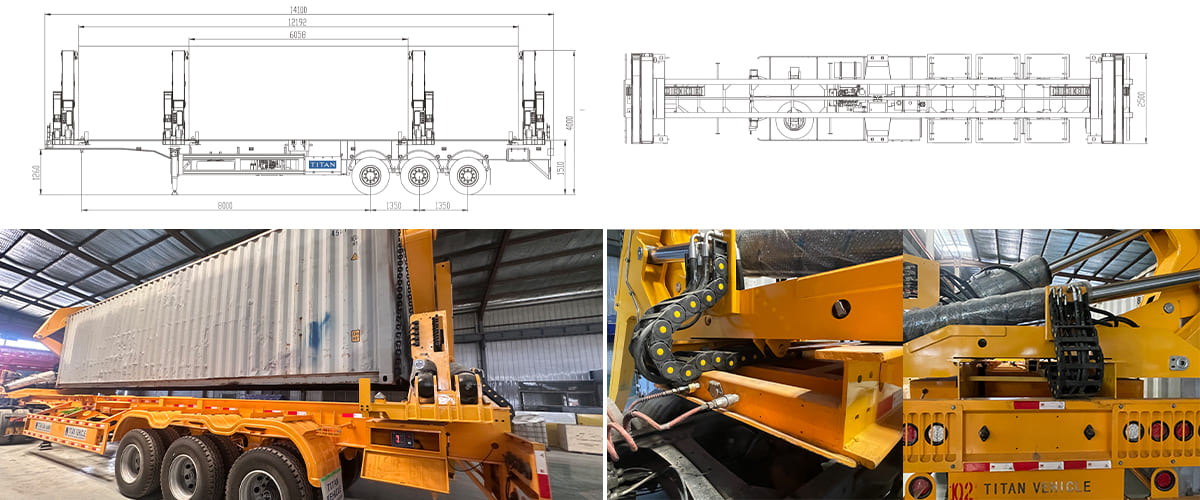
On a side loader, the lifting mechanism is not an accessory that can be ignored during product comparison. It is central to why the trailer exists.
A buyer should understand how the supplied configuration performs its side-loading function and how that function relates to the intended container format. The exact technical design will vary between products, so unsupported claims about lifting capacity, hydraulic components, cycle times, or operating limits should not be assumed without manufacturer specifications.
The important purchasing point is that the side-loading mechanism must be evaluated as part of the complete trailer.
4.4 The 40ft container side loader and the work area must be considered together
Side-loading changes the spatial relationship between the vehicle and the container.
With rear-oriented loading equipment, the working area is concentrated around the rear of the trailer. With a side-loading system, the working area extends laterally from the trailer.
That matters because the intended operating environment needs to accommodate the side-loading process. The buyer should therefore consider not only the route and container format but also the physical conditions in which the loading or unloading operation is expected to take place.
 20 40 Ft Container Side Loader Trailer in Guyana: Types and Uses
For B2B buyers in Guyana, the sourcing question is closely connected to specification clarity.
A side loader is a specialized piece of container equipment, so the quotation should identify the actual configuration rather than relying on a broad product title. The more clearly the buyer defines the intended container format and handling function, the easier it becomes to compare offers on an equivalent basis.
The most useful supplier discussion begins with the operating requirement: 20 ft containers, 40 ft containers, or both. The next point is whether the trailer is expected to transport only or to combine transport with side loading and unloading. Once those points are clear, technical details can be evaluated according to relevance.
5.1 What a quotation should make clear
A meaningful quotation for a side loader should correspond to a clearly defined equipment configuration.
At minimum, the buyer should be able to establish which container format the offered trailer is designed to handle and what side-loading function is included in the proposed configuration. Where the buyer requires both 20 ft and 40 ft operation, that compatibility should be explicitly confirmed.
This does not mean every quotation needs to contain an unnecessarily long specification list. In fact, excessive technical detail can make comparison harder when the important functional differences are buried among low-value information.
A better quotation is one in which the major configuration differences are easy to identify.
5.2 Comparing similar products
Two side loader trailers should be compared on equivalent requirements.
A quotation for a 20 ft-focused configuration should not be compared directly with a quotation for equipment intended to handle both 20 ft and 40 ft containers without acknowledging the functional difference.
Likewise, a conventional container chassis should not automatically be treated as a lower-priced equivalent to a side loader. The products may serve different workflows because one provides integrated side-loading capability and the other may rely on separate handling equipment.
The useful comparison is therefore between equipment configurations that solve the same operational problem.
5.3 Why the supplier's product description matters
For specialized transport equipment, the product description is often the first place where configuration differences become visible.
Terms such as 20ft container side loader, 40ft container side loader, side loader, and side loader trailer can describe related equipment but do not necessarily establish identical specifications.
A serious buyer should therefore look beyond the category keyword and identify the actual configuration behind it.
This is particularly important in online sourcing because different manufacturers may use similar commercial terminology for technically different products.
5.4 Direct factory sourcing and equipment clarity
A buyer in Guyana may source directly from a manufacturer, through a distributor, or through another commercial channel. The purchasing route can vary, but the technical requirement remains the same: the offered trailer needs to correspond to the intended application.
For direct manufacturer discussions, clarity is especially valuable because the buyer can communicate the operating requirement before the final configuration is quoted.
Instead of beginning with a generic request for “a side loader,” the more useful request identifies the container formats involved and whether the side-loading function is required for loading, unloading, positioning, or the complete handling process.
That produces a more meaningful technical discussion without turning the purchasing process into a long checklist.
 20 40 Ft Container Side Loader Trailer in Guyana: Types and Uses
What is a container side loader trailer?
A container side loader trailer is a transport trailer equipped with a side-loading system for handling containers from the side of the vehicle. Its purpose goes beyond simply transporting the container because the trailer also participates in the loading or unloading process.
What is a 20ft container side loader?
A 20ft container side loader is a side-loading trailer configured for 20 ft containers. The exact design and technical specifications depend on the manufacturer's supplied configuration, so compatibility should be confirmed from the actual product information.
What is a 40ft container side loader?
A 40ft container side loader is designed around the handling and transport of 40 ft containers. Because the container is longer than a 20 ft unit, the trailer's support and handling arrangement must correspond to the intended 40 ft configuration.
Can one side loader trailer handle both 20 ft and 40 ft containers?
Some side loader configurations can be designed for more than one container format, but this should not be assumed from the product name alone. Buyers should confirm with the supplier that the specific offered configuration supports both 20 ft and 40 ft containers.
Why choose a side loader instead of a standard container trailer?
The main distinction is handling capability. A standard container trailer can provide transportation, while a side loader can integrate container loading or unloading into the trailer's operation, making it relevant where the trailer itself needs to participate in container placement.
What should a buyer in Guyana confirm before ordering a side loader?
The most important point is to define the intended container format and the actual handling requirement. The buyer should then make sure the quoted configuration matches those requirements and that different supplier quotations are comparing equivalent equipment.
Is “side loader trailer” the same as “container chassis”?
Not necessarily. A container chassis is primarily designed to transport containers, while a side loader trailer adds a side-handling function to the transport equipment. The two categories can therefore serve different operational needs even when both are used for container transportation.
Shandong TITAN Vehicle Co., Ltd.
Wehcat/Whatsapp: +86 18660159635
Tel.: +86531-88997626

BOSS WeChat

Boss Whatsapp