
Since 2014
Ten Years of Reliability Your Trusted Partner
Ten Years of Reliability Your Trusted Partner
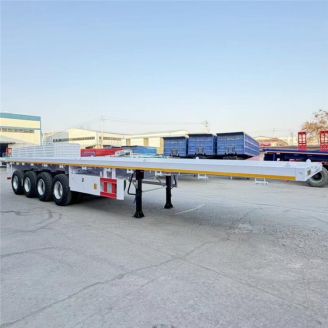
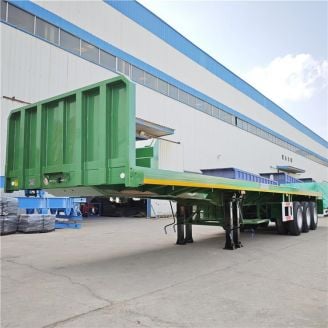
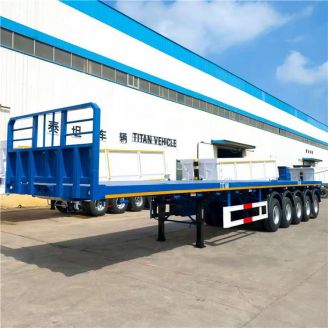
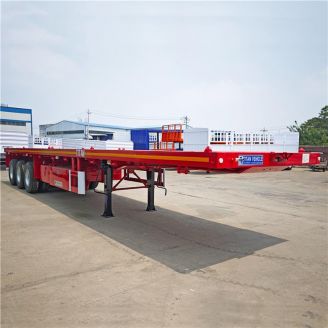
1. Flatbed Trailer for Sale in Jamaica
2. What Can a Flatbed Trailer Transport in Jamaica?
3. 3 Axle Flatbed Trailer for Jamaican Road Transport
4. Flatbed Semi Trailer for Container and General Cargo
5. How to Choose a Flatbed Trailer in Jamaica
For buyers searching for a 40 ft flatbed trailer for sale, the trailer length, axle configuration, payload capacity, suspension, container locks, and cargo requirements should all be considered before purchasing. A properly configured flatbed trailer can provide stable cargo transportation while making loading and unloading more convenient.
A flatbed trailer is designed for cargo that does not necessarily require an enclosed trailer body. In Jamaica, it can be used for both container transportation and general cargo transportation.
A 40 foot flatbed trailer for sale in Jamaica is particularly suitable for standard 40 ft containers. Depending on the trailer design, container locks can help secure containers during transportation. Flatbed trailers can also be used to transport 20 ft containers, steel products, timber, construction materials, machinery, and other large or irregularly shaped cargo.
For construction and infrastructure projects, a flatbed semi trailer can provide a convenient way to move equipment and materials between ports, storage yards, and job sites. The open platform also allows cargo to be loaded from different directions using forklifts or cranes.
A flatbed trailer is one of the most practical trailer types for Jamaican transporters who need to move containers, steel, timber, construction materials, machinery and other cargo that does not require an enclosed trailer body. For many container and general-cargo applications, a 40-foot platform combined with a three-axle configuration provides a useful balance between cargo space, road usability and operating flexibility.
A flatbed trailer for sale in Jamaica is designed around a simple but highly versatile concept: instead of using a fixed enclosed body, the trailer provides an open loading platform that allows cargo to be loaded from the rear, side or, where suitable equipment is available, from above. This makes the flatbed semi trailer particularly useful for businesses that transport different types of cargo instead of one standardized commodity.
For Jamaican transport companies, this flexibility is important because the same trailer may be used for different transport jobs during the week. A container can be carried from a port or logistics yard, while another trip may involve steel products, construction materials, timber, packaged goods or machinery.
A flatbed semi trailer for sale can therefore serve both container logistics and general cargo operations. When equipped with container twist locks, the trailer can secure standard shipping containers. When the twist locks are not being used, the open platform can be used for other cargo, subject to proper loading, securing and legal requirements.
Why Choose a Flatbed Trailer in Jamaica?
The main advantage is versatility. An enclosed trailer is normally designed around a specific cargo environment, while a flatbed trailer can accommodate cargo with different shapes, heights and loading methods.
This makes the flatbed particularly relevant to Jamaica's construction, logistics, import/export and distribution activities.
For container transportation, the 40 foot flatbed trailer for sale is especially important because a 40-foot platform is designed around the dimensions and handling requirements of standard 40-foot containers. A suitable twist-lock arrangement allows the container to be positioned and secured on the trailer before road transportation.
A 40 ft flatbed trailer for sale can also provide more flexibility than a container-only chassis when the operator needs to transport cargo other than containers.
Typical Flatbed Trailer Configuration
A Jamaican customer purchasing a trailer should not focus only on platform length. The axle arrangement, suspension, braking system, kingpin, landing gear, tires, twist locks, frame construction and intended tractor all need to be considered together.
A typical three-axle flatbed trailer may use a heavy-duty steel frame, mechanical or air suspension, container twist locks, commercial tires, JOST-type landing gear and a WABCO-type braking system. However, the final configuration should be matched to the customer's tractor, cargo, operating conditions and local requirements rather than assuming one specification works for every customer.
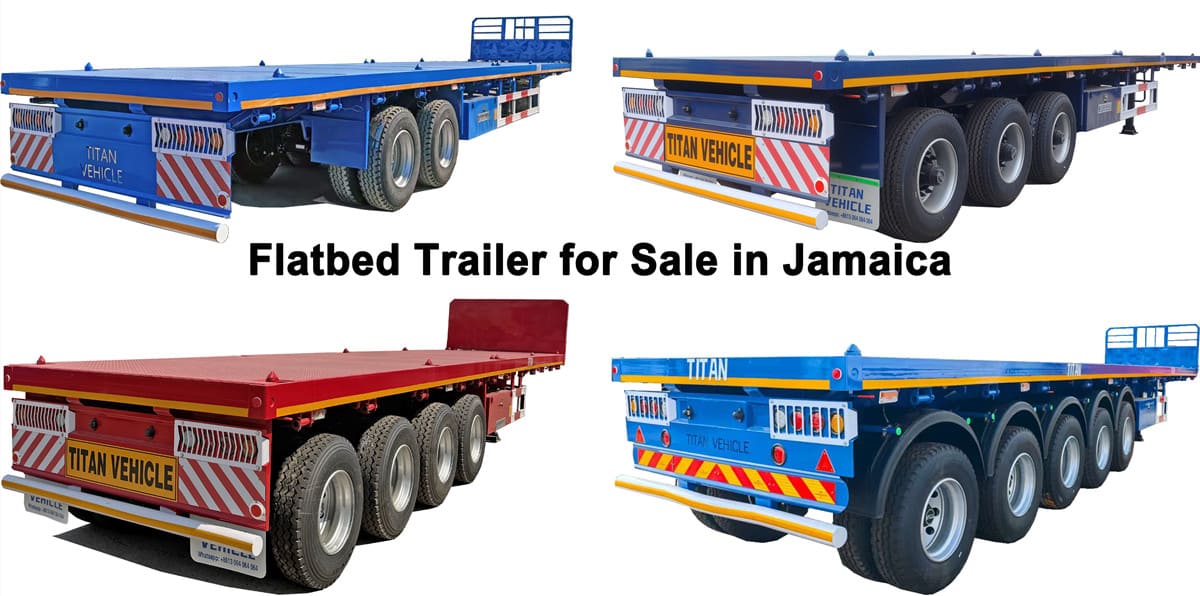 Flatbed Trailer for Sale in Jamaica
Flatbed Trailer for Container Logistics
Container transportation is one of the clearest applications for a flatbed trailer in Jamaica. A transporter may need to move containers between a port, warehouse, distribution center, construction site or customer's facility.
The open deck makes container positioning straightforward, while twist locks provide a dedicated securing mechanism. This is particularly useful for operators handling regular container movements.
A 40 foot flatbed trailer for sale can be configured to carry a standard 40-foot container, while suitable designs may also accommodate combinations involving 20-foot containers. The exact arrangement depends on the trailer frame and twist-lock layout.
The trailer should always be loaded according to the manufacturer's rated capacity and applicable Jamaican regulations. Jamaica's Road Traffic Regulations include requirements concerning maximum laden weight, axle loading and vehicle dimensions, and vehicles exceeding specified limits may require special permits.
This is particularly important when a customer is comparing a tri axle trailer for sale with a heavier multi-axle configuration. More axles can change how weight is distributed, but they do not automatically make any load legal or suitable for every road.
Flatbed Trailer for General Cargo
The second major advantage is general cargo flexibility.
Suppose a logistics company does not have a container shipment every day. Instead of leaving the trailer unused, an open flatbed can transport steel, timber, machinery or construction materials when no container is available.
This makes the flatbed semi trailer for sale attractive to companies that want one trailer to support multiple transport activities.
For example, a Jamaican transporter could use the same basic trailer for:
Container transportation → construction materials → steel products → machinery → agricultural equipment
The important requirement is that each cargo type must be within the trailer's rated capacity and must be properly secured.
Buying a Flatbed Trailer for Sale in Jamaica
When comparing a flatbed trailer for sale in Jamaica, buyers should look beyond the initial price. Total operating costs can be affected by axle components, tires, suspension, braking components, structural strength, spare-parts availability, and maintenance requirements.
A low purchase price is not necessarily the lowest long-term cost if the trailer uses difficult-to-source components or does not match the customer's existing tractor. The correct trailer is the one that matches the customer's actual transportation work rather than simply the trailer with the largest stated capacity.
A flatbed trailer in Jamaica can transport much more than shipping containers. Its open platform makes it suitable for containers, steel, timber, machinery, construction materials, agricultural equipment and other cargo that can be safely loaded and secured on an open deck.
The major reason companies choose a flatbed semi trailer is the freedom of the platform. There are no fixed side walls or roof restricting cargo dimensions in the same way as an enclosed trailer.
However, this flexibility does not mean every oversized or overweight load can simply be placed on a flatbed. Cargo must remain within the trailer's rated capacity, and road dimensions and axle-weight requirements must also be respected.
Containers are one of the most common applications for a flatbed trailer. A 40-foot container is particularly suitable for a 40 ft flatbed trailer for sale, because the trailer platform can be designed around the length and securing points of the container.
For a logistics company handling international cargo, this provides a simple connection between port transportation and inland delivery.
A flatbed with suitable twist locks can be used for container movements while maintaining the ability to carry other cargo when required.
Steel and Metal Products
Steel products are another important flatbed application.
Steel beams, steel pipes, structural steel, plates and other long products can be difficult to transport in an enclosed trailer because of their length and weight. A flatbed provides a practical open platform.
The operator must distribute the load correctly and use suitable chains, straps or other approved securing equipment. Heavy steel cargo should not be concentrated in a way that overloads a particular axle group.
Timber and Wood Products
Timber can also be transported on a flatbed trailer. Long timber products can be positioned along the platform, while suitable side restraints and tie-down equipment can be used to secure the load.
For Jamaican construction and building-material supply chains, this flexibility can make a flatbed useful for moving materials between suppliers, warehouses and job sites.
Construction Materials
Construction is another area where flatbed trailers are particularly useful.
A trailer may transport:
•Steel structures
•Pipes
•Cement-related equipment
•Scaffolding
•Building materials
•Construction machinery
•Generators
•Industrial equipment
The open platform allows loading equipment such as forklifts and cranes to access the cargo more easily.
Machinery and Equipment
Heavy machinery can also be transported when the trailer is appropriately configured.
Examples include:
•Small excavators
•Agricultural machinery
•Generators
•Compressors
•Industrial machines
•Road construction equipment
For heavier machinery, the buyer should consider whether a conventional flatbed is sufficient or whether a lowbed trailer would be more appropriate.
A flatbed is generally intended for cargo that can be safely positioned on the deck without requiring the low loading height of a specialized low-loader.
Agricultural Cargo
Jamaica's agricultural sector also creates demand for flexible transport equipment. Agricultural machinery, packaged products, timber and other non-containerized cargo can be moved on flatbed trailers when the dimensions and weight are appropriate.
This versatility is one reason a tri axle trailer for sale can be considered by operators who want one trailer for several types of work.
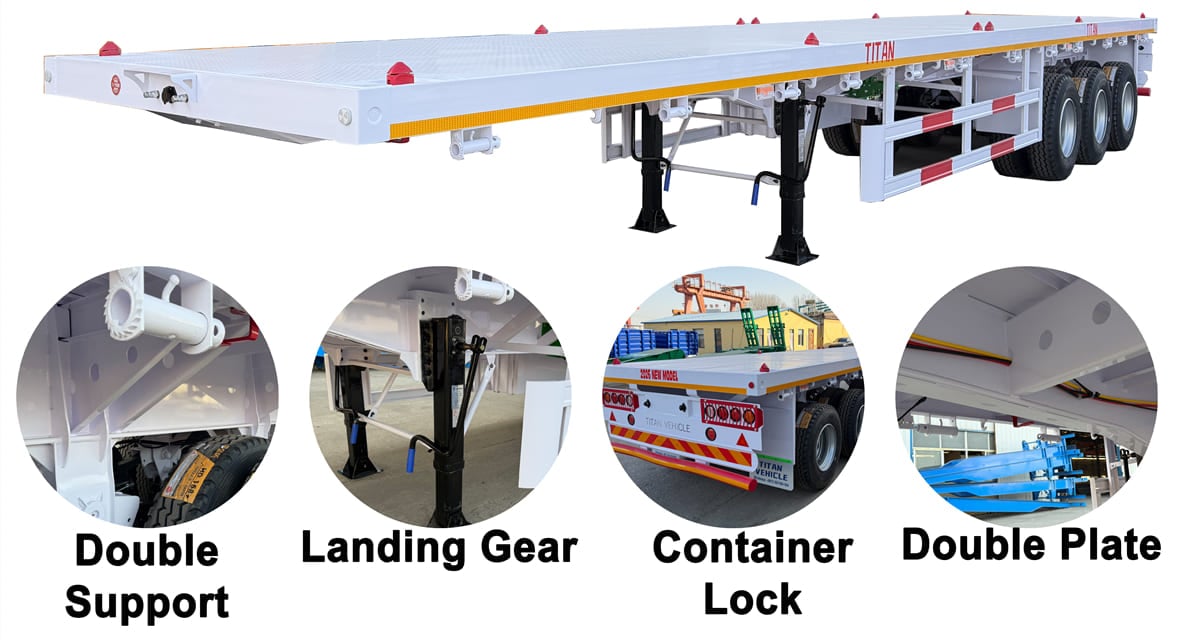 What Can a Flatbed Trailer Transport in Jamaica?
A 3 axle flatbed trailer is a practical configuration for many Jamaican container and general-cargo applications because three axles provide a useful balance between load distribution, trailer stability, maintenance requirements and operating flexibility. However, the correct axle configuration should always be selected according to the actual cargo weight and applicable Jamaican limits.
The tri axle trailer for sale is one of the most searched configurations in international trailer markets because it provides a straightforward solution for operators who need more load-support capability than a two-axle trailer while keeping the design relatively simple.
For Jamaican transport businesses, a three-axle flatbed can be particularly useful for container transportation and general cargo.
Why Three Axles?
Three axles allow the trailer's load to be distributed across a larger number of wheels and axle positions than a two-axle design.
This can provide advantages in:
•Load distribution
•Trailer stability
•Tire load distribution
•Container transportation
•Long-distance road operation
•General cargo flexibility
However, axle count should not be interpreted as a simple "more axles = more legal payload" formula.
Jamaican regulations specify maximum laden weights and axle loads, and the vehicle manufacturer and tire ratings also need to be respected. The regulations state that a vehicle must not exceed the applicable maximum axle or axle-unit load.
This means a customer looking for a tri axle trailer for sale should provide the intended cargo weight and tractor specification before finalizing the trailer.
3 Axle Flatbed for 40-Foot Containers
For a customer transporting 40-foot containers, a three-axle configuration combined with a suitable platform and twist-lock arrangement is a common solution.
The trailer's container locks should correspond to the intended container positions. The frame should also provide sufficient structural strength for the expected operating conditions.
A typical 40-foot flatbed can be built around a platform in the approximately 12-metre class, although exact dimensions vary by manufacturer and configuration.
The buyer should not select a trailer solely because the product title says "40 ft." The actual platform dimensions, wheelbase, twist-lock positions and overall vehicle dimensions should be confirmed before purchase.
3 Axle Configuration and Jamaican Regulations
Jamaica's current road-traffic framework is particularly relevant when importing a trailer.
The Road Traffic Regulations specify maximum dimensions and weight requirements, and the Ninth Schedule provides different limits according to vehicle type, axle count and configuration.
For example, the published schedule includes different maximum gross weights and dimensions depending on axle configuration. The regulations also emphasize that maximum allowances must not exceed the manufacturer's ratings and the specifications of the vehicle and tires.
For this reason, a trailer supplier should confirm the complete tractor-trailer combination rather than discussing the trailer independently.
A customer can provide:
Truck model + number of tractor axles + target cargo + container size + operating route
and the supplier can then recommend a corresponding trailer configuration.
This is an example configuration, not a universal specification. Actual axle ratings, dimensions, suspension, tires and braking equipment should be confirmed according to the final trailer design.
Mechanical Suspension vs Air Suspension
The suspension is another important consideration when purchasing a tri axle trailer for sale.
Mechanical suspension is widely used because of its relatively straightforward structure and maintenance characteristics. It can be suitable for general freight and container transportation.
Air suspension can provide different ride characteristics and may be selected when cargo protection, ride quality or specific operating requirements are important.
Neither suspension type should automatically be considered suitable for every Jamaican route. The decision should consider road conditions, cargo type, maintenance capability and operating costs.
Tire and Axle Selection
Tires are one of the most important operating components on a trailer.
A trailer designed for heavy cargo requires tires with appropriate load ratings. The tire specification must match the axle rating and expected operating load.
For a Jamaican operator, another practical question is tire availability. A common commercial tire size may be easier to replace locally or regionally than a specialized size.
The same principle applies to brake components, suspension parts and axle components. Before purchasing a 40 foot flatbed trailer for sale, it is useful to ask the supplier what replacement parts are available and whether commonly used brands can be supplied.
Flatbed Trailer Frame
The frame is the foundation of the trailer.
A quality flatbed semi trailer normally uses longitudinal beams and cross-members designed to withstand repeated loading, vibration and road forces.
For general cargo and container transportation, the structure should be designed around the expected cargo rather than simply maximizing steel thickness.
A stronger structure may improve durability, but excessive weight can reduce useful payload. Therefore, trailer design is a balance between structural strength and tare weight.
For customers operating in Jamaica, the supplier should also consider the expected road conditions and loading frequency.
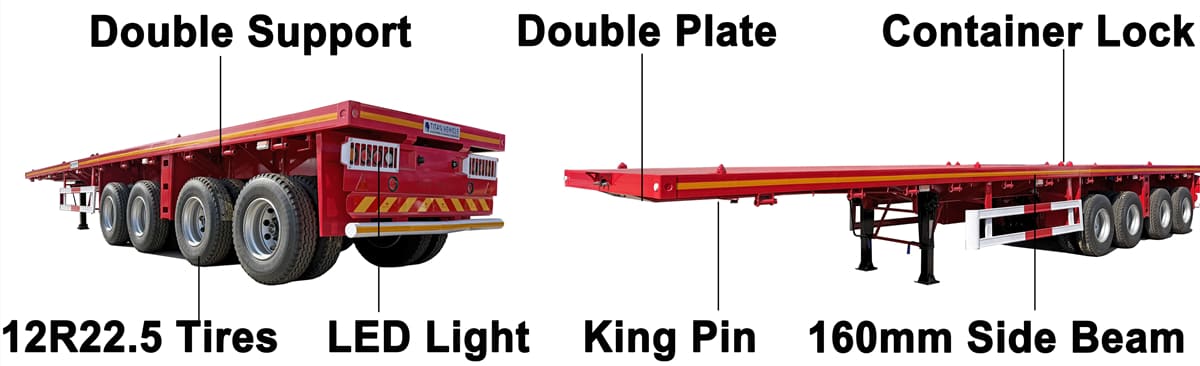
3 Axle Flatbed Trailer for Jamaican Road Transport
A flatbed semi trailer is especially valuable for Jamaican logistics companies because one open-platform trailer can support both container transportation and a wide range of general-cargo operations. A 40-foot model is particularly useful when 40-foot containers are a major part of the business, while twist locks and a properly designed platform provide the flexibility needed for mixed cargo operations.
The term flatbed semi trailer for sale generally refers to an open-deck semi-trailer designed to be connected to a tractor unit through a kingpin.
Unlike a box trailer, it does not have a permanent enclosed cargo compartment. This makes it suitable for cargo that is too long, too wide, too tall or otherwise inconvenient for enclosed transportation, provided that the load remains within applicable limits.
Flatbed Trailer for Container Transportation
For container logistics, the trailer needs more than just a flat steel platform. It needs appropriate container securing points.
Twist locks are designed to engage with the corner castings of compatible containers and help prevent the container from moving during transportation. For a 40-foot container, the twist-lock arrangement must match the trailer's design.
This is why a buyer searching for a 40 ft flatbed trailer for sale should ask for the exact container configuration instead of assuming every 40-foot flatbed has identical locking positions.
Flatbed for General Cargo
The second major advantage is that the trailer does not stop being useful when there is no container. The same platform can be used for steel, timber, machinery, pipes and other general cargo.
This can improve equipment utilization for a logistics company because the trailer can move different products according to available transport orders. The exact application depends on cargo weight and dimensions, but the principle is simple: the open deck provides greater cargo flexibility.
Why a 40-Foot Flatbed?
The 40 foot flatbed trailer for sale is closely associated with container transportation because the platform length is designed around a standard 40-foot container application.
However, buyers should understand that "40 foot" does not necessarily mean that every external trailer dimension is exactly 40 feet.
A trailer includes the kingpin area, landing gear, rear structure, suspension and other components. Therefore, the overall length of the complete vehicle combination will be different from the usable platform length.
This distinction is important when checking Jamaican road requirements.
Jamaica's Road Traffic Regulations specify dimensional requirements and provide for special permits where specified limits are exceeded.
Container Security
Cargo security is one of the most important considerations in container transportation.
Position and lock the container properly before the tractor-trailer leaves the loading area.
The twist locks should be inspected, and the driver or operator should confirm that the container is properly seated.
For general cargo, different securing methods may be required depending on the cargo.
Steel: chains, binders and suitable restraints
Timber: straps and side restraints
Machinery: chains, blocking and suitable restraints
Pipes: chains, straps and appropriate supports
Palletized goods: straps and other cargo-securing equipment
The correct securing method depends on the cargo's size, weight, center of gravity and packaging.
Flatbed Trailer and Jamaican Port Logistics
A flatbed trailer can be useful for the movement of containers between Jamaican ports and inland destinations.
For an importer, the transportation process may involve:
Container arrival → port handling → tractor and flatbed pickup → inland transportation → warehouse or customer
The flatbed's open structure makes it straightforward to connect container handling operations with road transportation.
This is one reason the 40 ft flatbed trailer for sale remains relevant for logistics companies serving containerized cargo.
Overall Vehicle Dimensions Matter
One important point for Jamaican operators is that trailer dimensions cannot be considered separately from the tractor.
The applicable regulations concern the motor vehicle or vehicle combination, and special permit requirements can apply when specified dimensions or loads are exceeded.
Therefore, before importing a flatbed trailer, customers should provide the supplier with the tractor's:
•Brand and model
•Number of axles
•Fifth-wheel height
•Kingpin specification
•Tire size
•Intended container size
•Target cargo weight
This information allows the supplier to design or recommend a trailer that is compatible with the tractor.
Maintenance and Long-Term Operation
A flatbed trailer has fewer enclosed body components than a box trailer, but that does not mean maintenance can be ignored.
Important inspection areas include:
•Axle and suspension components
•Tires
•Brake chambers
•Brake lines
•Kingpin
•Landing gear
•Twist locks
•Frame welds
•Lighting system
•Electrical connections
Regular inspection is particularly important for trailers used frequently for heavy cargo.
A fleet operator should establish a routine inspection process rather than waiting until a component fails.
Flatbed Trailer Purchase Considerations
When looking for a flatbed semi trailer for sale in Jamaica, price is only one part of the purchasing decision.
A better comparison should include:
Purchase price + shipping + configuration + spare parts + tires + maintenance + expected service life
A slightly different axle brand or suspension system can also affect long-term maintenance.
For this reason, a supplier should provide a complete quotation rather than only giving a trailer base price.
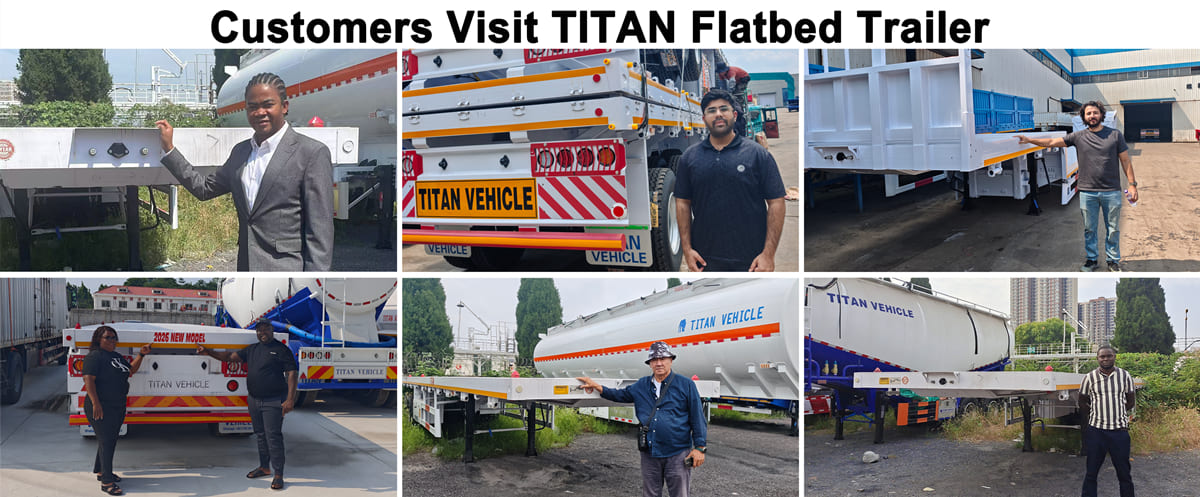 Flatbed Semi Trailer for Container and General Cargo
The right flatbed trailer for Jamaica should be selected according to cargo type, cargo weight, container size, tractor configuration, axle loading, road dimensions, maintenance requirements and local operating conditions. For customers mainly transporting 40-foot containers and general cargo, a 40-foot three-axle flatbed is a practical configuration to evaluate, but the final specification should be confirmed against the complete vehicle combination and Jamaican regulations.
Buying a flatbed trailer for sale in Jamaica is not simply a matter of choosing 40 feet or three axles.
Two trailers can both be advertised as "40 ft flatbed trailers" while having different axle ratings, frame designs, suspension systems, tires, kingpins and container-lock arrangements.
The correct specification depends on how the trailer will actually be used.
Start With the Cargo
The first question should be:
What do you transport most often?
If the answer is 40-foot containers, the buyer should focus on a 40-foot platform with suitable container twist locks.
If the business mainly transports steel, timber and construction materials, the open deck should be designed for general cargo securing.
If the customer regularly moves heavy machinery, a specialized heavy-duty flatbed or lowbed may be more appropriate.
This is more useful than selecting a trailer based only on the phrase 40 foot flatbed trailer for sale.
Consider the Tractor
The trailer must work with the tractor.
Important compatibility factors include:
•Fifth-wheel height
•Kingpin size
•Tractor axle configuration
•Electrical connection
•Brake connection
•Tire size
•Suspension
•Intended cargo weight
For example, a trailer with a 3.5-inch kingpin should not simply be connected to a tractor configured for a different kingpin specification.
The supplier should verify compatibility before production.
Choose the Correct Axle Configuration
A tri axle trailer for sale is often considered when the customer wants a balance between load distribution and operating simplicity. Three axles can be suitable for container and general cargo applications, but the final decision depends on the cargo weight and legal axle-load requirements.
Jamaica's regulations include specific requirements concerning axle loads, gross weight and vehicle dimensions. The regulations also state that maximum allowances must not exceed the manufacturer's ratings and the specifications of the vehicle and tires.
Therefore, a supplier should not simply promise a certain payload without considering the entire vehicle combination.
Check Platform Dimensions
For a customer searching for a 40 ft flatbed trailer for sale, the usable platform length is important. But the overall vehicle length is equally important.
The customer should ask for: Platform length + overall trailer length + trailer width + trailer height + tractor-trailer overall dimensions
This prevents confusion between "40-foot platform" and "40-foot total vehicle." Jamaica's published requirements include dimensional limits and special permit provisions for vehicles exceeding specified limits.
Check Weight Distribution
Weight distribution is just as important as total cargo weight. Position a container or piece of machinery so the trailer and tractor do not exceed applicable axle loads. The Road Traffic Act establishes requirements concerning maximum laden weight and axle loads, and authorities can weigh vehicles to determine whether limits have been exceeded.
For commercial operators, this means that payload planning should include: Cargo weight + trailer tare weight + tractor weight + axle distribution rather than looking only at the cargo weight.
Select the Right Suspension
Mechanical suspension can be attractive for operators who prioritize straightforward maintenance and conventional trailer construction. Air suspension may be considered where ride quality and specific cargo requirements are more important.
The choice should be made according to the actual operating environment. A Jamaican customer should also consider whether replacement suspension parts can be obtained efficiently.
Check Brake System
The braking system should match the trailer's axle configuration and intended operating weight. Air brakes are common on heavy commercial trailers. The supplier should provide information about the brake valves, chambers and other components used.
For fleet operators, component availability matters. A braking component that is difficult to source can increase downtime.
Check Container Twist Locks
For container transportation, twist locks are critical.
A buyer should confirm:
•Number of twist locks
•Locking positions
•20-foot container compatibility
•40-foot container compatibility
•Fixed or removable arrangement
•Lock condition and material
•Ease of inspection and maintenance
A flatbed without the correct container-lock configuration may not meet the customer's actual container transportation needs.
Check Frame Quality
The frame should be evaluated based on the intended cargo and operating conditions. A trailer that carries containers regularly requires a structure capable of handling repeated loading cycles.
General cargo may create different stress patterns because cargo can have different weight distributions. The supplier should therefore confirm the main-beam and cross-member design according to the requested application.
Consider Tires
Tires influence operating cost, safety and availability. For a 40 ft flatbed trailer for sale, the buyer should ask:
What tire size is used? What is the load rating? What brands are available? Are replacement tires easy to source? A common commercial tire specification may be more convenient for a fleet than a specialized tire that requires long-distance procurement.
Consider Spare Parts
A trailer is a long-term working asset. The purchase decision should therefore include spare-parts support.
Useful spare-parts categories include:
•Brake chambers
•Brake valves
•Bearings
•Suspension components
•Leaf springs
•Bushings
•Landing gear components
•Twist locks
•Lights
•Tires
A supplier capable of providing replacement parts can reduce downtime after the trailer enters service.
Check Local Road Requirements
This is one of the most important steps for a Jamaican buyer.
Jamaica's Road Traffic Regulations contain requirements concerning vehicle dimensions, maximum laden weight and axle loads. Special permits may apply when vehicles exceed specified limits or carry certain indivisible loads.
The Jamaica Information Service notes that special permits are required for vehicles that do not comply with specified dimensions and for trucks, tractors and trailers exceeding 13 metres, among other cases.
Therefore, customers should verify the current requirements before ordering a trailer, especially if the intended configuration involves unusual length, width, height or weight.
Why Buy a 40 Foot Flatbed Trailer for Sale for Jamaica?
A 40 foot flatbed trailer for sale can provide several practical advantages for Jamaican transport operators.
First, it is suitable for container logistics. A 40-foot platform is naturally aligned with the transportation of standard 40-foot containers when the trailer is correctly equipped with container locks.
Second, the open platform allows the trailer to be used for general cargo.
Third, a three-axle configuration can provide a useful load-distribution arrangement for many commercial transport applications.
Fourth, the relatively simple open structure can make loading and unloading easier for cargo that does not require an enclosed body.
Most importantly, a flatbed trailer can support multiple business models. A logistics company can use it for containers. A construction company can use it for steel and machinery. A building-material supplier can use it for pipes and structural materials. A general transport company can use it for different cargo depending on customer demand. This flexibility is one of the main reasons the flatbed semi trailer for sale remains an important trailer category.
Flatbed Trailer Maintenance in Jamaica
A properly maintained flatbed trailer can provide long-term service, but maintenance should begin from the first day of operation. The tires should be inspected regularly for pressure, wear and damage.
The brake system should be checked to ensure that chambers, hoses and valves remain in good condition. The suspension should be inspected for worn components, damaged springs, loose fasteners and abnormal movement.
The kingpin and fifth-wheel connection should also be inspected because they are critical connection points between tractor and trailer. For container operations, twist locks should be checked regularly. A damaged or improperly functioning twist lock should not be ignored because the container depends on these securing points.
The frame should also be inspected for cracks, deformation or other signs of abnormal stress. For a Jamaican fleet, preventive maintenance can be particularly valuable because trailer downtime affects both the trailer itself and the tractor assigned to it.
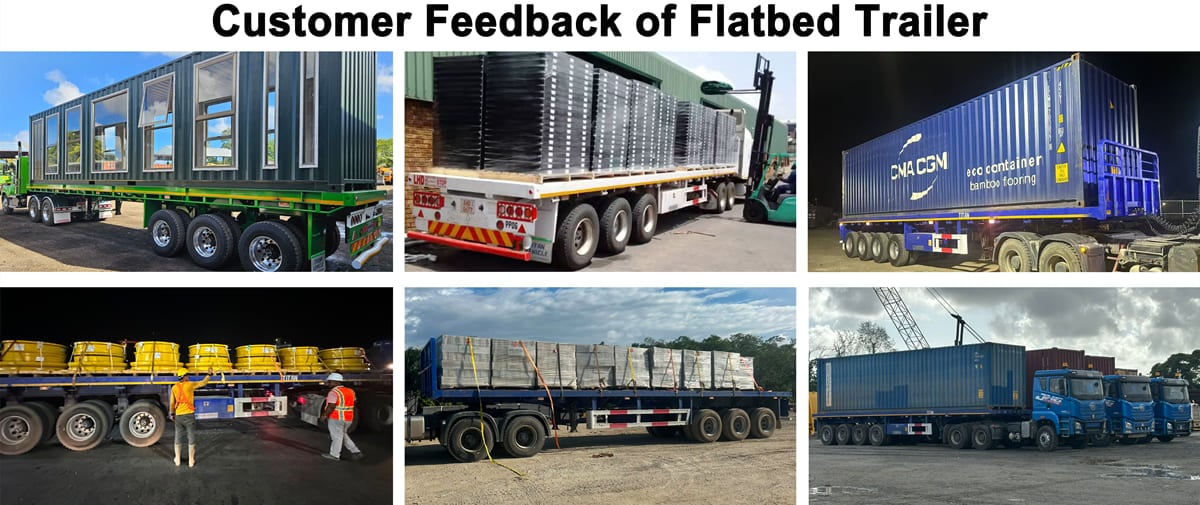
How to Choose a Flatbed Trailer in Jamaica
Shandong TITAN Vehicle Co., Ltd.
Wehcat/Whatsapp: +86 18660159635
Tel.: +86531-88997626

BOSS WeChat

Boss Whatsapp