
Since 2014
Ten Years of Reliability Your Trusted Partner
Ten Years of Reliability Your Trusted Partner
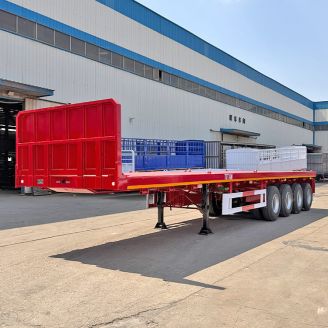
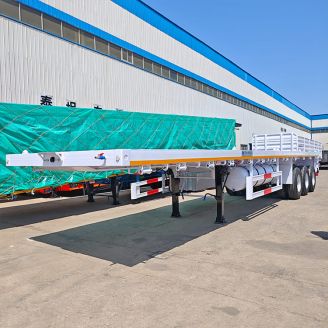
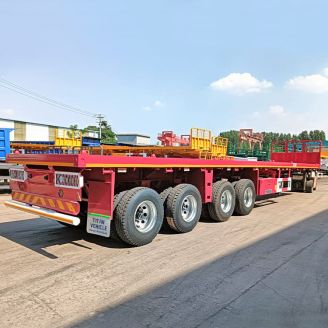
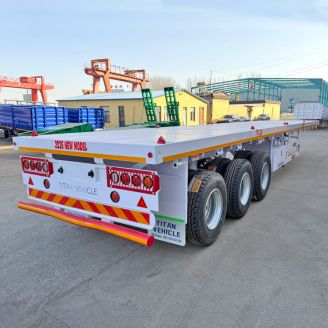
For buyers in Tanzania, the right flatbed trailer is determined less by its name than by what it must carry, how the cargo is loaded, and how much structural margin is needed for repeated commercial transport. For standard container and general cargo operations, a 40-foot-class platform with a reinforced main beam can be a practical choice. For heavier work, moving from a 3-axle configuration to a 4-axle configuration provides a different load-handling option rather than simply making the trailer “better.”
For Tanzanian buyers comparing flatbed trailer for sale options, the most important question is therefore not simply, “What is the cheapest trailer?” It is, “Which configuration matches the actual cargo weight and loading pattern I will use?” A trailer with a stronger structure than necessary may increase purchase cost, while an under specified trailer can create much greater operating problems later.
A flatbed trailer is a semi-trailer with an open, level cargo deck rather than an enclosed body. Its design allows cargo to be loaded from the rear, from the side, or from above, depending on the equipment available at the loading site.
The flat deck is the reason this type of flatbed trailer for sale is widely used for cargo that does not require an enclosed box. Containers, steel products, machinery, construction materials, palletized goods, and other large or awkward loads can be transported without needing the cargo body of a box trailer.
1.1 Why Is It Called a Flatbed Trailer For Sale?
It is called a flatbed trailer for sale because the cargo platform is essentially a flat structural deck. There are no tall side walls surrounding the main cargo area, so the available loading space remains open.
That simple structure creates an important operational advantage. A forklift can approach from different directions when site conditions permit, a crane can lower heavy cargo directly onto the deck, and cargo with unusual dimensions does not need to fit through a fixed enclosed opening.
For a Tanzanian transport company, this flexibility matters when the flatbed trailer prices is expected to serve multiple cargo types instead of one specialized application. A single open deck can support both container transport and general heavy cargo work, provided the cargo is properly secured and the trailer configuration is suitable for the load.
1.2 What Can You Use a Flatbed Trailer For?
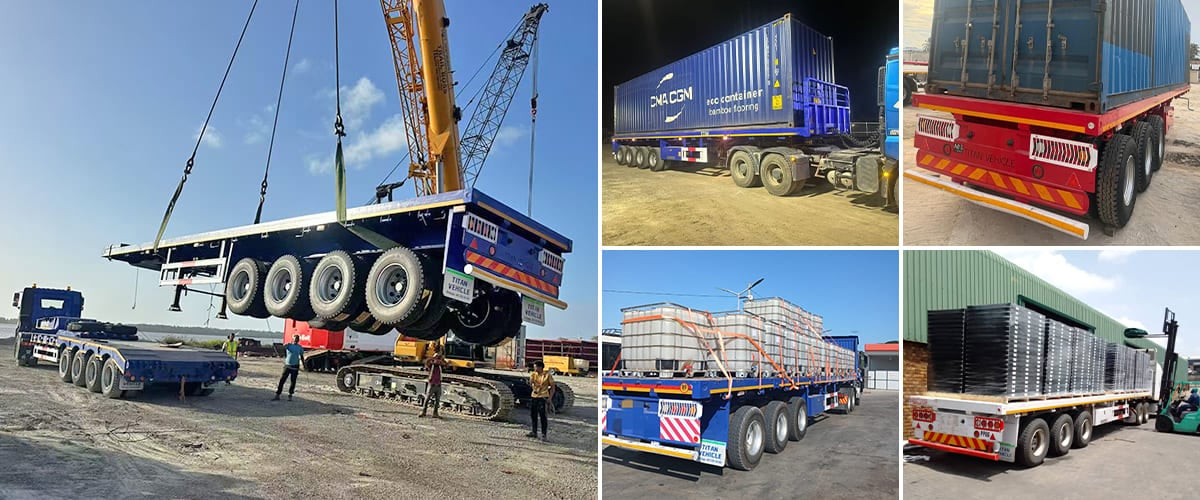
A flatbed can be used for container transport and for many forms of general cargo that need an open loading platform. The most direct application of the models discussed here is container transport because the trailers are equipped with 12 container locks and are designed around a 12,500 mm x 2,500 mm x 1,530 mm platform dimension.
The trailer can also be useful for cargo such as structural materials, industrial components, machinery, and other goods that can be safely placed and secured on an open deck. The exact suitability depends on cargo weight, dimensions, support points, center of gravity, and the way the cargo is secured.
This is especially relevant when selecting a flatbed trailer for sale for mixed fleet operations. A buyer may initially purchase the trailer for containers but later use the same equipment for non-container cargo. The open deck provides flexibility, but that flexibility does not remove the need to match the load to the structural and axle configuration.
1.3 Flatbed vs. Lowbed: Which One Fits?
A flatbed is generally the more appropriate choice when the cargo can be transported safely on a relatively level deck and does not require a specialized low platform. A lowbed is designed around a lower deck concept and is more suitable for oversized or high-profile machinery where overall transport height becomes a major concern.
The difference is therefore functional rather than purely visual. A flatbed focuses on open, flexible cargo loading, while a lowbed is designed around the transport requirements of large or tall heavy equipment.
For a Tanzanian buyer deciding between the two, the first question should be the cargo itself. If the regular work is containers and general cargo, a flatbed configuration is often the more direct solution. If the work centers on excavators, construction machinery, or loads where deck height is a critical constraint, a lowbed may be more suitable.
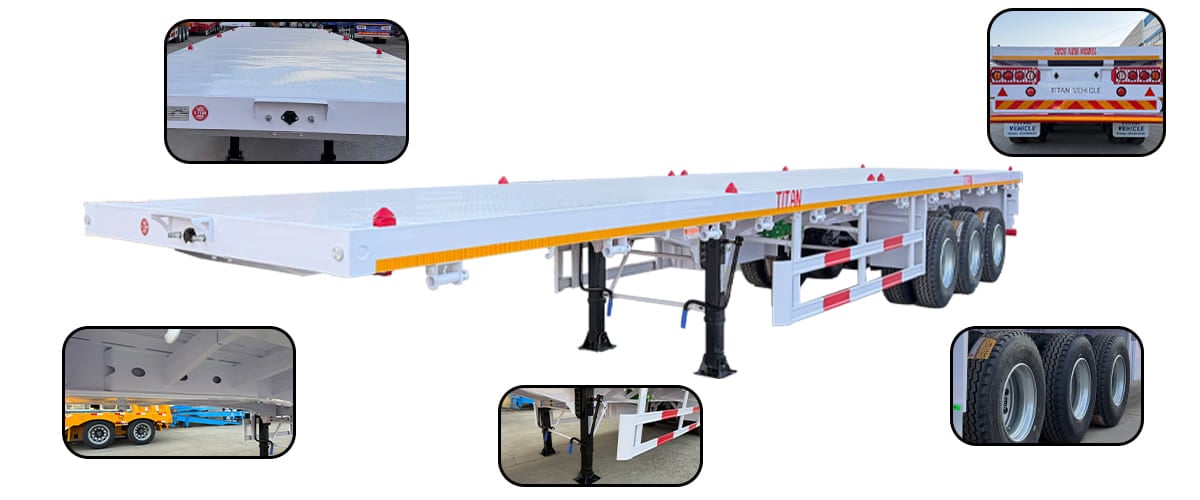 Flatbed Trailer for Sale Prices in Tanzania
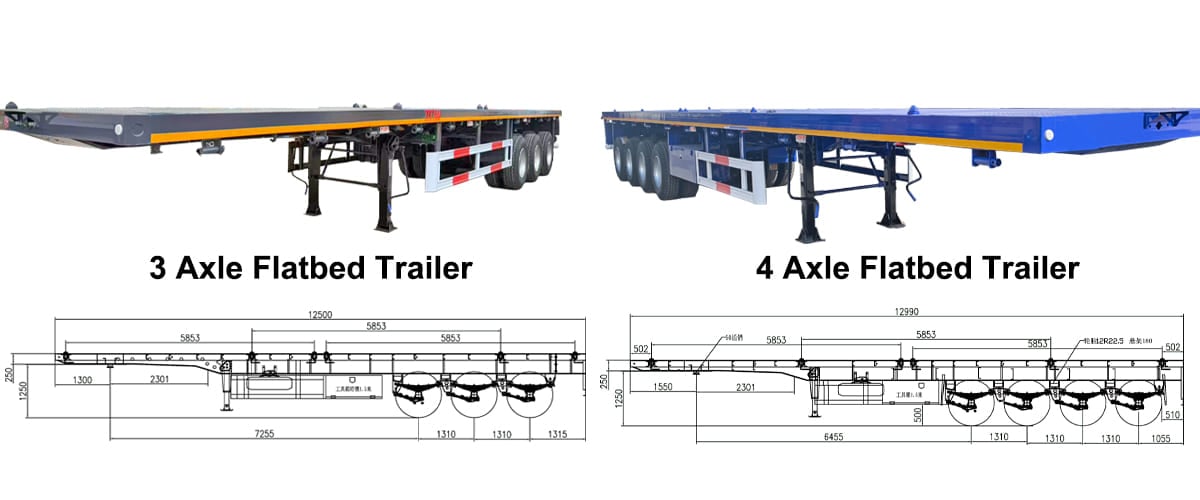
The supplied flatbed trailer prices configurations use an overall dimension of 12,500 mm x 2,500 mm x 1,530 mm. In practical terms, that is a 40-foot-class semi-trailer platform commonly associated with container transport.
The important point is that “flatbed trailer size” does not describe only length. Buyers should consider overall length, deck width, deck height, axle arrangement, and the relationship between cargo dimensions and the trailer’s locking and support points.
The two configurations provided here use the same basic overall dimensions, but they are built for different load levels.
2.1 How Big Is a Semi-Trailer in Feet?
A flatbed trailer for sale used for container transport is commonly discussed in feet because container sizes are also described that way. The trailers discussed here have an overall length of 12,500 mm, which is approximately 41 feet from one end of the trailer to the other. The product is also described as a 40-foot-class flatbed for container applications.
This distinction is worth understanding when comparing online listings. A seller may use “40 ft” to describe the container application while the actual overall trailer dimension is measured in millimeters and is slightly longer than 40 feet.
For procurement work, the millimeter dimensions are more useful than the rounded marketing description. A buyer in Tanzania should request the exact drawing or technical specification when confirming compatibility with the intended container or cargo operation.
2.2 How Much Weight Can a Flatbed Carry?
The supplied 3-axle configuration is specified around a 60-ton load requirement, while the 4-axle configuration is specified around an 80-ton load requirement. These figures should be treated as the intended rated load levels of the two configurations rather than as a general statement that every flatbed trailer prices can automatically carry those weights.
A flatbed trailer's actual safe operating capability depends on the complete vehicle configuration, including the frame, axles, suspension, brakes, tires, kingpin, tractor combination, cargo distribution, and operating conditions. That is why a buyer should not compare capacity figures in isolation.
2.3 What Determines Real Carrying Capacity?
Real carrying capacity is determined by the complete load-bearing system, not by one specification. The main beam transfers bending loads through the frame, the cross members distribute cargo forces, the suspension transfers loads to the axles, and the tires and brakes have to handle the resulting road forces.
Cargo distribution is equally important. A load concentrated in one area can create a very different structural demand from a load distributed evenly across the deck. The same nominal cargo weight can therefore produce different operating conditions depending on its center of gravity and support points.
This is why the quoted 60-ton and 80-ton configurations should be selected according to actual operating requirements rather than simply choosing the larger number. Buyers looking for flatbed trailer prices should compare capacity together with structural design instead of evaluating price per advertised ton alone.
 Flatbed Trailer for Sale Prices in Tanzania
The key engineering question is not simply whether a flatbed trailer for sale has a flat deck. It is whether the frame can repeatedly handle the forces generated by heavy cargo, braking, road movement, loading, unloading, and uneven weight distribution.
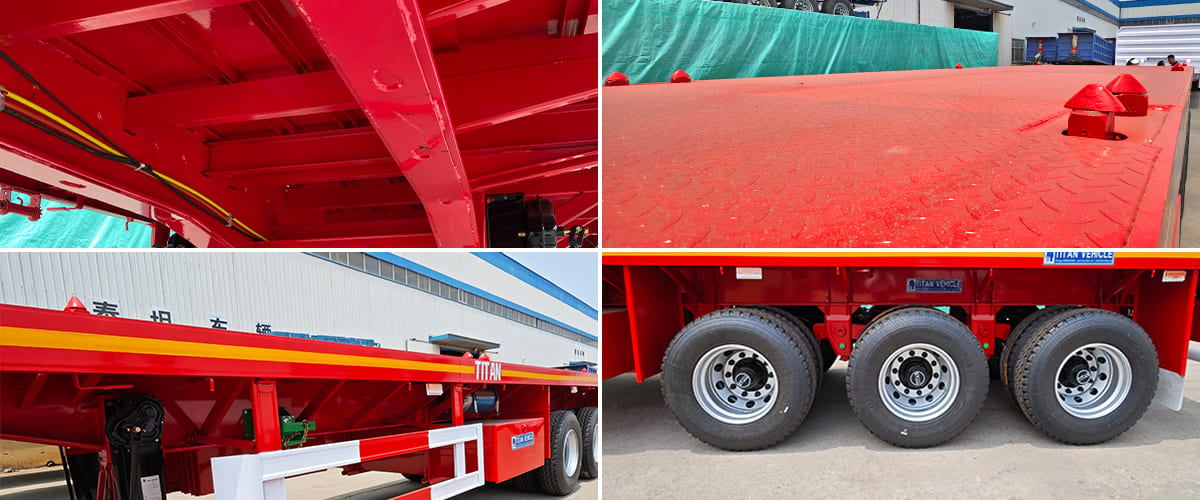
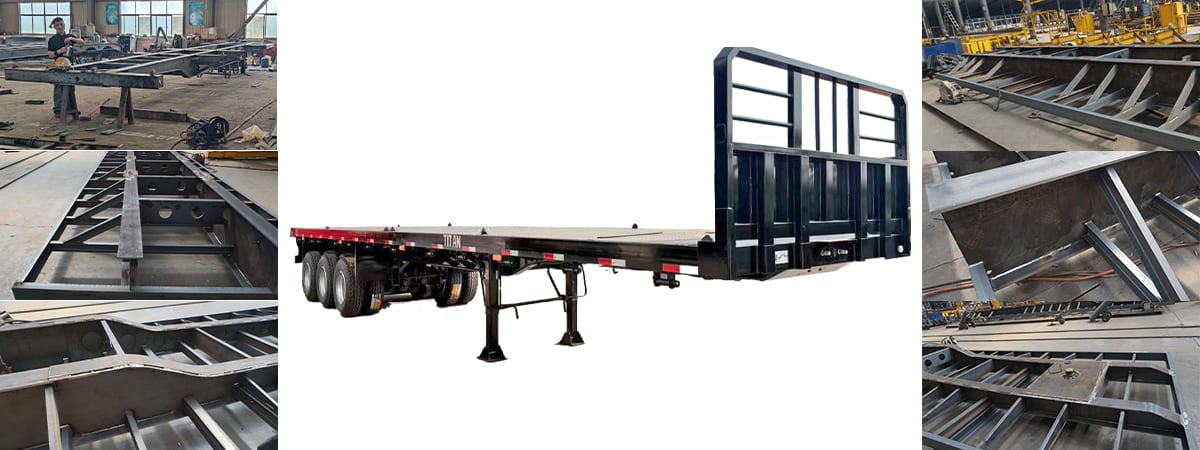
These supplied trailers use Q345 steel for the main longitudinal beams and incorporate reinforced structural details in several areas. The frame is therefore designed as a load-bearing system, not just a flat sheet placed over a chassis.
3.1 Main Beam Design
The main beam height on both configurations is 500 mm, but the flange and web thicknesses distinguish the two versions. The 3-axle model uses a 14 mm upper flange, 8 mm web, and 16 mm lower flange, while the 4-axle model uses 20 mm upper and lower flanges and a 10 mm web.
This difference matters because the longitudinal beam is one of the most important structural components in a semi-trailer. The beam has to resist bending while the cargo weight is transferred through the deck and supported by the chassis and suspension.
Keeping the same beam height while increasing the flange and web thickness allows the 4-axle version to use substantially heavier structural members. The result is not just a nominally higher capacity label; it is a different frame specification intended for a higher load requirement.
For Tanzania buyers comparing flatbed trailer prices, this is an important purchasing lesson. Two trailers may have the same overall length and width and still have very different production costs because their internal structural steel is not the same.
3.2 Cross Members and Side Structure
The 3-axle configuration uses 16# channel steel side beams, while the 4-axle configuration uses 18# channel steel side beams. Both use 10# channel steel cross members and a 3 mm checkered plate deck.
The cross members connect the primary longitudinal structure and help distribute cargo loads across the trailer width. The deck plate then provides the working surface between the structural members.
The 3 mm checkered plate is also practical from a working perspective because the patterned surface provides a more functional cargo platform than a smooth sheet. However, the deck plate should not be viewed as the primary reason for the trailer's capacity. The major structural contribution comes from the main beams, cross members, side members, suspension, and axle system.
The 4-axle version's stronger side members complement its heavier main beam structure. This is one of the reasons it should be evaluated as a complete heavy duty configuration instead of being treated as the 3-axle model with one additional axle.
3.3 Reinforcement Where the Frame Needs It
The supplied design includes multiple beam reinforcement points, including reinforcement around the gooseneck upright plates and lower flange, together with diagonal supports.
These details are important because stress is not distributed equally across every part of a flatbed trailer for sale. Areas around structural transitions and connection points can experience concentrated forces, especially when the trailer is loaded, unloaded, braked, or moving over uneven ground.
The additional reinforcement is therefore part of the design logic behind a heavy duty flatbed trailer. It supports the main beam system and helps maintain structural continuity where different components interact.
The suspension is specified as 8 mm thick, and the flatbed trailer prices uses a 70 mm center pin. These details are not the first specifications most buyers notice, but they matter when evaluating the completeness of a flatbed trailer for sale specification.
3.4 Axles, Brakes, Tires, and Suspension
The supplied 3-axle configuration uses TITAN 13-ton axles with 16-ton brake linings, 12 TITAN 12R22.5 tires, and 12 900 x 22.5 steel rims. It also uses 10 pieces of 13 mm thick leaf springs.
The supplied 4-axle specification is identified as a 4-axle flatbed configuration, but its component description also states three TITAN 13-ton axles. Because the supplied information contains this internal inconsistency, the exact axle quantity for the 4-axle build should be confirmed on the final technical drawing and order specification before purchase.
That clarification is important for a B2B buyer because axle count affects not only capacity but also load distribution and the compatibility of the complete flatbed trailer prices system. A purchase specification should always identify the final number and rating of the actual axles installed.
Braking is another key consideration. The default specification uses a WABCO brake valve, while LED electronic lighting and waterproof electrical cables are included. These components support the trailer's braking and electrical systems, but buyers should still verify the final configuration against the tractor and operating requirements before delivery.
3.5 Container Locks and Practical Loading
Both configurations include 12 container locks, which makes the trailer particularly relevant to container transport. The locks provide designated securing points for compatible container operations instead of requiring the buyer to improvise a securing system on a general flat deck.
The flatbed trailer prices also includes two spare-tire racks and one toolbox, which are practical fleet-use features rather than headline specifications. They may seem secondary during the initial purchase, but these details become useful during routine transport operations.
The kingpin is specified as a 2-inch (50 mm) assembled kingpin. Because the kingpin forms the connection between the semi-trailer and tractor fifth wheel, buyers should confirm tractor compatibility before finalizing the purchase.
 Flatbed Trailer for Sale Prices in Tanzania
The best flatbed trailer is the one that matches the cargo requirement without forcing the buyer to pay for a heavier configuration that is not needed. For a fleet centered on regular container and general cargo transport within a 60-ton requirement, the 3-axle version is the more direct choice. For applications requiring the supplied 80-ton configuration, the 4-axle version offers the stronger structural specification.
The choice should therefore begin with actual work rather than with advertised flatbed trailer prices.
4.1 3-Axle vs. 4-Axle
The most useful comparison is the difference in structural and load configuration. Both trailers have the same overall dimensions, but the 4-axle model uses heavier main beam flanges and web material and a larger side channel section.
| Feature | 3-Axle Flatbed Trailer | 4-Axle Flatbed Trailer |
|---|---|---|
| Overall dimension | 12,500 × 2,500 × 1,530 mm | |
| Stated load requirement | 60 tons | 80 tons |
| Main beam material | Q345 | |
| Main beam height | 500 mm | |
| Upper flange | 14 mm | 20 mm |
| Web | 8 mm | 10 mm |
| Lower flange | 16 mm | 20 mm |
| Side beam | 16# channel steel | 18# channel steel |
| Deck | 3 mm checkered plate | |
| Container locks | 12 | |
| Kingpin | 2 in. (50 mm) assembled | |
| Paint process | Powder coating and baking | |
The table shows why the 4-axle version should not be understood simply as a longer version or a basic extension of the 3-axle model. The overall dimensions are unchanged, but key structural members are upgraded.
For a buyer looking at flatbed trailer prices, that difference provides a much better basis for comparison than asking only why one trailer costs more than another. If the higher price is associated with heavier structural material and a higher load configuration, the comparison should be made against the actual operating requirement.
4.2 When the 3-Axle Version Makes More Sense
The 3-axle flatbed trailer for sale is a logical choice when the normal cargo requirement is within the stated 60-ton configuration and the buyer wants a heavy-duty trailer without moving into the larger structural specification.
Its 500 mm Q345 main beam, reinforced frame, 12 container locks, 13-ton TITAN axles, 12R22.5 tires, and supporting suspension system make it suitable for operations where the cargo requirement does not justify the heavier 4-axle specification.
This can be particularly relevant for a fleet that needs a standard container platform with strong structural construction but also wants to control capital expenditure across multiple trailer purchases.
The important point is not that a 3-axleflatbed trailer prices is universally “better” or “worse.” It is better suited to a defined load requirement. Selecting it because the purchase price is lower, however, is not enough. The expected cargo weight and distribution should still be confirmed first.
4.3 When the 4-Axle Version Makes More Sense
The 4-axle configuration is intended for a higher 80-ton load requirement and uses heavier beam construction to match that objective.
The increased flange and web thicknesses are particularly significant. The upper flange rises from 14 mm to 20 mm, the web from 8 mm to 10 mm, and the lower flange from 16 mm to 20 mm. The side beam also increases from 16# to 18# channel steel.
These are substantial changes in structural specification. For buyers who expect heavier loads or want the supplied high-capacity configuration, the 4-axle model provides a more appropriate starting point.
However, the 4-axle model should not be selected simply because “more axles means better.” A larger configuration can involve higher purchase and operating requirements. The correct question is whether the additional structure and capacity are justified by the cargo the fleet actually transports.
4.4 How Should Buyers Evaluate Flatbed Trailer Prices?
The correct way to evaluate flatbed trailer prices is to compare the complete specification rather than the headline price.
Start with the main beam dimensions and steel grade. Then compare flange and web thickness, side beam size, cross members, axles, tires, suspension, brake components, container locks, electrical equipment, and reinforcement. Finally, check whether the stated capacity aligns with the actual structural configuration.
A Tanzania buyer should also distinguish between the base trailer price and the cost of additional specifications. Options such as customized locking arrangements, different axle brands, different tire brands, special deck layouts, or other engineering changes can affect the final quotation.
For a Tanzania procurement project, requesting a clear technical quotation is therefore more useful than asking for a generic “40 foot flatbed trailer prices.” The supplier should identify the exact configuration, so the buyer can compare like with like.
 Flatbed Trailer for Sale Prices in Tanzania
Loading a flatbed trailer correctly begins with understanding the cargo and securing system rather than simply putting the heaviest item wherever there is space. The load should be positioned so that its weight is distributed appropriately across the trailer and the cargo can be securely restrained.
The purchasing process follows the same principle: define the actual application first, then select the trailer configuration.
5.1 How to Load a Flatbed Trailer
A flatbed should be loaded according to the cargo's dimensions, weight, center of gravity, and securing requirements. Heavy cargo should not be positioned arbitrarily at one end of the deck because uneven weight distribution can affect trailer stability and axle loading.
For containers, the process is more structured because the trailer includes 12 container locks designed for container securing. The container should be positioned correctly over the locking points and checked to ensure that all required locking devices engage properly before transport.
For general cargo, the securing method depends on the cargo itself. Chains, straps, blocks, or other appropriate restraints may be required, but the specific method should be determined by the cargo and operating conditions rather than assumed from the flatbed trailer for sale alone.
The flat deck makes loading flexible, but that does not mean every cargo can be loaded from every direction without planning. Forklift access, crane clearance, cargo length, and available working space at the loading location all affect the practical loading method.
5.2 What Should Tanzanian Buyers Check Before Ordering?
The first check should be the intended cargo and actual maximum operating weight. A buyer who regularly handles standard container work may have very different requirements from one who transports heavy industrial components.
The second check should be the flatbed trailer prices' structural specification. For this product, the difference between the 3-axle and 4-axle models is not limited to axle count. The beam thickness and side structure also change, so the buyer should confirm which version is actually quoted.
The third check should be the tractor-trailer compatibility. The supplied trailer uses a 50 mm kingpin, so the tractor's fifth-wheel system must be compatible. Brake and electrical systems should also be matched with the tractor configuration used by the fleet.
A fourth check should be the final technical document. This is particularly important because the supplied description for the 4-axle model contains a conflicting axle reference. The order confirmation should clearly state the final axle quantity, axle rating, braking arrangement, tire specification, and other critical components before production begins.
5.3 What Makes One Supplier Better Than Another?
A better supplier is not simply the company offering the lowest flatbed trailer for sale price. A better supplier is one that can clearly explain the frame design, provide a consistent specification, and build the trailer according to the agreed configuration.
For B2B buyers, documentation and specification clarity are especially important. The customer should be able to identify the exact main beam size, steel material, deck structure, axle configuration, tire size, kingpin, braking system, container locks, and electrical arrangement.
Manufacturing details can also matter. These trailers use powder coating and baking as the stated paint process, together with waterproof electrical cables. These are part of the supplied specification and should remain consistent with the confirmed production order.
The buying process should end with an agreed technical specification rather than a vague product description. That is the safest way to compare quotations and prevent misunderstandings between supplier and buyer.
5.4 Is a Flatbed Trailer a Good Choice for Tanzania?
A flatbed trailer for sale can be a practical option in Tanzania when the fleet's work involves containers and general cargo that can be transported safely on an open platform. The product's 40-foot-class configuration and container-lock system make it particularly relevant to this type of work.
The key is application matching. A flatbed trailer prices is not automatically the right trailer for every heavy load, and a high-capacity model does not automatically solve every transport problem. The cargo must still fit the deck, the weight must match the chosen configuration, and the loading and securing method must be appropriate.
For a Tanzania-based fleet, buying several trailers for different applications may eventually make more sense than trying to make one trailer perform every task. A standard 3-axle configuration can cover one load range, while a heavier 4-axle configuration can address another.
Flatbed Trailer for Sale Prices in Tanzania
6.1 What are flatbed trailers?
A flatbed trailer is an open semi-trailer with a flat cargo deck and no fixed enclosed body. It is commonly used for containers, machinery, steel products, construction materials, and other cargo that can be loaded onto an open platform.
6.2 What is the difference between a lowbed and a flatbed?
A flatbed provides a relatively level open platform for general cargo and container transport. A lowbed is designed around a lower deck arrangement and is better suited to certain oversized or high-profile heavy equipment applications where transport height is a major concern.
6.3 How much weight can a flatbed trailer carry?
The supplied 3-axle configuration is specified around a 60-ton load requirement, while the supplied 4-axle configuration is specified around an 80-ton load requirement. Actual operating suitability depends on the complete flatbed trailer prices and tractor configuration, cargo distribution, and the final technical specification.
6.4 What is the size of a flatbed trailer?
The two configurations supplied here have an overall size of 12,500 x 2,500 x 1,530 mm. They are designed as 40-foot-class flatbed configurations for container and general cargo applications.
6.5 How do you load a flatbed trailer?
Loading depends on the cargo type, weight, dimensions, center of gravity, and securing method. Containers should be positioned over the trailer's designated 12 container locks, while general cargo should be distributed appropriately and secured with a suitable restraint system.
6.6 Which flatbed trailer for sale is best?
The best flatbed trailer for sale is the one that matches the cargo requirement. The supplied 3-axle model is aimed at a 60-ton requirement, while the 4-axle model is intended for an 80-ton requirement and uses heavier main beam and side-member construction.
6.7 What should I check when buying a flatbed trailer for sale?
Check the overall dimensions, actual load requirement, main beam construction, axle configuration, tires, suspension, brakes, kingpin, container locks, electrical system, and final technical drawing. For a Tanzania purchase, it is especially important to confirm the exact axle configuration and all structural specifications before approving the production order.
Shandong TITAN Vehicle Co., Ltd.
Wehcat/Whatsapp: +86 18660159635
Tel.: +86531-88997626

BOSS WeChat

Boss Whatsapp