
Since 2014
Ten Years of Reliability Your Trusted Partner
Ten Years of Reliability Your Trusted Partner
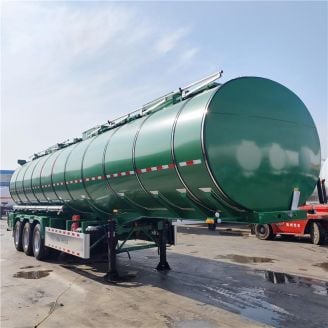
1. What Is a Crude Oil Tanker Trailer and How Does It Work in Ghana?
2. What Are the Key Features of an Oil Tanker Semi Trailer?
3. What Capacity and Specifications Should You Choose for an Oil Tanker Trailer in Ghana?
4. How Much Does an Oil Tanker Trailer for Sale in Ghana Cost?
5. Where to Buy a Reliable Crude Oil Tanker Trailer for Sale in Ghana?
A crude oil tanker trailer is a specialized semi-trailer designed to transport crude oil and other liquid petroleum products safely between oil production sites, storage facilities, refineries, and distribution terminals. For transport companies in Ghana, choosing a suitable oil tanker trailer helps improve transportation efficiency, protect cargo during transit, and support reliable petroleum logistics.
Ghana has an established petroleum industry, with major oil production activities concentrated offshore in the Western Region. As crude oil production, storage, and petroleum distribution activities develop, reliable tanker transportation equipment remains important for companies involved in the oil supply chain.
Unlike ordinary cargo trailers, an oil tanker semi trailer uses a sealed tank structure mounted on a heavy-duty chassis. The tank is designed to contain liquid cargo while the chassis, suspension, axles, and braking system support the vehicle during transportation.
How Does an Oil Tanker Semi Trailer Transport Crude Oil?
The transportation process generally involves four stages: loading, transportation, unloading, and cleaning or maintenance.
Loading: Crude oil is transferred into the tank through the designated loading system. Depending on the tanker configuration, loading may be carried out through top-loading or other suitable loading arrangements.
Transportation: The tractor truck pulls the loaded oil tanker trailer along designated roads. The tank structure and vehicle chassis work together to support the liquid cargo. Proper load distribution and appropriate driving practices help maintain vehicle stability.
Unloading: At the destination, crude oil is discharged through the designated outlet system. The unloading arrangement can be configured according to the customer's operational requirements.
Maintenance: After unloading, the tanker should be inspected and cleaned according to the transported product and applicable safety procedures. Regular maintenance helps protect the tank and maintain reliable operation.
Where Can Crude Oil Tanker Trailers Be Used in Ghana?
Oil tanker trailers can serve different petroleum transportation requirements in Ghana, depending on the tank material, design, and operating conditions.
Oil production and storage facilities: Transporting crude oil between designated production-related facilities and storage locations.
Petroleum terminals: Supporting liquid petroleum transportation between approved storage and handling facilities.
Industrial operations: Moving suitable liquid petroleum products for industrial customers.
Oil transportation companies: Providing tanker transportation services for commercial petroleum logistics.
Long-distance transportation: Connecting designated petroleum storage locations with industrial and distribution destinations.
For Ghanaian transport companies, the most suitable tanker depends on the cargo type, transportation distance, road conditions, loading and unloading arrangements, and local regulatory requirements.
An important consideration is that crude oil, diesel, gasoline, and other petroleum products may have different transportation requirements. A tanker designed for one product should not automatically be assumed suitable for every other liquid. The tank material, seals, valves, and safety equipment must be compatible with the intended cargo.
A reliable oil tanker semi trailer combines a durable tank body, a reinforced chassis, dependable running gear, and a suitable loading and unloading system. These components determine the tanker's transportation performance, operational reliability, and service life.
When purchasing an oil tanker trailer in Ghana, buyers should evaluate the complete vehicle rather than focusing only on tank capacity or purchase price.
Tank Body Structure and Material
The tank body is the most important component of a crude oil tanker trailer because it directly contains the transported liquid.
Depending on the customer's requirements, the tank can be manufactured using suitable carbon steel, stainless steel, or other compatible materials.
Carbon steel is commonly considered for conventional petroleum transportation because of its structural strength and suitability for many industrial liquid cargo applications. Stainless steel may be considered when specific cargo compatibility, corrosion resistance, or cleaning requirements justify its use.
For Ghanaian buyers, discussing the exact crude oil characteristics with the manufacturer is an important step before confirming the tanker material.
Reinforced Tanker Chassis
The chassis provides structural support for the tank body and distributes the vehicle load to the axles and suspension system.
A properly designed chassis helps the oil tanker semi trailer maintain structural integrity during transportation, particularly when operating with heavy liquid cargo.
Kingpin and landing gear specifications.
For transport operations in Ghana, buyers should pay attention to chassis strength and the compatibility between the tanker, tractor truck, and intended loading conditions.
Axles, Suspension, and Tires
The axle and suspension systems influence the load-bearing capacity, road performance, and stability of an oil tanker trailer.
The number of axles should be selected according to the intended payload, applicable axle-load limits, vehicle configuration, and local road regulations.
2-axle tanker trailers for suitable lower-capacity applications.
3-axle tanker trailers for many conventional heavy-duty transportation requirements.
Other axle configurations for specialized applications where permitted.
Suspension options can include mechanical leaf spring suspension or air suspension, depending on the customer's requirements and vehicle configuration.
Tire specifications should also be selected according to the axle load, operating environment, and manufacturer's recommendations.
Loading and Unloading System
The loading and unloading system determines how efficiently the tanker can transfer crude oil between locations.
Depending on the operating requirements, the oil tanker trailer can be equipped with:
Loading manholes.
Discharge valves.
Discharge pipelines.
Suitable connecting fittings.
Tank vents and pressure-control components where required.
Compatible pumps or other transfer equipment when specified.
Not every crude oil tanker trailer requires the same unloading arrangement. Some operations use external transfer pumps, while others require a tanker equipped with a suitable pumping system.
Buyers in Ghana should confirm the loading and unloading method before ordering to avoid compatibility problems at the destination facility.
Safety and Operational Equipment
Safety equipment is an essential part of petroleum transportation.
A suitable crude oil tanker trailer may be configured with safety-related components such as:
Emergency shut-off arrangements where applicable.
Pressure and vacuum protection systems where required by the design.
Suitable valves and sealing components.
Anti-static or electrical bonding provisions where required.
Fire extinguishers and other required safety equipment.
Reflective markings and warning signs.
Anti-slip walkways and access ladders.
The exact equipment depends on the transported product, tank design, and applicable regulations.
Key Specifications of an Oil Tanker Trailer
Note: This is a configuration reference, not a confirmed factory specification for every unit. Final specifications are subject to the approved technical quotation.
The best oil tanker trailer capacity for Ghana depends on the customer's transportation volume, crude oil density, tractor truck performance, axle-load restrictions, and road conditions. Choosing the correct capacity is more important than simply selecting the largest available tank.
A larger tank does not always mean higher transportation efficiency. The vehicle must operate within the permitted gross vehicle weight, axle-load limits, and technical capabilities of the tractor truck.
Choosing the Right Tank Capacity
Before selecting an oil tanker trailer, buyers should estimate their daily or weekly transportation requirements.
The following factors should be considered:
Transportation volume: Estimate how much crude oil needs to be transported per trip and how many trips are required each day.
Cargo density: Crude oil density varies depending on its source and characteristics. The actual cargo weight must be calculated rather than assuming that every cubic meter weighs the same.
Vehicle weight: The total operating weight includes the tractor truck, empty tanker trailer, cargo, and other equipment.
Road restrictions: Bridge limits, axle-load regulations, road conditions, and permitted vehicle dimensions may restrict the usable tank capacity.
Loading and unloading facilities: The tanker should be compatible with the available loading equipment, storage tanks, and discharge connections.
For Ghanaian buyers, it is advisable to confirm these factors before deciding on the final tank volume.
Tank Material Selection for Crude Oil Transportation
Carbon steel is a practical option for many conventional crude oil transportation applications because it offers structural strength and can provide a cost-effective solution when the cargo is compatible with the material.
However, crude oil composition varies. Some crude oils contain water, sulfur compounds, sediments, or other substances that may influence corrosion and maintenance requirements.
Stainless steel can be considered for applications with specific corrosion-resistance or cleaning requirements, although it may increase the initial purchase cost.
The following comparison can help buyers understand the differences.
How Many Axles Does an Oil Tanker Trailer Need?
A 3 axle oil tanker trailer is a common configuration to consider for heavy-duty liquid transportation, but the correct axle arrangement depends on the intended load and applicable regulations.
A 2 axle configuration may be suitable for certain lighter applications, while specialized projects may require different arrangements.
For Ghanaian transport companies, axle selection should consider:
Maximum permitted vehicle weight.
Axle-load distribution.
Tanker empty weight.
Expected cargo density.
Tractor truck capacity.
Road and bridge restrictions.
It is important to distinguish tank volume from legal payload. A tank may physically hold a certain volume of crude oil, but the vehicle may not be legally permitted to carry the corresponding cargo weight.
Matching the Tanker Trailer with a Tractor Truck
The tractor truck and oil tanker trailer must work as one transportation system.
Before ordering, buyers should check the following compatibility factors:
Engine power: The tractor should have sufficient power for the combined operating weight and intended road conditions.
Transmission: Gear ratios should be appropriate for the expected load, road gradients, and driving conditions.
Fifth wheel height: The coupling height must match the tanker trailer's kingpin arrangement.
Fifth wheel and kingpin compatibility: The coupling components must meet the relevant technical requirements.
Braking system: The tractor and trailer braking systems should be compatible and properly configured.
Electrical connections: Lighting, ABS, and other electrical connections should match the tractor configuration.
For customers purchasing a complete transportation solution in Ghana, TITAN can discuss the compatibility requirements between the selected oil tanker trailer and the customer's tractor truck.
Considerations for Ghana's Road and Operating Conditions
Ghanaian transport companies may operate across different road environments, including major highways, industrial roads, urban routes, and access roads to storage facilities.
The tanker configuration should reflect its actual operating environment.
For example, companies transporting crude oil between industrial facilities may prioritize chassis strength, tire selection, suspension performance, and reliable braking components.
For operations involving frequent loading and unloading, tank access, discharge arrangements, and maintenance convenience may be more important.
Buyers should also consider the availability of replacement tires, brake components, valves, and other maintenance parts in their operating areas.
A tanker that is technically suitable but difficult to maintain locally may create unnecessary downtime.
The price of an oil tanker trailer for sale in Ghana depends on tank capacity, material, axle configuration, chassis design, components, and customization requirements. There is no single fixed price that applies to every crude oil tanker semi trailer.
Main Factors Affecting Oil Tanker Trailer Price
1. Tank Capacity
Tank capacity is one of the main factors influencing the overall price. A larger tank generally requires more material and may require a stronger supporting structure and different running gear.
However, capacity should be selected according to the legal payload and operating requirements rather than price alone.
2. Tank Material
Different tank materials have different purchasing and processing costs.
Carbon steel is commonly considered for conventional petroleum transportation. Stainless steel may increase the initial investment because of material and manufacturing costs.
3. Axle and Suspension Configuration
The number of axles, axle brand, suspension type, and load-bearing requirements all influence the final price.
Customers can select suitable configurations according to their transportation requirements and budget.
4. Tanker Accessories
The loading and unloading system, valves, manholes, pipelines, safety components, and optional equipment also affect the total quotation.
5. Manufacturing Requirements
Special tank dimensions, customized structures, additional safety equipment, and specific component brands may require additional manufacturing work.
6. Shipping and Import Costs
For buyers in Ghana, the total landed cost also includes international transportation, marine insurance, port-related charges, customs duties, taxes, and other applicable import expenses.
These costs should be considered separately from the factory quotation.
Oil Tanker Trailer Purchase Cost Breakdown
When evaluating an oil tanker trailer for sale in Ghana, buyers should distinguish between the manufacturer's product price and the total cost of importing and operating the vehicle.
A low initial purchase price does not necessarily represent the best long-term investment. Buyers should compare the overall configuration, manufacturing quality, component availability, warranty, and after-sales support.
How to Get an Accurate Quotation from TITAN
To receive a suitable quotation for a crude oil tanker trailer for sale in Ghana, buyers should prepare the following information:
Required tank capacity.
Type of crude oil or liquid cargo.
Preferred tank material.
Number of axles.
Preferred suspension system.
Required loading and unloading method.
Tractor truck model, if already available.
Delivery destination in Ghana.
Any special technical or regulatory requirements.
With this information, TITAN can evaluate the customer's requirements and recommend a suitable oil tanker semi trailer configuration.
Instead of offering a generic price, a detailed quotation helps buyers understand exactly what is included in the vehicle.
Choosing the right manufacturer is essential when purchasing an oil tanker trailer for long-term petroleum transportation in Ghana. Buyers should consider manufacturing experience, structural quality, component selection, customization capability, inspection procedures, and export support.
TITAN focuses on providing commercial semi-trailer solutions for international transportation markets, including customers who need customized tanker trailers for their local operating requirements.
Customized Oil Tanker Trailer Solutions
Different petroleum transportation companies have different operational requirements.
Some customers need a conventional crude oil tanker trailer for regular transportation, while others require specific tank dimensions, material choices, unloading arrangements, or running gear configurations.
TITAN can discuss customized solutions based on the customer's intended application.
Customization may cover:
Tank capacity and dimensions.
Tank material.
Axle number and configuration.
Suspension type.
Tire specifications.
Tank loading and unloading equipment.
Valve and pipeline arrangements.
Safety-related components.
Tractor truck compatibility.
The purpose of customization is to ensure that the final oil tanker semi trailer matches the customer's actual transportation requirements.
Manufacturing Quality and Inspection
Manufacturing quality directly affects tanker safety and service life.
For a crude oil tanker trailer, inspection should cover both the tank structure and the complete running gear.
Important manufacturing and inspection considerations include:
Raw material inspection: Verify that the selected materials meet the agreed technical specifications.
Welding inspection: Check weld quality and the consistency of the tank manufacturing process.
Tank inspection: Verify the tank structure, connections, manholes, valves, and other relevant components.
Chassis inspection: Check the main beams, crossmembers, suspension mounting positions, and structural connections.
Running gear inspection: Verify the axles, tires, suspension, landing gear, and braking components.
Final inspection: Check the completed vehicle against the approved technical configuration.
Where required, appropriate tank integrity and pressure or leak testing should be conducted according to the tank design and applicable standards. The specific test method must match the equipment's intended service.
Reliable Components and Configuration Options
The quality of individual components can influence vehicle performance and maintenance costs.
TITAN can discuss component options with buyers according to the intended operating environment and budget.
Important components include:
Axles and suspension systems.
Brake chambers and air brake components.
Tires and wheels.
Landing gear.
Kingpin and coupling components.
Valves and sealing components.
Electrical and lighting systems.
Customers should confirm the actual component brands and models in the technical quotation before production.
Export Experience and Delivery Support
Exporting a tanker trailer involves more than manufacturing the vehicle.
The manufacturer and buyer need to coordinate technical specifications, production arrangements, inspection, shipping documentation, and delivery.
For customers in Ghana, the export process generally involves the following steps:
Requirement confirmation: The buyer provides tank capacity, cargo type, axle configuration, and other technical requirements.
Technical proposal: TITAN prepares a suitable configuration for the customer's review.
Quotation and order confirmation: Both parties confirm the specifications, commercial terms, and delivery arrangements.
Production: Manufacturing begins according to the approved configuration.
Inspection: The completed tanker is inspected before shipment.
Shipping preparation: Export documents and transportation arrangements are prepared.
Delivery to Ghana: The tanker is shipped according to the agreed delivery terms.
Buyers should confirm shipping arrangements, port of destination, import documentation, and customs requirements before placing an order.
Long-Term Maintenance and After-Sales Considerations
For Ghanaian transportation companies, maintenance convenience is an important part of the purchasing decision.
Regular inspections help identify potential problems before they affect transportation operations.
Recommended maintenance activities include:
Checking tank body condition and external corrosion.
Inspecting valves, seals, and pipeline connections.
Checking tires and wheel fasteners.
Inspecting brake components and air lines.
Checking suspension and axle mounting points.
Inspecting lights and electrical connections.
Maintaining landing gear and coupling components.
Cleaning the tank according to cargo requirements.
The maintenance schedule should follow the manufacturer's recommendations and applicable local requirements.
Buyers should also confirm warranty coverage, available spare parts, technical documentation, and after-sales support before purchasing.
What Makes a Suitable Crude Oil Tanker Trailer for Ghana?
A suitable tanker is not necessarily the one with the largest capacity or the lowest purchase price.
The best choice is a vehicle that meets the customer's cargo requirements, operates within permitted weight limits, matches the tractor truck, and can be maintained efficiently.
For Ghanaian buyers, the following points should receive particular attention:
Tank material compatibility with the crude oil.
Appropriate tank capacity and payload.
Reliable chassis and axle configuration.
Suitable braking and suspension systems.
Compatible loading and unloading equipment.
Compliance with applicable Ghanaian transportation and safety requirements.
Convenient access to replacement parts and maintenance support.
By evaluating these factors before ordering, buyers can reduce configuration mistakes and improve the long-term value of their oil tanker trailer investment.
Shandong TITAN Vehicle Co., Ltd.
Wehcat/Whatsapp: +86 18660159635
Tel.: +86531-88997626

BOSS WeChat

Boss Whatsapp