
Since 2014
Ten Years of Reliability Your Trusted Partner
Ten Years of Reliability Your Trusted Partner
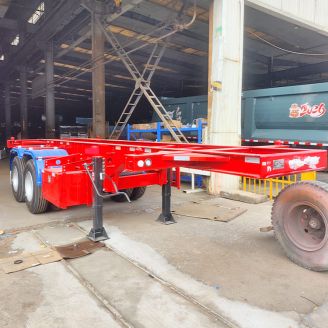
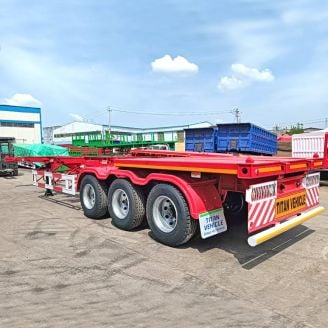
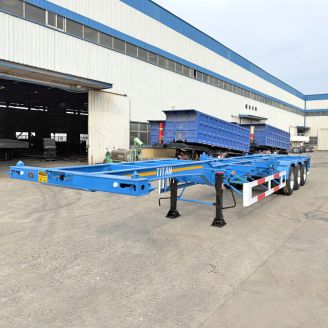
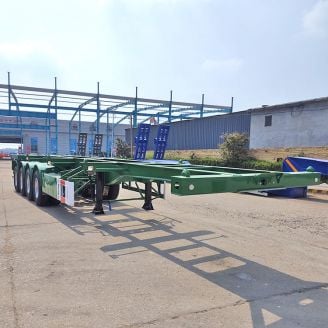
A 20 40 ft container chassis for sale is not simply a flat platform for carrying a container. The real purchasing decision is whether the chassis configuration matches the container sizes, operating requirements, axle arrangement, locking points, payload expectation, and fleet usage the buyer has in mind.
That distinction is the key to understanding the container chassis price in Jamaica. Buyers should compare not only the number on a quotation, but the capacity, application, axle configuration, locking arrangement, dimensions, included equipment, and tare weight behind that number. The right chassis is the one that fits the work, not simply the one with the lowest initial quotation.
1.1 A 20 ft application and a 40 ft application should be evaluated differently
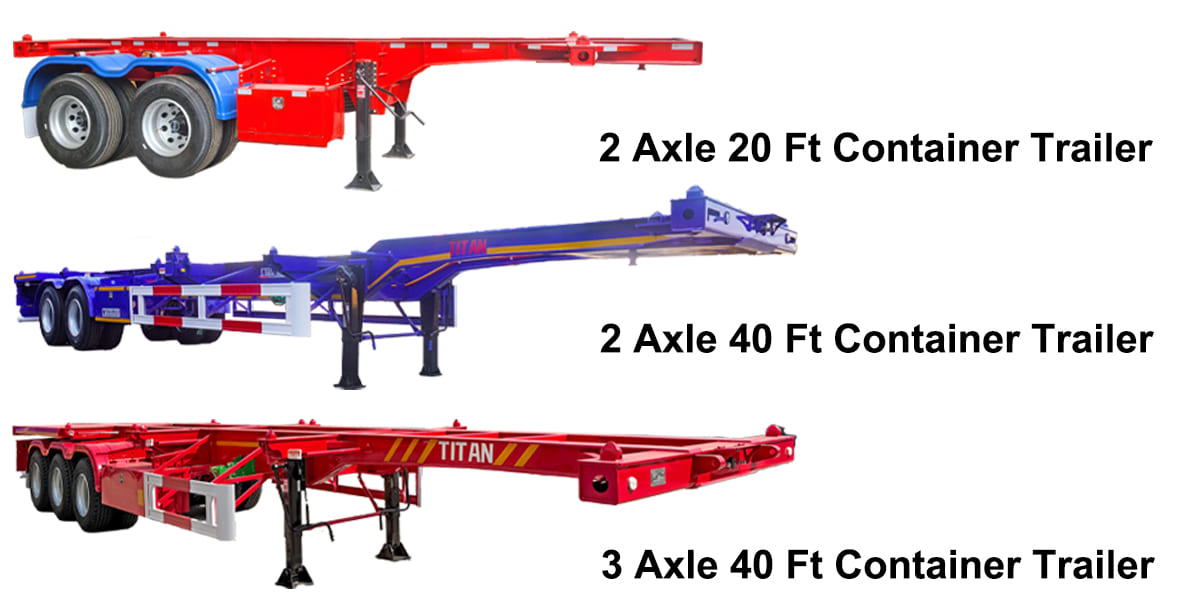
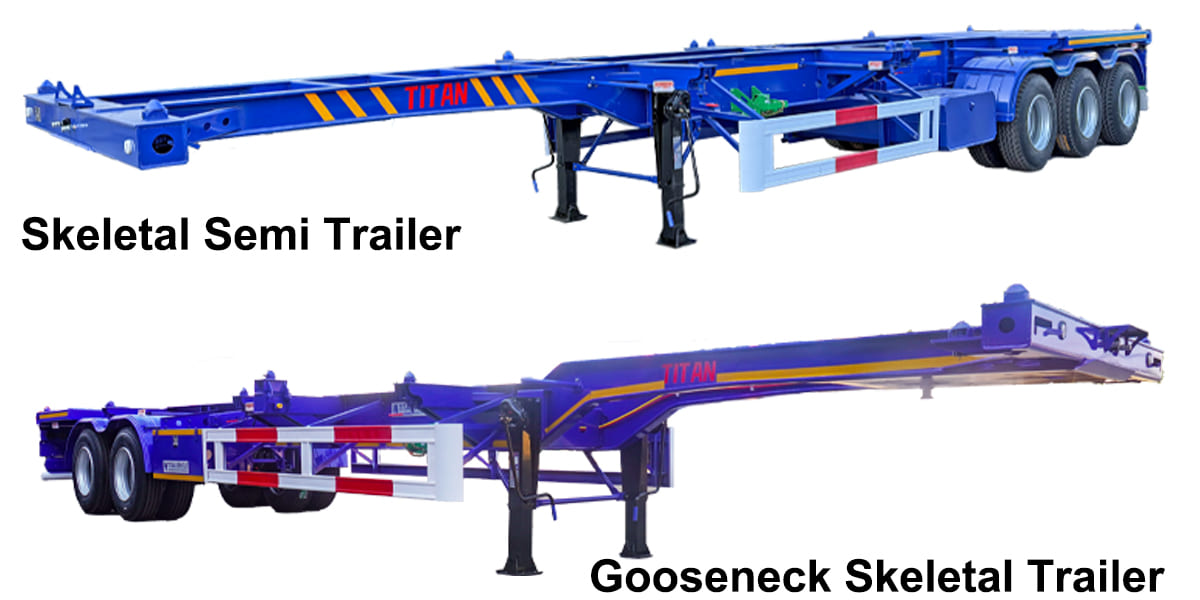
The 20 ft container chassis in this product range is a two-axle straight-beam chassis measuring 7,000 x 2,500 x 1,550 mm and carrying a stated warranty payload of 40 tons. The 40ft container chassis is a three-axle straight-beam chassis measuring 12,400 x 2,500 x 1,550 mm with a stated warranty payload of 55 tons and an approximate tare weight of 6.3 tons.
These specifications immediately show why the two versions serve different purchasing needs. The two-axle chassis is physically shorter and is positioned around the 20 ft container application. The three-axle chassis is designed as the longer 40 ft version and has a larger locking arrangement. A buyer should therefore select between them according to the container work that the fleet actually performs instead of choosing only by the advertised product category.
The distinction is especially important when a procurement team sees a listing described broadly as a “20/40 container chassis.” That phrase can suggest flexibility, but the actual product configurations may still be specialized by container length. In this case, the supplied specifications identify one configuration as a 20-inch, or 20 ft, straight-beam chassis and another as a 40-inch, or 40 ft, straight-beam chassis. The quotation should therefore state which unit is being purchased.
1.2 The container size should drive the first specification decision
The first question for a Jamaican buyer is straightforward: what container length will this chassis transport most often?
If the operating requirement is centered on 20 ft containers, the two-axle configuration is the relevant starting point. Its 7,000 mm overall length, 2,500 mm width, 1,550 mm height, eight 12R22.5 tires, and two-axle layout form a specification package built around that application. The 40-ton warranty payload also gives the buyer a clear reference point when discussing the intended load requirement.
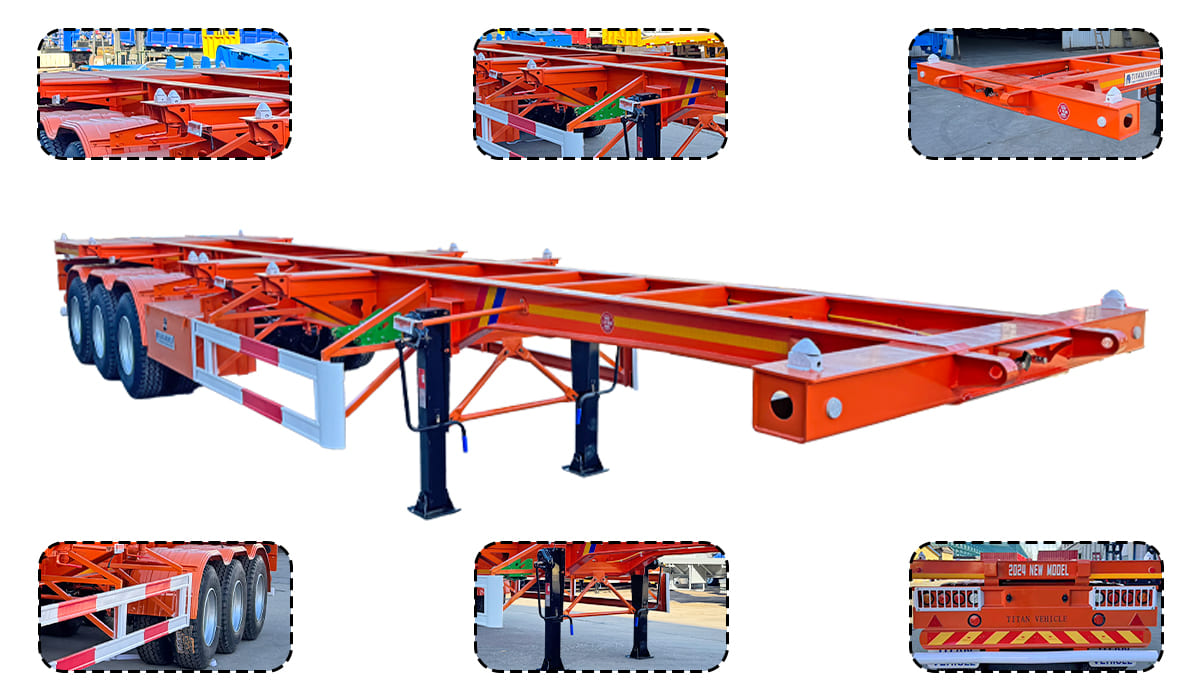
If the fleet's primary requirement is 40 ft container movement, the three-axle configuration is the more directly aligned option. It measures 12,400 mm in length, uses twelve 12R22.5 tires, has twelve container locks, and is specified with a 55-ton warranty payload. Its approximate 6.3-ton tare weight is also useful when a buyer is comparing the relationship between rated carrying capability and empty trailer weight.
The practical lesson is simple: container size should be established before the buyer begins comparing price. Otherwise, the procurement team may compare two units that are not designed for the same transport job.
1.3 Why one fleet may still need more than one configuration
A company that handles different container lengths may have a legitimate reason to consider more than one chassis configuration. The issue is not whether one product is universally better, but whether fleet composition matches actual assignments.
A fleet focused on 20 ft containers may gain little from buying a longer 40 ft-oriented chassis simply because the larger unit has a higher stated payload. The additional capability may not address the core operating requirement. Conversely, a fleet that regularly moves 40 ft containers should not select the shorter two-axle configuration simply because its purchase price is lower.
For Jamaica procurement, the most useful purchasing conversation is therefore application-led. Tell the supplier which container lengths are expected, how the equipment will be used, and whether the buyer is evaluating one configuration or several. Then compare the manufacturer's quotation on that exact basis.
1.4 The locking arrangement is part of the container compatibility question
Container locks are not an accessory detail that can be ignored during the selection process. They are part of how the chassis is configured to secure containers.
The two-axle configuration is supplied with four sets of container locks, while the three-axle configuration is supplied with twelve container locks. This difference is directly relevant to the product's intended configuration and therefore should be included when comparing quotations.
The correct purchasing interpretation is not that “more locks automatically means better quality.” Instead, the lock arrangement is evidence that the two chassis are configured differently. When reviewing a container chassis price, the buyer should make sure the quoted locking system corresponds to the intended container application and that the supplier is quoting the same scope across competing offers.
 20 40 Ft Container Chassis for Sale Price in Jamaica
2.1 The main-beam specification gives buyers a concrete basis for comparison
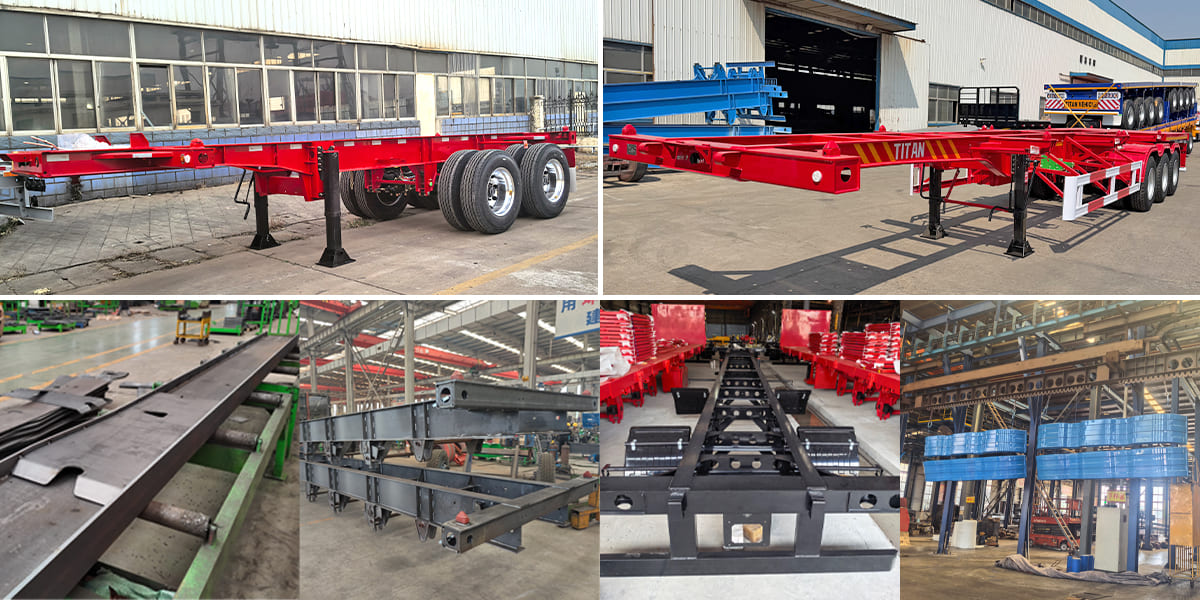
Both chassis configurations use Q345 steel for the longitudinal beams. The stated longitudinal-beam height is 500 mm, with a 14 mm upper flange, a 16 mm lower flange, and an 8 mm web.
These numbers matter because they describe the main structural member rather than a cosmetic feature. The buyer can use them as part of a like-for-like technical comparison when different manufacturers submit quotations for similar container chassis.
The important point is not to assume that one isolated steel number determines the entire performance of a trailer. The specifications provided here identify the material and dimensions of the longitudinal beam, but they do not provide every structural detail of the chassis. Therefore, a responsible procurement comparison should use the supplied beam specification as one verified part of the product definition rather than making unsupported claims about total structural performance.
For a Jamaican buyer, having this information in the quotation can make supplier comparison more transparent. If another supplier proposes a different beam material or section, that is a technical difference that deserves clarification before the two prices are treated as equivalent.
2.2 The two configurations share a common core of running equipment
Both products use TITAN 13-ton axles and TITAN 12R22.5 tires. The two-axle version has eight tires, while the three-axle version has twelve. Both use 28-ton landing legs, a 50 mm assembled kingpin, three-axle synchronized brake valves, and LED electronic lights.
This shared equipment creates a useful procurement advantage because buyers can identify which parts of the two configurations are standardized and which parts change with the application. The axle brand, tire specification, landing-leg rating, kingpin diameter, brake-valve arrangement, and lighting system are not vague marketing claims; they are concrete items that can be placed on a quotation comparison sheet.
At the same time, the difference in the number of axles and tires should not be ignored. The two-axle chassis and three-axle chassis are distinct configurations. A lower container chassis price for the two-axle unit does not mean the two quotes are automatically interchangeable, because the supplied equipment scope is different.
2.3 Tare weight can help explain a 40 ft quotation
The three-axle 40 ft configuration has a stated tare weight of approximately 6.3 tons. This is useful information because the buyer can see the empty trailer weight when evaluating the complete specification.
Tare weight should be interpreted together with the stated 55-ton warranty payload rather than considered alone. A buyer comparing two quotations can ask whether the reported empty weight and rated payload refer to comparable configurations and whether both quotations include the same major components.
No tare weight is provided for the two-axle 20 ft configuration, so it should not be estimated. This is a good example of how disciplined procurement works: use the information that is verified, and request missing data from the supplier rather than filling the gap with an assumption.
2.4 Powder coating and paint are part of the supplied finish specification
Both configurations use powder-coating paint. This gives the buyer a clear description of the finishing process included in the supplied products.
The practical importance of stating the finishing process is that paint treatment is part of the manufacturing specification and can be included in supplier-to-supplier comparisons. However, the supplied information does not establish a specific service life, corrosion-resistance period, environmental rating, or warranty duration for the coating, so those claims should not be added to the quotation or product description without supporting information.
For a buyer in Jamaica, this means the finish should be recorded as a verified specification rather than turned into an unsupported performance promise.
2.5 The equipment package matters as much as the frame
A container chassis quotation should not be reduced to the steel structure. Both configurations include one toolbox, two spare-wheel carriers, a 50 mm assembled kingpin, 28-ton landing legs, synchronized brake valves, and LED electronic lights.
The three-axle unit additionally has twelve container locks rather than four sets on the two-axle version. These included components affect the actual equipment supplied and therefore belong in the commercial comparison.
When a supplier provides a price that initially appears attractive, the buyer should ask whether the quoted package contains the same components as the competing offer. Otherwise, the difference in price may simply reflect a difference in scope rather than a difference in manufacturing value.
 20 40 Ft Container Chassis for Sale Price in Jamaica
3.1 The choice should be based on the job, not only on payload
The two configurations differ in the dimensions, axle count, tire count, locking arrangement, and rated warranty payload. The 40 ft configuration has the larger rated figure, but that does not make it automatically the correct choice for a 20 ft-focused fleet.
A useful comparison is:
| Feature | 20 ft Container Chassis | 40 ft Container Chassis |
|---|---|---|
| Recommended Application | Regular 20 ft container transport | Regular 40 ft container transport |
| Axle Configuration | 2 axles | 3 axles |
| Overall Dimensions | 7,000 × 2,500 × 1,550 mm | 12,400 × 2,500 × 1,550 mm |
| Warranty Payload | 40 tons | 55 tons |
| Tires | 8 × TITAN 12R22.5 | 12 × TITAN 12R22.5 |
| Container Locks | 4 sets | 12 sets |
| Approx. Tare Weight | Not provided | About 6.3 tons |
| Best Choice When | The fleet mainly handles 20 ft containers and does not require the 40 ft configuration | The fleet mainly handles 40 ft containers and requires the longer three-axle configuration |
| Key Buying Consideration | Avoid paying for a larger configuration that is not needed for the intended 20 ft application | Compare the higher payload and three-axle configuration against the actual 40 ft transport requirement |
The purpose of the table is not to declare a universal winner. It shows how the configuration changes the transport application and why the 20 ft container chassis and 40ft container chassis should be compared as distinct procurement options.
3.2 When the two-axle chassis makes more sense
The two-axle configuration is the more logical choice when the buyer's regular transport requirement is based on 20 ft containers and does not require the longer 40 ft configuration.
Its overall length is 7,000 mm, compared with 12,400 mm for the three-axle unit. It also uses eight tires rather than twelve and has a two-axle arrangement rather than three. These are not simply numerical differences; they define a different equipment configuration.
The stated 40-ton warranty payload gives the buyer a specific reference point for discussing application requirements. If the intended operation fits within that stated basis and is centered on 20 ft containers, the two-axle chassis can be a more directly matched procurement choice than buying a larger 40 ft-oriented unit.
3.3 When the three-axle chassis makes more sense
The three-axle version is designed around the 40 ft application and provides a stated 55-ton warranty payload. Its 12,400 mm overall length and twelve container locks distinguish it clearly from the two-axle model.
Its approximate 6.3-ton tare weight is also a useful figure for buyers reviewing the complete vehicle specification. Instead of asking only whether the trailer has a higher payload rating, the buyer can consider the full configuration: container application, axle count, tire count, lock arrangement, empty weight, and structural specification.
For a fleet whose core work is 40 ft container transport, these are the details that should drive the purchasing decision.
3.4 The higher-rated configuration is not automatically the better value
A common procurement mistake is to equate a larger specification with better purchasing value. The three-axle unit has a higher stated warranty payload, but the buyer does not gain value from a capability that does not match the fleet's actual container work.
The correct question is: which configuration provides the required container application and technical scope at a reasonable quotation? A 20 ft-focused operation should not automatically buy the 40 ft configuration simply because it has more axles or a higher payload figure.
Similarly, a fleet regularly handling 40 ft containers should not select the two-axle model merely to obtain a lower initial number. Application fit should come before headline price.
4.1 Price should be compared only after the configuration is fixed
The container chassis price becomes meaningful only when the buyer knows exactly which configuration is being quoted.
For these products, the quotation can differ because the buyer is requesting the two-axle 20 ft chassis or the three-axle 40 ft chassis. Their dimensions, axle count, tire count, container locks, payload basis, and tare-weight information are different.
This is why a Jamaican buyer should first specify the intended configuration and then request a formal quotation. Comparing an unspecified “20/40 chassis” price with a clearly specified three-axle 40 ft quotation can create a false impression of supplier price differences.
4.2 Use the technical specification to explain quotation differences
Suppose one supplier offers a lower price for a 40ft container chassis. Before deciding that it is the better deal, compare the beam specification, axle arrangement, tire quantity, container locks, landing legs, kingpin, brake-valve arrangement, lighting, spare-wheel carriers, toolbox, finish, and other items included in the quote.
The same method applies when comparing a 20 ft container chassis from different manufacturers. The goal is not to find the supplier with the fewest technical details. The goal is to determine whether each supplier is quoting equivalent equipment.
This is particularly important for B2B sourcing because a quotation that appears lower can become less attractive if required equipment has been excluded or if the technical configuration is different.
4.3 A clear quotation makes international sourcing easier
For a Jamaican buyer purchasing from a manufacturer outside Jamaica, a clear written quotation can reduce uncertainty before the order is placed. The quotation should identify the exact chassis configuration, overall dimensions, rated payload basis, major component specifications, container-lock arrangement, and any other requested options.
The supplied products already provide a strong basis for this kind of documentation. For example, the three-axle quotation can identify 12,400 x 2,500 x 1,550 mm, 55-ton warranty payload, 12 TITAN 12R22.5 tires, 12 container locks, and approximately 6.3 tons tare weight.
The two-axle quotation can separately identify 7,000 x 2,500 x 1,550 mm, 40-ton warranty payload, eight tires, and four sets of container locks. This level of clarity makes it easier for the Jamaican buyer to compare proposals and identify differences before purchase.
4.4 Do not let the word “for sale” replace technical due diligence
Search terms such as container chassis for sale, 20 ft container chassis, and 40ft container chassis are useful for finding suppliers, but the search result is only the beginning of the purchasing process.
Once a buyer has found a suitable manufacturer, the product should move from a search phrase to a defined technical requirement. The supplier should confirm which configuration is being offered and what is included in the quotation.
This is also the point where the buyer can clarify any missing information rather than assuming that a product title covers both models equally.
4.5 Purchasing value comes from matching specification and application
The best value is created when the chassis specification matches the buyer's operating requirement without introducing unnecessary differences between suppliers.
For the two-axle model, that means confirming the 20 ft application and evaluating whether the 40-ton warranty payload and supplied equipment meet the intended requirement. For the three-axle model, it means confirming the 40 ft application and evaluating the 55-ton warranty payload, 6.3-ton approximate tare weight, three-axle arrangement, and twelve-lock configuration.
This is a more useful way to think about container chassis price because it connects the quotation to the actual job the equipment is expected to perform.
4.6 What a Jamaican B2B buyer should include in the inquiry
A useful inquiry should tell the supplier which container size is required, which configuration is being considered, and which technical information is required for comparison.
For example, a buyer seeking the 20 ft unit should explicitly request the two-axle straight-beam configuration rather than asking only for a generic container chassis quotation. A buyer seeking the 40 ft unit should request the three-axle straight-beam configuration and ask the supplier to confirm the twelve-lock arrangement and the approximately 6.3-ton tare weight.
This makes the quotation discussion much more precise and reduces the risk of receiving different product interpretations from different suppliers.
4.7 The same framework works when buying multiple units
Fleet procurement often requires more than one trailer, so consistency matters. When ordering several units, the buyer should keep the technical configuration fixed unless there is a deliberate reason to change it.
A Jamaican fleet can therefore use the same specification sheet when requesting quotations from different manufacturers. This makes it easier to compare the container chassis price across suppliers without accidentally comparing different products.
If the fleet requires both 20 ft and 40 ft units, the request should clearly separate the two configurations instead of treating them as one generic chassis type.
 20 40 Ft Container Chassis for Sale Price in Jamaica
5.1 Start with the container application
The first line of a purchasing inquiry should identify the required container application. This immediately establishes whether the buyer needs the 20 ft two-axle model, the 40 ft three-axle model, or quotations for both.
That simple step prevents many downstream misunderstandings. The supplier knows which chassis length and axle configuration are being discussed, while the buyer gains a clearer basis for comparing prices.
For Jamaica, this also keeps the procurement conversation grounded in the buyer's actual logistics requirement rather than in generic product listings.
5.2 Confirm the complete technical configuration
After the application is fixed, confirm the main structural and component specifications.
For these products, the verified common specifications include Q345 longitudinal beams, a 500 mm beam height, 14 mm upper flange, 16 mm lower flange, 8 mm web, one toolbox, a 50 mm assembled kingpin, two spare-wheel carriers, 28-ton landing legs, three-axle synchronized brake valves, LED electronic lights, TITAN 13-ton axles, TITAN 12R22.5 tires, and powder-coating paint.
Then confirm the model-specific differences. The two-axle unit has eight tires, four sets of container locks, a 7,000 mm overall length, and a 40-ton warranty payload. The three-axle unit has twelve tires, twelve container locks, a 12,400 mm overall length, a 55-ton warranty payload, and approximately 6.3 tons tare weight.
This creates a clear technical identity for each quotation.
5.3 Separate verified information from information that still needs confirmation
A disciplined B2B purchase does not fill gaps by assumption. In the supplied specifications, the two-axle unit does not have a stated tare weight. Therefore, the buyer should request that figure if it is important to the purchasing decision.
The same principle applies to any other information not provided in the product specification. Rather than assuming a certification, warranty period, braking standard, road requirement, or local compliance detail, the buyer should ask the supplier to confirm it separately.
This protects the accuracy of the quotation and keeps the purchasing decision based on documented information.
5.4 Compare quotations on one technical sheet
Once several suppliers have responded, put their offers into one comparison document. The first columns should identify whether the offer is for the two-axle 20 ft chassis or the three-axle 40 ft chassis. The remaining comparison should then cover the specifications that actually distinguish the quoted equipment.
This approach helps the Jamaican procurement team avoid an overly price-driven decision. A quotation that is several units lower in price is not necessarily cheaper in real purchasing terms if it excludes components included in another supplier's quotation.
5.5 Confirm the manufacturing finish
The supplied chassis use powder-coating paint, so the buyer should ensure that the quotation clearly states this finish where required.
The product information does not provide a separate coating thickness, corrosion warranty, or coating-service-life figure. Those should therefore be requested only when they are genuinely needed for the purchase and should be treated as separate confirmation items.
The broader procurement lesson is that finishing information belongs in the technical specification but should not be turned into unsupported performance claims.
5.6 Consider the fleet's future mix of container sizes
A fleet purchase can have a longer planning horizon than a single assignment. If the business expects its container mix to remain focused on 20 ft units, the two-axle configuration may be the more logical equipment category to evaluate. If the fleet's work is centered on 40 ft containers, the three-axle configuration deserves priority.
If both container sizes are expected to be regular requirements, the buyer may need to evaluate whether separate configurations better match the fleet's actual work. The decision should be based on the equipment application and the commercial economics of the fleet rather than assuming that one chassis type is automatically suitable for every container movement.
 20 40 Ft Container Chassis for Sale Price in Jamaica
5.7 Use the quotation as the final reference document
The final purchase should be based on a quotation that clearly identifies the configuration and specifications agreed between buyer and manufacturer.
For the two-axle unit, that reference should identify the 20 ft straight-beam configuration and its stated dimensions, payload basis, axle and tire arrangement, lock quantity, and included components. For the three-axle unit, it should identify the 40 ft straight-beam configuration together with the 12,400 mm length, 55-ton warranty payload, twelve tires, twelve locks, and approximately 6.3-ton tare weight.
This documentation creates a much stronger purchasing basis than a product-page title alone. It also makes later communication easier because both sides can refer to the same technical configuration.
5.8 The right purchasing question is “which specification fits?”
For a Jamaican buyer comparing a container chassis price, the most useful final question is not “Which supplier is cheapest?” It is “Which supplier is quoting the configuration that best fits the intended container application, and how does the price compare when the technical scope is equivalent?”
That question naturally leads to a more reliable purchase decision. The two-axle chassis is positioned around the 20 ft application, while the three-axle chassis is positioned around the 40 ft application. Both share a defined structural and component package, but their dimensions, axle configurations, locking arrangements, and rated payloads differ.
Once the application is fixed and the specifications are compared line by line, the price becomes a useful commercial measure rather than the only measure.
What is the difference between the 20 ft container chassis and the 40ft container chassis?
The supplied 20 ft model is a two-axle straight-beam chassis measuring 7,000 x 2,500 x 1,550 mm with a stated 40-ton warranty payload. The 40 ft model is a three-axle straight-beam chassis measuring 12,400 x 2,500 x 1,550 mm with a stated 55-ton warranty payload and approximately 6.3 tons tare weight.
What container chassis price should I expect in Jamaica?
A final container chassis price should be based on the exact configuration rather than the product title alone. The two-axle 20 ft and three-axle 40 ft models have different dimensions, axle counts, tire quantities, container-lock arrangements, and payload specifications, so they should be quoted separately.
Can the two-axle chassis and three-axle chassis be treated as the same product?
They belong to the same container-chassis product category, but they are different configurations with different intended applications. The supplied specifications show that the two-axle model is centered on 20 ft containers, while the three-axle model is centered on 40 ft containers.
Why do two suppliers offer different container chassis prices?
The quoted prices can differ because the actual equipment configuration may differ. Compare dimensions, axle and tire arrangements, container locks, structural specifications, included components, finishing, and any requested customization before deciding whether the price difference is meaningful.
Is the higher-payload 40 ft chassis automatically the better choice?
No. The three-axle unit has a higher stated warranty payload, but the best choice depends on the container application and fleet requirement. A buyer focused on 20 ft transport should evaluate the two-axle configuration based on its intended application rather than selecting a larger chassis only because its rating is higher.
 20 40 Ft Container Chassis for Sale Price in Jamaica
Shandong TITAN Vehicle Co., Ltd.
Wehcat/Whatsapp: +86 18660159635
Tel.: +86531-88997626

BOSS WeChat

Boss Whatsapp