
Since 2014
Ten Years of Reliability Your Trusted Partner
Ten Years of Reliability Your Trusted Partner
1. What Is A Container Side Loader And How Does It Work?
2. Key Specifications: Lifting Capacity, Chassis, And Crane Features
3. Top 5 Advantages Of Using A Side Lifter For Logistics
4. 20ft Vs 40ft Container Side Loaders: Which Fits Your Needs?
5. How To Evaluate Side Loader Manufacturers
6. What Is The Difference Between A Sideloader And A Forklift?
Container Side Loader Trailer In Guyana: Complete Guide For Efficient Container Handling And Transportation
Why Container Side Loader Is Becoming Important For Guyana Logistics
A container side loader trailer is an efficient solution for Guyana companies that need faster container loading, unloading, and transportation without depending on expensive port cranes or forklifts.
Guyana has experienced rapid growth in logistics demand due to expanding international trade, infrastructure development, mining projects, and offshore energy-related activities. As container transportation continues increasing through the Port of Georgetown and other logistics hubs, companies are searching for smarter ways to handle 20ft and 40ft containers.
Traditional container transportation usually requires external lifting equipment such as reach stackers, gantry cranes, or forklifts. However, these machines are expensive, require large operating areas, and are sometimes unavailable at remote construction sites, mining areas, or inland logistics locations.
A container side loader trailer provides an independent container handling solution by integrating hydraulic lifting equipment directly onto a specialized trailer chassis. With a container side loader trailer, one truck can transport and load containers without requiring additional lifting equipment.
For Guyana logistics companies, construction contractors, mining operators, and freight companies, a container side loader trailer can significantly improve operational flexibility and reduce container handling costs.
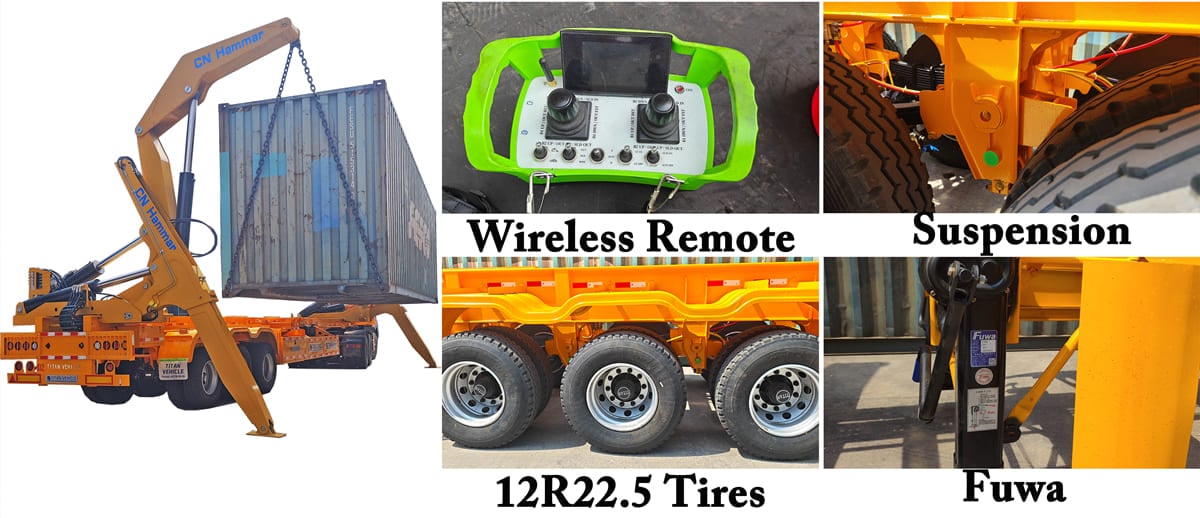 Container Side Loaders Trailer Complete Guide In Guyana: How to Choose, Specs, and Manufacturers
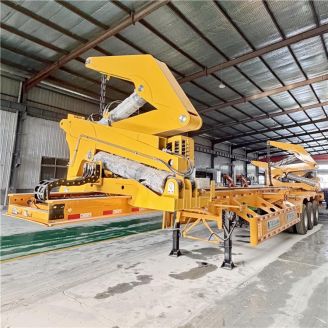
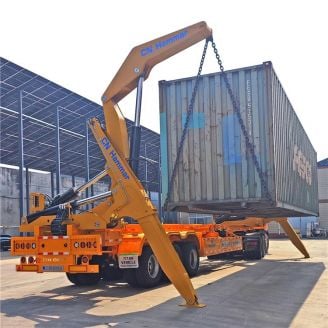
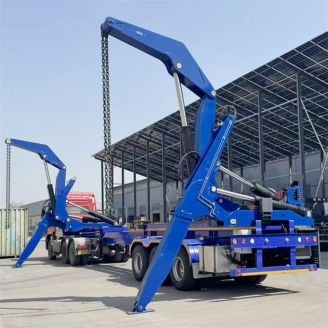
A container side loader trailer is a specialized trailer equipped with hydraulic cranes that can independently lift, load, transport, and unload containers from the side of the trailer.
A container side loader trailer is a type of container transportation equipment designed with two hydraulic crane systems mounted on both sides of the trailer chassis. These cranes work together to lift containers from the ground and place them onto the trailer platform.
Unlike traditional container chassis trailers, which only transport containers, a side loader combines transportation and lifting functions into one unit.
This makes it especially valuable in areas where container handling infrastructure is limited.
For Guyana, where some logistics operations are located away from major ports and require transportation to construction sites, mining areas, and industrial zones, a container side loader trailer provides a practical solution.
How Does A Container Side Loader Trailer Work?
The operation process of a container side loader trailer usually includes four main steps:
Step 1: Positioning The Trailer
The truck driver positions the side loader trailer next to the container. The trailer must maintain a stable distance from the container before lifting.
Step 2: Deploying Hydraulic Stabilizers
Before lifting, hydraulic support legs extend from the trailer chassis to increase stability and prevent movement during operation.
Step 3: Hydraulic Crane Lifting
The side cranes extend outward and connect with the container lifting points. The hydraulic system then raises the container vertically.
Step 4: Loading And Securing The Container
After lifting, the container is placed onto the trailer chassis and locked using twist locks for safe transportation.
| Process | Traditional Container Trailer | Container Side Loader Trailer |
|---|---|---|
| Container transportation | Yes | Yes |
| Independent lifting ability | No | Yes |
| Requires forklift/crane | Usually required | Not required |
| Suitable for remote locations | Limited | Excellent |
| Loading efficiency | Medium | High |
| Labor requirement | Higher | Lower |
A side loader trailer can be widely used in multiple industries in Guyana:
| Industry | Application |
|---|---|
| Port transportation | Moving containers from port areas |
| Mining industry | Delivering equipment and materials |
| Construction projects | Placing site containers and materials |
| Oil & gas logistics | Offshore project container handling |
| Warehousing | Flexible container movement |
| Remote areas | Independent loading operations |
For companies operating outside Georgetown, the ability to load containers without additional cranes is one of the biggest advantages.
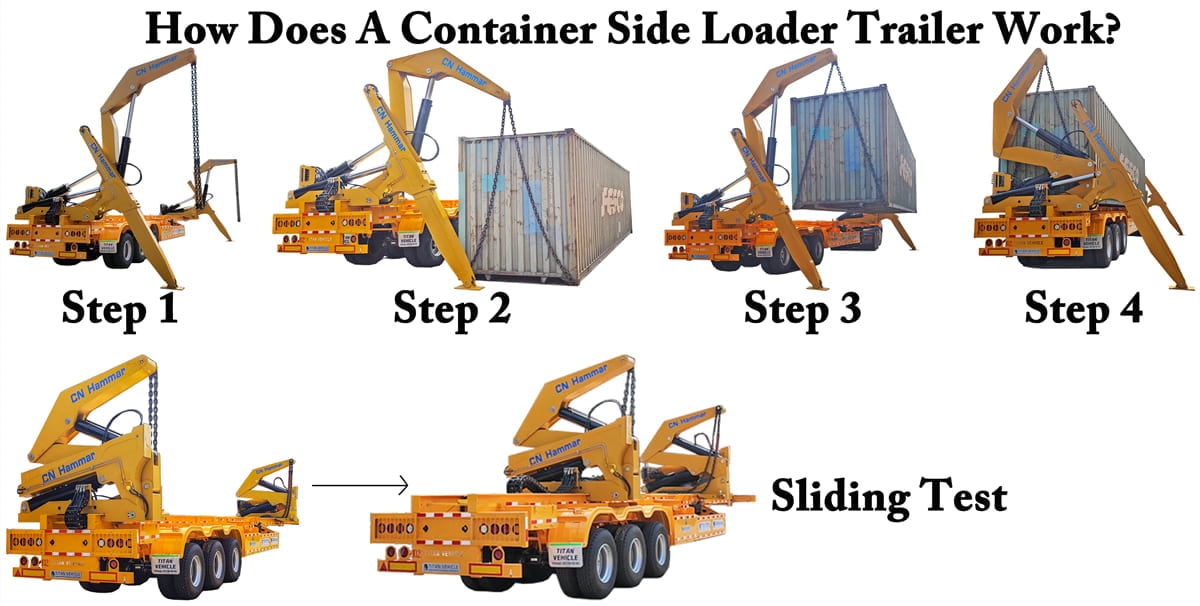 How Does A Container Side Loader Trailer Work?
The best container side loader trailer for Guyana should combine sufficient lifting capacity, a reinforced chassis, and a reliable hydraulic crane system to ensure safe container handling in ports, construction sites, and remote areas.
When selecting a container side loader, buyers should evaluate three critical areas: lifting capability, trailer structure, and hydraulic performance.
A professional side loader trailer is not simply a container chassis with lifting arms. It is an integrated transport and handling system designed to reduce dependence on external cranes and forklifts.
1. Lifting Capacity Determines Application Range
The container side loader trailer lifting capacity directly affects what type of containers the equipment can handle.
Most container side loader trailers are designed for standard ISO containers, including 20ft and 40ft containers. For Guyana logistics companies, a model capable of handling both container sizes usually provides the best investment value because it can serve different transportation requirements.
A suitable lifting capacity ensures the container side loader trailer can safely handle loaded containers while maintaining operational efficiency.
2. Heavy-Duty Chassis Design For Long-Term Operation
The chassis is the foundation of a reliable side loader trailer.
For Guyana's tropical climate and demanding logistics conditions, the trailer should have a reinforced structure with strong corrosion resistance.
High-quality manufacturers normally use high-strength steel such as Q345B for the main beams, combined with reinforced cross members and heavy-duty container locking systems.
The chassis design should focus on:
•High load-bearing capacity
•Resistance against twisting during lifting
•Stable container transportation
•Protection against humidity and corrosion
This is especially important for companies operating in mining areas, construction projects, and remote locations where road conditions can be challenging.
3. Hydraulic Crane System Defines Operating Efficiency
The hydraulic crane is the most important working system of a container side loader.
A reliable hydraulic system allows operators to complete container loading and unloading independently without waiting for external lifting equipment.
Modern side loader trailers usually include:
•Hydraulic lifting cylinders
•Stabilizer legs for safety
•Hydraulic control valves
•Wireless remote operation
Compared with traditional container transportation, the biggest advantage is operational independence.
A truck equipped with a container side loader trailer can arrive at a destination, unload the container, and leave immediately without requiring a forklift or crane.
Recommended Configuration For Guyana Market
For Guyana logistics companies, a practical configuration would include:
•20ft and 40ft container compatibility
•37-45 ton lifting capacity
•Reinforced steel chassis
•Hydraulic remote control system
•Strong corrosion protection
•Heavy-duty suspension suitable for different road conditions
This configuration provides a balance between purchase cost, flexibility, and long-term operating efficiency.
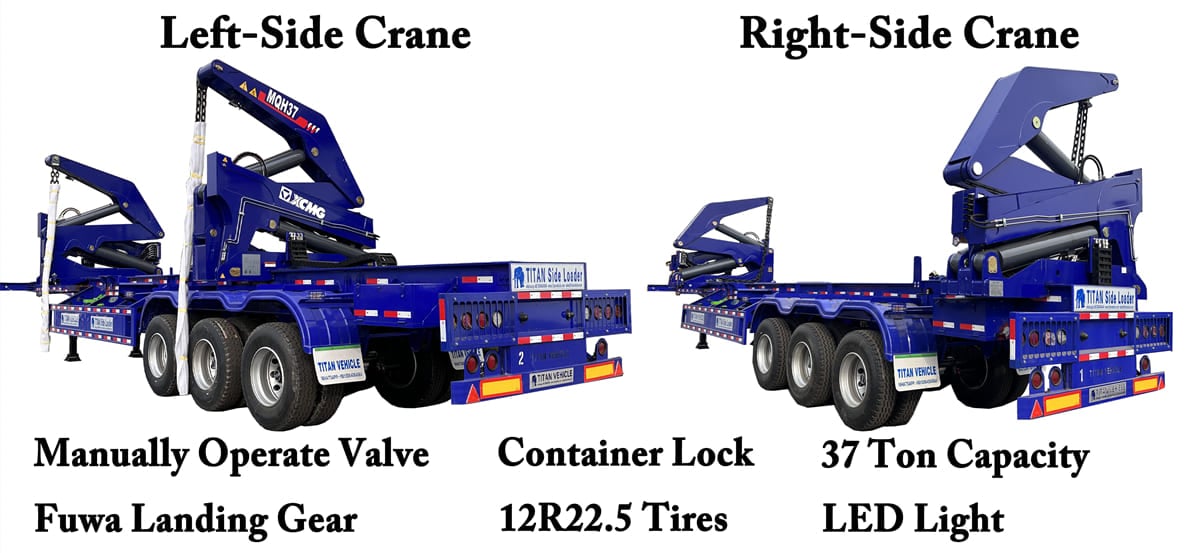 Key Specifications: Lifting Capacity, Chassis, And Crane Features
Container side loader trailer helps Guyana logistics companies reduce container handling costs, improve transportation efficiency, and operate containers in locations where traditional lifting equipment is unavailable.
The biggest reason companies choose a container side loader trailer is not only transportation. The real value comes from combining container delivery and container handling into one machine.
Traditional container transportation often depends on cranes, forklifts, or reach stackers. These machines require additional investment, operators, maintenance, and suitable working areas.
A container side loader trailer eliminates many of these limitations by allowing one truck operator to complete container loading, unloading, and transportation independently.
For Guyana, where logistics networks connect ports, industrial areas, mining regions, and remote project locations, this flexibility creates significant operational advantages.
1. No Need For External Cranes Or Forklifts
The biggest advantage of a container side loader trailer is independent container handling.
With traditional container chassis trailers, companies must arrange lifting equipment before moving containers. This creates additional costs and delays.
A container side loader trailer uses its own hydraulic crane system to lift containers directly from the ground.
This means:
•No waiting for port cranes
•No rental cost for forklifts
•Faster container deployment
•Fewer workers required
For construction companies in Guyana, this is especially useful when placing site offices, storage containers, or equipment containers in areas without permanent lifting facilities.
2. Faster Loading And Unloading Operations
Time efficiency directly affects logistics profitability.
A traditional container operation may require multiple steps:
•Arrange lifting equipment
•Position the container
•Coordinate crane operators
•Load the container
•Secure transportation
A container side loader trailer simplifies the process by integrating lifting and transportation functions.
For logistics companies handling multiple container movements every day, reducing loading time means more completed trips and better vehicle utilization.
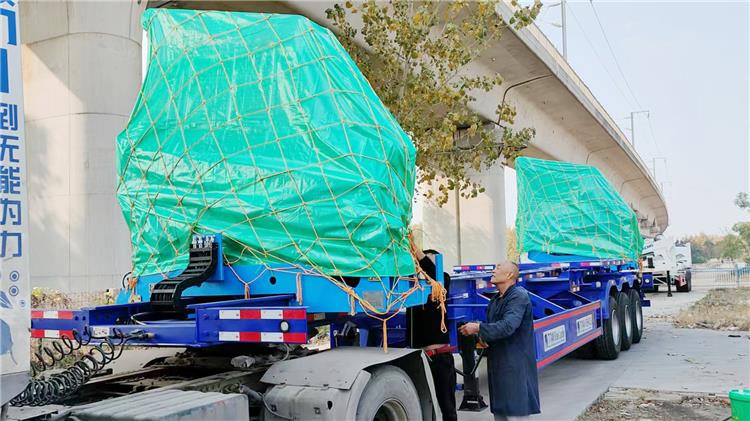
Tarpaulin Packaging & Preparation
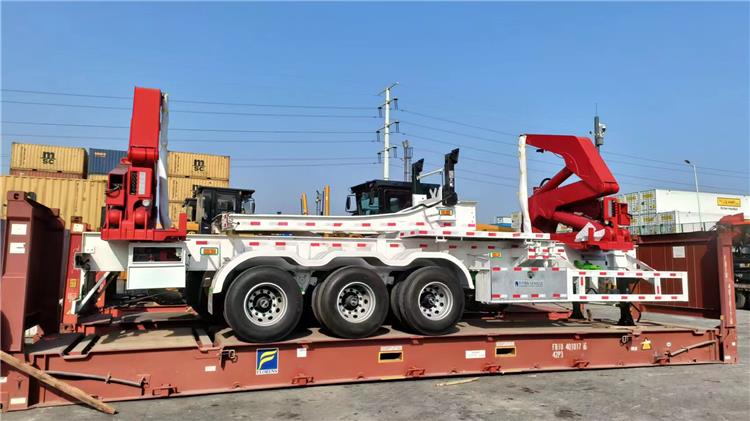
Flat Rack Container Loading
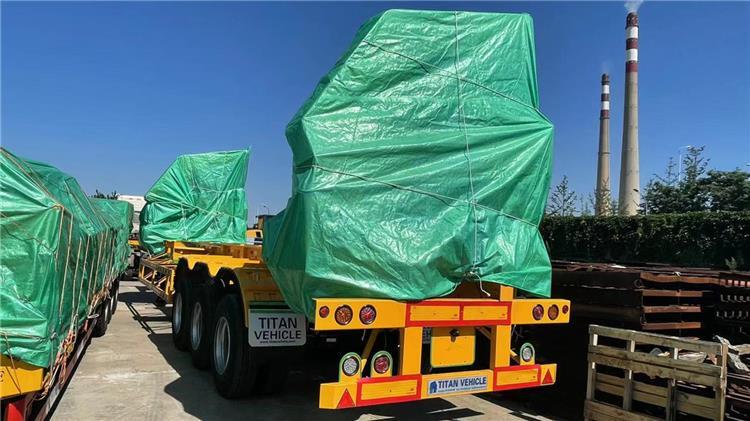
Factory Yard Port Delivery Preparation
| Destination | Product Model | Packaging Method | Status |
|---|---|---|---|
| Guyana | 40ft Container Side Loader | Rain-proof Tarpaulin Package | Dispatched / In Transit |
| Suriname | 37 Ton Side Loader Trailer | Flat Rack Container Shipping | Loaded at Port |
| Tanzania | 20ft Heavy Duty Side Loader | Protective Film Coating | Ready for Delivery |
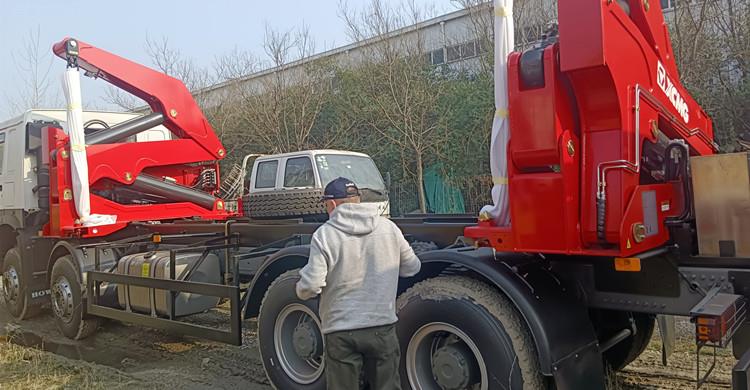
Client Testing Crane Arm Operation
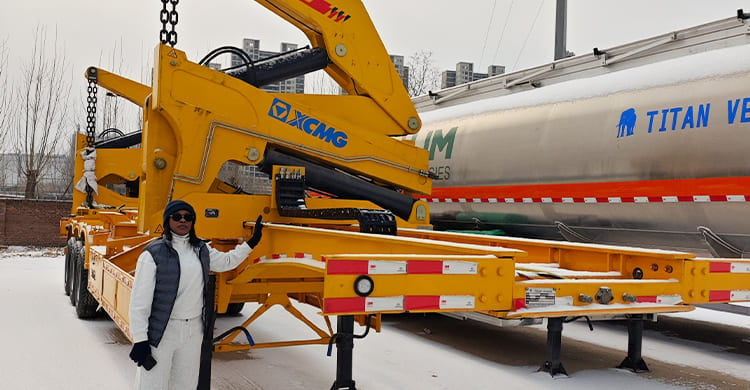
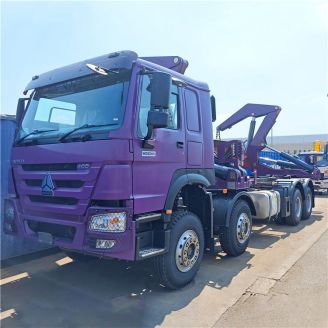
Checking Truck Chassis Integration
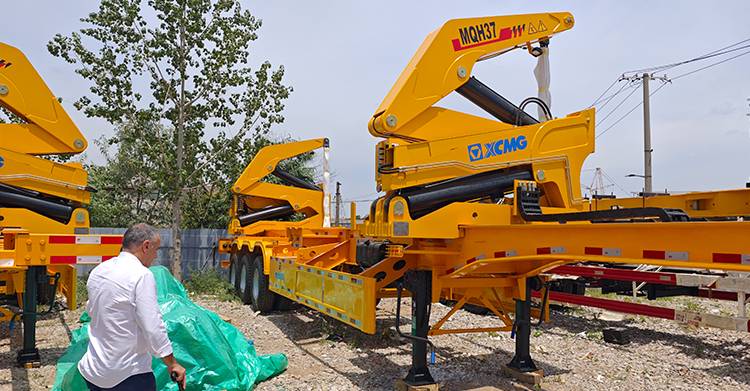
Inspecting Trailer Frame Stability
| Client Region | Inspection Purpose | Key Inspection Items |
|---|---|---|
| South America Client | Pre-delivery Vehicle Inspection | MQH37 Crane Arm Operation & Hydraulic Testing |
| European Client | Truck Mounted Side Loader Check | Chassis Structure & Lifting Control System |
| African Client | Factory Tour & Order Verification | Trailer Frame Beam Quality & Outrigger Stability |
3. Suitable For Remote And Challenging Locations
Guyana has many areas where logistics conditions are different from major ports.
Mining projects, infrastructure construction sites, and industrial developments may be located far away from cities where heavy lifting equipment is limited.
A container side loader trailer provides an effective solution because it can operate independently.
Typical applications include:
•Mining camps
•Construction sites
•Remote warehouses
•Industrial projects
•Temporary storage locations
The ability to unload containers directly at the destination gives companies greater flexibility.
4. Lower Operating Costs
Although the initial investment of a container side loader trailer is higher than a standard container chassis, the long-term operating cost can be lower.
Companies can reduce expenses related to:
•Crane rental
•Forklift operation
•Additional labor
•Container waiting time
•Equipment coordination
For businesses managing frequent container transportation, the container side loader trailer can provide a faster return on investment.
5. Better Container Placement Capability
Unlike normal trailers that only deliver containers, a container side loader trailer can precisely position containers.
The hydraulic lifting system allows operators to place containers:
•Beside buildings
•Inside warehouses
•At construction locations
•In limited-access areas
This makes a container side loader trailer especially valuable for companies that need more than simple transportation.
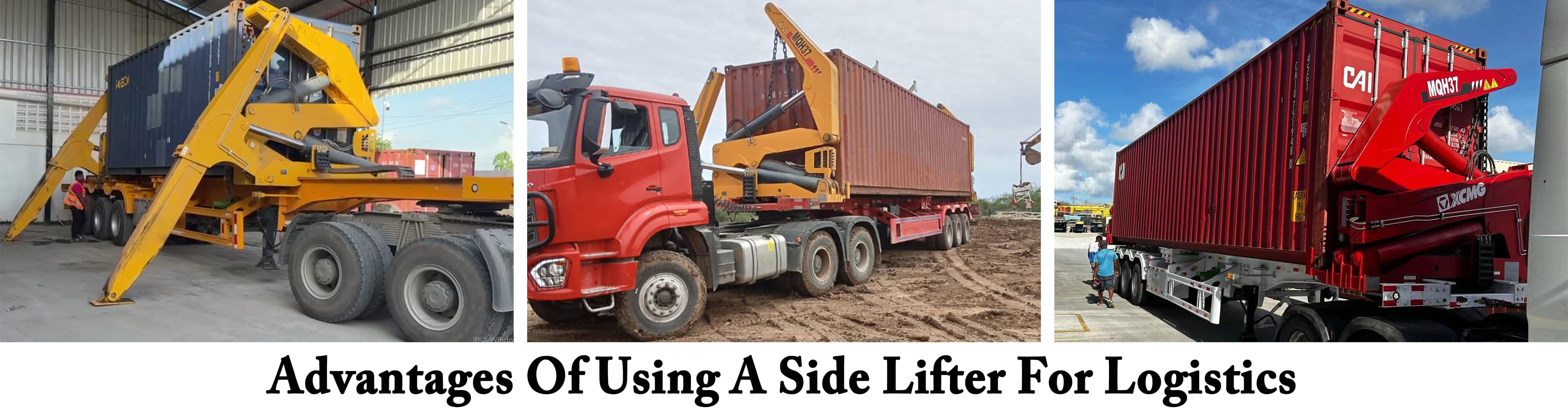 Top 5 Advantages Of Using A Side Lifter For Logistics
A 20ft container side loader trailer is ideal for flexible short-distance operations, while a 40ft container side loader trailer provides better versatility for international logistics and larger cargo transportation.
Choosing between a 20ft and 40ft container side loader depends mainly on container types, cargo volume, operating environment, and business requirements.
Many Guyana companies handle both imported goods and industrial materials, so selecting the right configuration is an important purchasing decision.
20ft Container Side Loader
A 20ft side loader is designed mainly for smaller container operations.
It is suitable for:Local distribution,Construction materials,Small cargo shipments,Mining equipment transportation,Limited-space locations
The advantages include: Lower purchase cost, Easier maneuverability, Smaller operating space requirement, Lower fuel consumption
For companies mainly moving 20ft containers around Georgetown or nearby areas, this configuration can be economical.
40ft Container Side Loader
A 40ft container side loader trailer is designed for larger logistics operations.
It can handle: 40ft standard containers, High-volume cargo, International shipping containers, Long-distance transportation
The main advantages include:
Higher transportation efficiency, More container flexibility, Better utilization for freight companies, Suitable for larger logistics fleets
For Guyana companies involved in international trade, import/export, and industrial projects, a 40ft compatible side loader usually provides greater value.
| Feature | 20ft Side Loader | 40ft Side Loader |
|---|---|---|
| Main application | Local container movement | International logistics |
| Container size | 20ft | 20ft and 40ft |
| Investment level | Lower | Higher |
| Flexibility | Good | Excellent |
| Best users | Small operators, projects | Freight companies, ports |
Which Container Side Loader Should Guyana Buyers Choose?
For most professional logistics companies in Guyana, a 20ft and 40ft compatible container side loader trailer is usually the most practical choice.
This type of equipment provides:
•Greater container compatibility
•Higher utilization rate
•Better long-term investment value
However, companies operating only small-scale container transportation may choose a dedicated 20ft model to reduce initial investment.
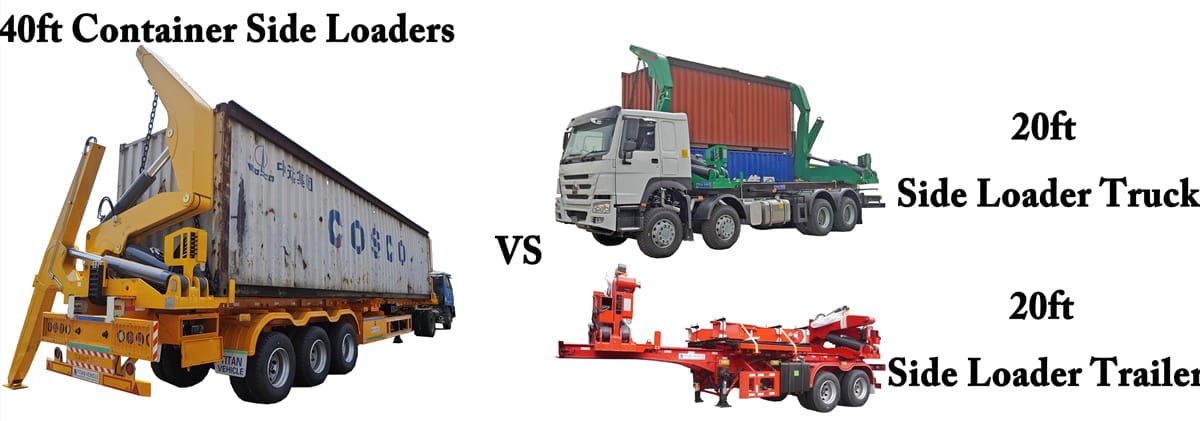 20ft VS 40ft Container Side Loaders: Which Fits Your Needs?
A reliable container side loader trailer manufacturer should provide strong engineering capability, proven hydraulic technology, customization options, and professional after-sales support.
Purchasing a container side loader trailer is a long-term investment. Choosing the wrong supplier can result in high maintenance costs, hydraulic failures, and operational downtime.
Guyana buyers should evaluate manufacturers based on several important factors.
1. Manufacturing Experience
A professional manufacturer should have experience producing:
Container side loader trailers, Container chassis, Heavy-duty semi trailers, Hydraulic transport equipment
Manufacturing experience directly affects structural reliability and product quality.
2. Hydraulic System Quality
The hydraulic system determines the working performance of the side loader trailer.
Buyers should check: Hydraulic cylinder quality, Lifting stability, Control accuracy, Safety protection system
Poor hydraulic components may cause unstable lifting or unexpected downtime.
3. Customization Ability
Different countries have different road conditions and regulations.
A good manufacturer should customize: Axle configuration, Suspension type, Container locking system, Electrical standards, Corrosion protection
For Guyana, corrosion-resistant treatment and durable components are especially important because of the tropical environment.
4. After-Sales Support
A professional supplier should provide: Spare parts supply, Technical guidance, Operation training, Warranty service
For imported equipment, reliable after-sales support is critical for maintaining continuous operation.
| Evaluation Area | What Buyers Should Check |
|---|---|
| Production ability | Factory experience and equipment |
| Product quality | Steel structure and hydraulic system |
| Customization | Ability to adapt to local needs |
| Service | Spare parts and technical support |
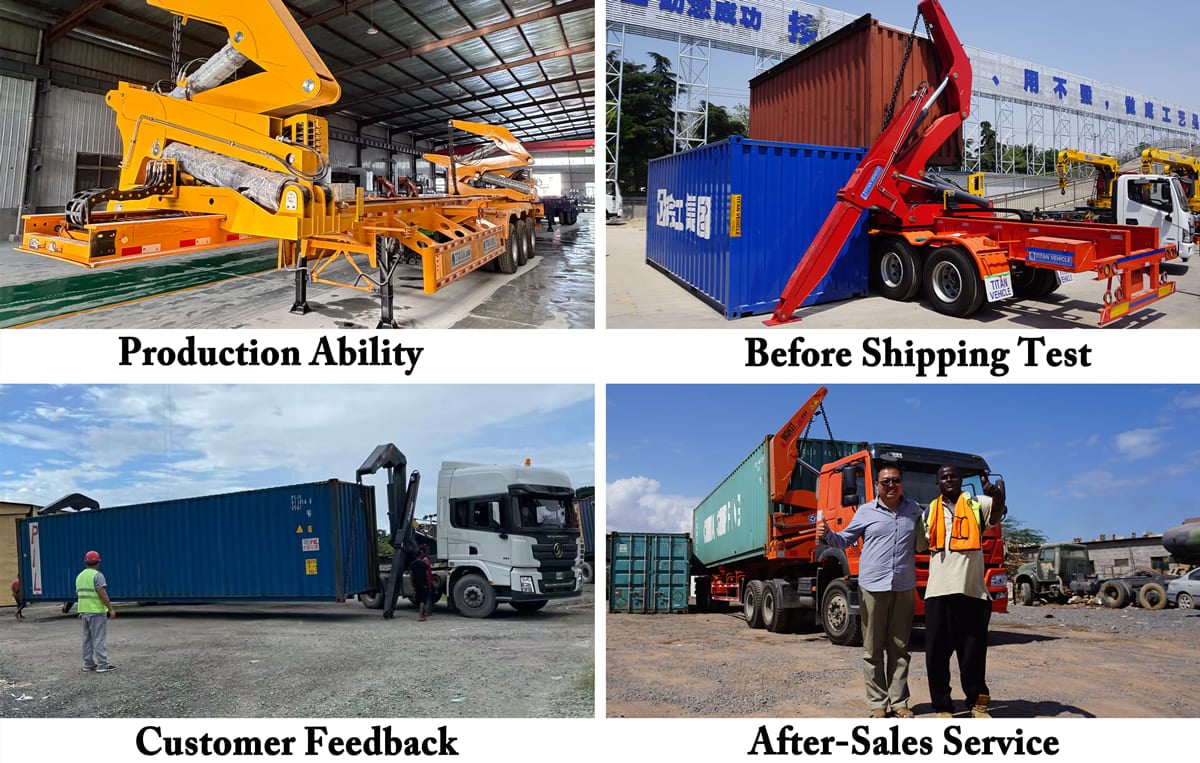 How To Evaluate Side Loader Manufacturers
Container side loader trailer is a more flexible solution for container transportation because it combines lifting and transport functions, while a forklift is mainly designed for short-distance material handling.
Many companies compare a side loader trailer with forklifts because both can assist with container movement. However, they serve different purposes.
A forklift is primarily a handling machine used inside warehouses, ports, and industrial areas. A container side loader is a specialized transportation solution that can move containers between different locations and load or unload them independently.
For Guyana logistics companies, understanding this difference helps determine which equipment provides better long-term value.
| Feature | Container Side Loader Trailer | Forklift |
|---|---|---|
| Main function | Container transportation and lifting | Material handling |
| Transportation ability | Yes | No |
| Long-distance operation | Excellent | Limited |
| Container loading | Direct hydraulic lifting | Requires suitable attachment |
| Remote location operation | Suitable | Limited |
| Additional equipment needed | Usually no | Often requires trailer or truck |
1. Transportation Capability
The biggest difference is that a container side loader trailer is both a transport and lifting system.
A forklift can move containers inside a limited working area, but it cannot transport containers between ports, warehouses, and construction sites.
Guyana logistics company delivering a 40ft container from Georgetown Port to a remote project site would still need a separate container trailer if using a forklift.
A container side loader trailereliminates this additional step because the same vehicle can pick up the container, transport it, and place it at the destination
2. Operating Environment
Forklifts require: Flat working surfaces, Sufficient operating space, Regular maintenance areas
A container side loader trailer is designed for more flexible environments.
It can operate in:
Construction projects, Industrial zones, Mining locations, Remote storage areas.
This makes it more suitable for Guyana's developing infrastructure and resource industries.
3. Cost Efficiency
The purchase price of a forklift may appear lower, but companies should consider the complete operating system.
Using forklifts often requires: Additional container trailer, Forklift operator, Maintenance costs, Suitable storage area
A container side loader trailer combines multiple functions into one investment.
For companies handling containers frequently, the improved efficiency can significantly reduce total operating costs.
When Should You Choose A Container Side Loader?
A side loader is recommended when your business needs:
•Frequent container transportation
•Independent loading and unloading
•Operations in remote areas
•Reduced dependence on cranes
A forklift may still be suitable for:
•Warehouse operations
•Short-distance movement
•Factory material handling
Therefore, the correct choice depends on the company's logistics model.
Why Container Side Loader Trailer Is A Smart Investment For Guyana Logistics
With increasing demand for efficient container transportation in Guyana, a container side loader trailer provides a practical solution for companies seeking faster operations, lower handling costs, and greater logistics independence.
Guyana's logistics sector is developing rapidly, driven by international trade, infrastructure projects, mining activities, and industrial expansion.
As container transportation demand increases, companies need equipment that can adapt to different working environments.
A container side loader trailer provides several advantages:
•Independent container loading
•Reduced equipment dependency
•Faster operation speed
•Better remote-site capability
•Lower long-term operating costs
For freight companies, construction contractors, mining operators, and industrial businesses in Guyana, investing in a reliable container side loader trailer can improve transportation efficiency and strengthen competitiveness.
When selecting a supplier, buyers should focus on manufacturing experience, hydraulic reliability, customization capability, and after-sales service.
A well-designed container side loader trailer is not only a transportation tool but also a complete container handling solution.
Shandong TITAN Vehicle Co., Ltd.
Wehcat/Whatsapp: +86 18660159635
Tel.: +86531-88997626

BOSS WeChat

Boss Whatsapp