
Since 2014
Ten Years of Reliability Your Trusted Partner
Ten Years of Reliability Your Trusted Partner
1. What Is a Dump Trailer Used for in Mali?
2. Dump Semi Trailer for Sale in Mali: How Does It Work?
3. Semi Trailer Tipper for Mali: What Capacity Should You Choose?
4. Which Dump Semi Trailer Is Suitable for Mali Roads and Mining Transport?
5. Dump Trailer Specifications and Key Configurations for Mali Buyers
6. How Much Does a Dump Trailer Cost in Mali?
7. How to Choose a Tipper Tipping Trailer Supplier for Mali?
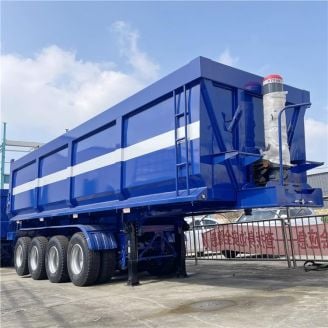
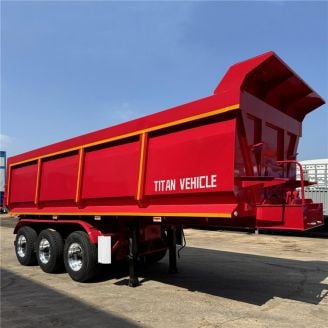
A dump trailer in Mali is mainly used for transporting and unloading loose bulk materials such as sand, gravel, crushed stone, laterite, construction waste, soil, and mining materials. Instead of requiring external unloading equipment, the hydraulic tipping system allows the trailer body to lift and discharge the cargo quickly.
This makes a dump trailer particularly useful for construction and mining operations where trucks may need to complete many loading and unloading cycles every day.
Mali has an important mining industry, particularly gold mining, while construction and infrastructure projects also require large quantities of aggregates and earthmoving materials. For these applications, transportation efficiency directly affects operating costs. A suitable dump semi trailer allows a tractor truck to carry a large amount of material in one trip and unload it quickly at the destination.
Why Dump Trailers Are Suitable for Mali
Mali's transport requirements can vary considerably between paved roads, secondary roads, construction sites, mining areas, and unpaved access routes. Therefore, a dump trailer intended for the Mali market should not be selected only according to nominal capacity.
The chassis strength, suspension, axle configuration, tires, hydraulic system, tipping body, braking system, and ground clearance all influence the trailer's performance.
For buyers looking for a dump trailer for sale in Mali, the right configuration should therefore be based on the actual working environment rather than simply choosing the largest possible trailer.
A dump semi trailer for sale in Mali normally consists of a reinforced trailer chassis, tipping body, hydraulic lifting system, axles, suspension, braking system, landing gear, kingpin, and other supporting components.
The basic working principle is straightforward. The tractor truck pulls the dump semi trailer to the loading location. After the trailer is loaded, the combination transports the material to its destination. When unloading, hydraulic pressure extends the lifting cylinder and raises the front section of the dump body. The material then slides toward the rear of the body and exits through the rear opening.
After unloading, the hydraulic cylinder retracts and the body returns to its normal horizontal position.
How the Hydraulic Tipping System Works
The hydraulic system is one of the most important parts of a semi trailer tipper. It determines how smoothly and safely the body can be lifted.
A typical tipping process can be understood as:
Loading → Transportation → Positioning → Hydraulic Lifting → Material Discharge → Body Lowering
The hydraulic cylinder provides the lifting force required to raise the loaded body. Depending on the design, the system can use different cylinder configurations and hydraulic components.
For heavy-duty applications, the hydraulic system should be properly matched to the body length, body weight, payload, and tipping angle. An undersized system may struggle when the trailer is heavily loaded, while an appropriately configured system provides smoother operation.
Dump Semi Trailer Structure
The dump body is normally manufactured from heavy-duty steel. The floor and side walls can be reinforced according to the type of cargo.
For example, transporting sand may not require the same body reinforcement as transporting large rocks or mining materials. When the trailer is intended for quarry or mining applications, impact resistance becomes especially important.
These are typical options rather than a fixed specification. The final configuration should be matched to the tractor truck and local operating conditions.
Choosing the capacity of a semi trailer tipper in Mali should start with the type of material being transported and the tractor truck available to pull the trailer.
A larger body does not automatically mean better transportation efficiency. If the body volume is too large for the material density or the permitted payload, the trailer may become overloaded before it is physically full.
For example, sand and gravel have different densities, while crushed stone and mining materials can create much higher loads on the trailer structure. Therefore, both payload capacity and body volume need to be considered.
A 3 axle dump semi trailer is often a practical choice for general heavy-duty transportation because it provides a balance between payload, maneuverability, operating cost, and maintenance.
For demanding mining applications, buyers may consider a 4 axle configuration or another reinforced heavy-duty design depending on the tractor and local regulations.
Capacity Should Match the Material
The volume of the dump body is another important consideration.
For example, a 35 CBM dump body may be suitable for one material and application, while a larger 45–50 CBM body may be more appropriate for lighter bulk materials.
This is why a Mali buyer should provide the supplier with the cargo type, expected payload, transportation distance, road conditions, tractor model, and loading method before confirming the final trailer.
Matching the Trailer to the Tractor
The tractor truck is equally important.
A high-capacity dump trailer requires a tractor with sufficient engine power, fifth-wheel capacity, braking capability, and legal towing capacity.
For example, if a customer already operates HOWO, Shacman, FAW, Foton, or another heavy truck in Mali, the trailer configuration can be designed around the existing tractor.
The kingpin, trailer height, electrical connections, air brake system, and suspension should all be compatible with the tractor.
For Mali's construction and mining applications, the most suitable dump semi trailer is generally one designed around durability rather than simply maximum volume.
Mining and quarry transportation can expose trailers to rough surfaces, uneven loading, repeated tipping cycles, dust, impact from large stones, and high axle loads. A trailer used under these conditions needs a strong frame and appropriately reinforced dump body.
Heavy-Duty Frame for Difficult Working Conditions
The main frame carries the load from the dump body and transfers it through the suspension and axles. For heavy-duty Mali applications, the frame should have sufficient structural strength to withstand repeated loading cycles.
The material and manufacturing process are therefore important.
Common structural steel options include Q345B and higher-strength steel, depending on the required design. The exact material can be selected according to the customer's payload and application.
For mining operations, the body floor can also be reinforced to reduce deformation and wear caused by rocks and other high-impact materials.
Suspension and Axles
The suspension system affects both load distribution and road performance.
Mechanical suspension is commonly selected for heavy-duty applications because of its relatively simple structure and ease of maintenance. Air suspension can also be used where improved ride characteristics and specific operating requirements justify the additional system complexity.
Axle capacity should be matched to the total trailer load.
A typical heavy-duty configuration may use 13-ton, 16-ton, or other axle capacities depending on the design.
Tires for Mali Applications
Tires are another component that should not be overlooked.
For construction and mining operations, tire selection needs to consider road surface, load, operating speed, and distance.
A common heavy truck trailer specification is 12R22.5, although other sizes can be supplied according to customer requirements.
For customers operating frequently on rough unpaved roads, the tire pattern and load rating should be considered carefully rather than choosing a tire based only on purchase price.
Dump Body Design
The dump body is where the cargo directly contacts the trailer, so its construction should correspond to the cargo.
A body designed for sand does not necessarily need the same reinforcement as a body transporting large rocks.
For mining and quarry applications, the following design considerations are particularly important:
Why a Reinforced Tipper Is Better for Mining
A tipper tipping trailer used for mining should be designed for repeated heavy loading and unloading rather than occasional transportation.
When large rocks are dropped into the body, the impact can be significantly higher than when loading sand or soil. A reinforced floor, appropriate side-wall design, strong cross members, and reliable hydraulic system can therefore improve service life.
This is one reason why the same basic dump trailer can be customized into different versions for construction, quarrying, and mining.
The right dump trailer specifications for Mali depend on the customer's application. There is no single configuration suitable for every transport company.
A buyer transporting construction sand between Bamako and a nearby project may have different requirements from a mining contractor operating on rough roads.
The following table provides a reference configuration for a heavy-duty dump semi trailer:
These specifications can be adjusted according to the actual project.
Hydraulic System
The hydraulic system deserves particular attention because the tipping operation is the primary function of the trailer.
A properly selected cylinder should have enough lifting capacity for the maximum loaded body. The hydraulic components should also be matched to the tractor's hydraulic system or the selected independent hydraulic power configuration.
For frequent tipping operations, reliability is more important than simply selecting the cheapest hydraulic components.
Braking System
A fully loaded semi trailer tipper has significant momentum, especially when traveling on downhill roads. Therefore, the braking system should be appropriately configured for the total combination weight.
Air braking systems are commonly used on heavy-duty semi trailers. Depending on the customer's requirements, the trailer can also be equipped with ABS and other braking components.
Rear Door
The rear door affects unloading speed and cargo retention.
Different cargo types may require different door configurations. A suitable rear door allows materials to discharge efficiently while helping prevent unnecessary material loss during transportation.
Customization for Mali Buyers
A major advantage of purchasing a dump semi trailer directly from a manufacturer is the ability to customize the trailer before production.
For a Mali project, buyers should provide the supplier with as much operating information as possible. This allows the trailer to be designed around the actual application rather than using a generic configuration.
The price of a dump trailer in Mali depends on the trailer's size, payload, axle configuration, materials, hydraulic system, suspension, tires, and shipping requirements.
There is therefore no single fixed price for every dump semi trailer.
For international buyers, the final cost can also include transportation from China to Mali, port handling, inland transportation, customs-related expenses, taxes, and other local costs.
For example, a basic construction-oriented dump trailer may have a very different price from a reinforced mining tipper tipping trailer.
The reason is not simply the trailer size. Mining trailers may require thicker steel, stronger beams, reinforced bodies, higher-capacity axles, and upgraded hydraulic components.
FOB Price vs Final Cost in Mali
When comparing quotations from Chinese suppliers, Mali buyers should check whether the price is EXW, FOB, CIF, or another trade term.
A supplier quotation of USD X may not represent the final amount paid by the customer in Mali.
For example:
Factory price → China inland transportation → Port charges → Ocean freight → Destination charges → Customs/taxes → Inland delivery in Mali
Therefore, when comparing a dump trailer supplier, it is better to compare the complete configuration and total landed cost rather than selecting the lowest initial quotation.
Why the Cheapest Dump Trailer Is Not Always the Best Choice
For a trailer used every day in mining or construction, the initial purchase price is only part of the operating cost.
A low-cost trailer may use thinner steel, lower-capacity axles, basic hydraulic components, or less suitable tires. If the trailer experiences frequent repairs or structural problems, downtime can cost more than the original purchase-price difference.
For Mali buyers, a better approach is to evaluate:
Purchase Price + Durability + Maintenance + Payload + Unloading Efficiency + Spare Parts + After-Sales Support
This gives a more realistic picture of the trailer's value.
Choosing a reliable tipper tipping trailer supplier for Mali should be based on the manufacturer's engineering capability, production quality, configuration transparency, and after-sales support.
A dump trailer is a heavy-duty piece of equipment. The quality of the main frame, welding, axles, suspension, hydraulic system, and braking system can directly affect its working life.
Check the Manufacturer's Production Capability
Before purchasing, buyers should determine whether the supplier is an actual manufacturer or mainly a trading company.
This is particularly important for customers purchasing several units for mining or construction fleets.
Compare the Complete Configuration
Two suppliers may both advertise a “60-ton dump semi trailer,” but their actual products can be very different.
One may use a reinforced main beam and heavy-duty axles, while another may use a lighter structure.
Therefore, Mali buyers should compare specifications such as:
Consider After-Sales Support
For customers operating a semi trailer tipper in Mali, after-sales support can be as important as the original purchase.
A trailer may operate hundreds or thousands of kilometers away from the factory. Customers therefore need access to technical information and replacement parts when necessary.
A reliable supplier should be able to provide:
Operating instructions + Spare parts support + Technical communication + Hydraulic system guidance + Warranty service
For fleet buyers, it is also useful to keep common replacement components available locally.
Choose a Trailer According to the Real Application
The final configuration should be based on what the trailer actually needs to transport.
A customer purchasing a trailer for construction sand should not necessarily choose the same specification as a gold mining contractor transporting rock.
Dump Trailer Buying Guide for Mali: Final Considerations
For customers searching for a dump trailer for sale in Mali, the most important decision is not simply choosing the biggest trailer or the lowest price. The trailer should match the local operating conditions, tractor truck, cargo type, payload, and transportation cycle.
A properly configured dump semi trailer can provide efficient transportation for sand, gravel, laterite, crushed stone, soil, mining materials, and other bulk cargo. The hydraulic tipping system allows faster unloading, while a reinforced frame and dump body can provide the durability needed for construction and mining applications.
For general construction and aggregate transportation, a 3 axle configuration can provide a practical balance between capacity and operating cost. For heavier mining and quarry applications, customers may require additional axles, reinforced steel structures, higher-capacity axles, and upgraded hydraulic components.
For Mali buyers comparing dump trailer, dump semi trailer, tipper tipping trailer, and semi trailer tipper suppliers, the best purchasing decision should consider the complete package: structural strength, hydraulic performance, payload, components, customization, price, shipping, spare parts, and after-sales support.
A properly engineered trailer can become a long-term working asset for construction contractors, mining companies, quarry operators, and transport fleets in Mali rather than simply another piece of transport equipment.
Shandong TITAN Vehicle Co., Ltd.
Wehcat/Whatsapp: +86 18660159635
Tel.: +86531-88997626

BOSS WeChat

Boss Whatsapp